Morgan Stanley Report Assessment
High Dependence on Imported Oil and Gas in Asia, Including Korea
With the intensifying conflict among the United States, Israel, and Iran, downside risks for Asian economies, including Korea, have increased. Global investment bank Morgan Stanley has warned that Korea, which has a high dependence on imported energy, could be hit harder than China.
On March 3, the Hong Kong-based South China Morning Post reported this, citing a report released the previous day by Morgan Stanley’s Chief Asia Economist, Chetan Ahya. The report states that Asian countries are vulnerable to the economic fallout from the current situation due to their heavy reliance on imported oil and natural gas.
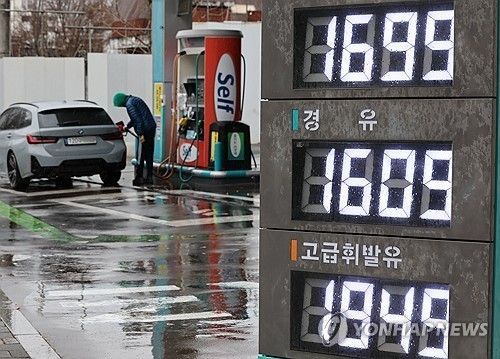
The oil and gas trade deficit in Asia amounts to 2.1% of gross domestic product (GDP). According to the report, for every $10 increase in international oil prices per barrel, the economic growth rate in Asia declines by 0.2 to 0.3 percentage points. In fact, Asia’s high manufacturing share and export-oriented economic structure make it more sensitive to oil price fluctuations than the United States or Europe.
Morgan Stanley lists Korea, Thailand, Taiwan, and India as countries facing significant downside risks based on the size of their oil and gas trade deficits. In contrast, the report notes that for China, this deficit is only 1.8% of GDP, making the impact relatively less severe.
If geopolitical tensions persist and supply disruptions occur, macroeconomic stability in Asia is likely to be shaken. The magnitude of the shock will be determined by both the extent of the oil price increase and the duration of elevated prices.
DBS Bank, the largest financial institution in Southeast Asia, has also expressed similar concerns. Analyst Subhro Sarkar mentioned the possibility of a blockade of the Strait of Hormuz during an online seminar on this day. He emphasized, “Even if the blockade lasts only one to two weeks, the price of liquefied natural gas (LNG) from Qatar could surge by 20%,” adding that this would be a negative factor for Northeast Asian countries such as Korea, where the proportion of imported LNG is high.
© The Asia Business Daily(www.asiae.co.kr). All rights reserved.