There is analysis suggesting that the airstrikes on Iran by the United States and Israel will negatively impact the smartphone supply chain. Observers also predict that profitability may deteriorate due to ongoing memory shortages and disruptions in air transport.
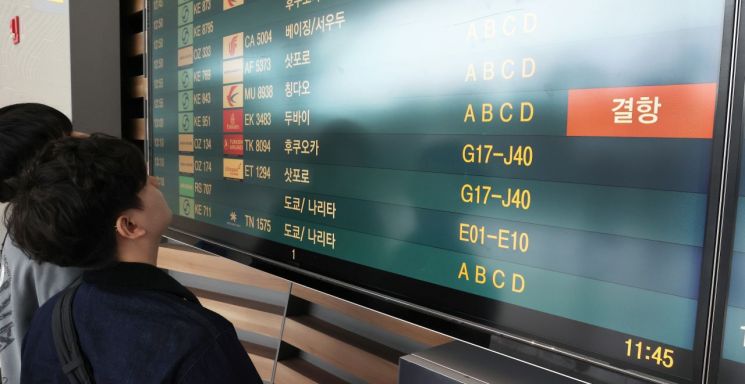
Market research firm Counterpoint Research explained in a report on March 3 that "the escalating tensions between the United States, Israel, and Iran are further worsening the smartphone supply chain situation, which is already burdened by rising memory prices." The firm also warned, "This situation is likely to become more complex and prolonged," adding, "If the Middle East crisis continues for an extended period, it will affect global smartphone market air routes, operating costs, and inventory planning as a whole."
Counterpoint Research analyzed that the war will have a negative impact on smartphone logistics. Most smartphones are shipped by air, and the Middle East serves as a key hub for major air routes. The report noted that these air routes could be blocked due to the war. Although air transport is more expensive than sea freight, air is preferred for smartphones because they are high-value products with short life cycles. The report stated, "Original Equipment Manufacturers (OEMs) use interconnected air routes to supply smartphones to key markets in the Middle East, Europe, Africa, and the Americas, with the Middle East playing a central role in this network."
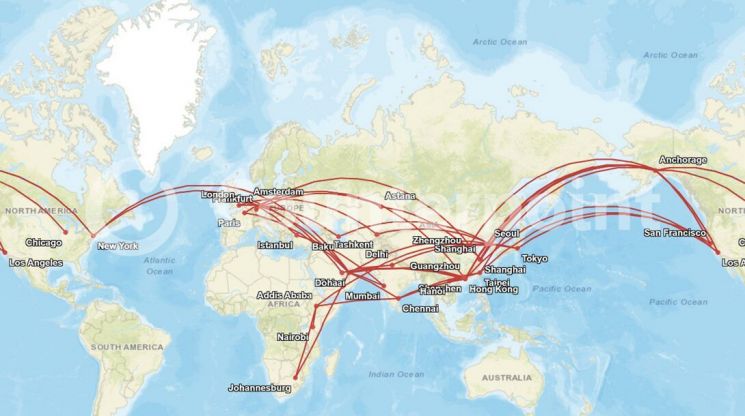 Market research firm Counterpoint Research explained in a report on the 3rd, "Tensions between the United States, Israel, and Iran are further worsening the smartphone supply chain situation, which is already burdened by rising memory prices." Major routes used for smartphone air transport. Screenshot from Counterpoint Research website
While alternative routes are available, cost issues arise. According to the report, shipments to Europe can be routed through Central Asian hubs such as Tashkent in Uzbekistan, and cargo bound for the eastern and western United States can transit through East Asia and North America instead of the Middle East. However, this would add at least two to three hours of flying time. Additionally, the sharp increase in oil prices due to Iran’s closure of the Strait of Hormuz must be considered. The report pointed out, "Just three additional hours of flight time can add approximately $25,000 (about 36.67 million won) in fuel costs alone," and added, "On top of that, increases in route- and destination-specific insurance premiums and rising labor costs may also be incurred."
Counterpoint Research also warned of a structural downturn in the smartphone industry caused not only by the current war but also by ongoing memory supply shortages. The firm projected that global smartphone shipments this year will fall by 12.4% year-on-year, dropping below 1.1 billion units. The report explained, "The smartphone industry is entering a phase of structural downturn, not just a simple cyclical adjustment," and added, "The current downturn stems from structural imbalances in the memory supply chain. Whether a recovery occurs will depend on the pace of new memory production capacity and yield improvements."
© The Asia Business Daily(www.asiae.co.kr). All rights reserved.