Activation of the 'Reward Circuit' Unrelated to Satiety
"Not a Matter of Willpower, but of Habitual Brain Response"
A study has found that the brain's response to delicious-looking food does not turn off even when one is full. It has been confirmed that even when a person feels "I don't want to eat anymore," the moment food appears before their eyes, the brain still sends strong 'reward' signals. This suggests that the cause of overeating may not simply be a lack of willpower.
 It has been confirmed that even when one feels "I don't want to eat anymore," the moment food appears before the eyes, the brain still sends strong 'reward' signals. Getty Images
According to the scientific journal 'Appetite' on March 1 (local time), Dr. Thomas Sambrook and his research team at the University of East Anglia in the UK conducted a food reward-based learning experiment with 76 university students and confirmed these findings.
The research team measured the participants' brain activity using electroencephalography (EEG) while they played a game involving candies, chocolate, potato chips, and popcorn. During the task, the participants were given one of these foods until they felt they could not take another bite, thereby reaching a state of fullness.
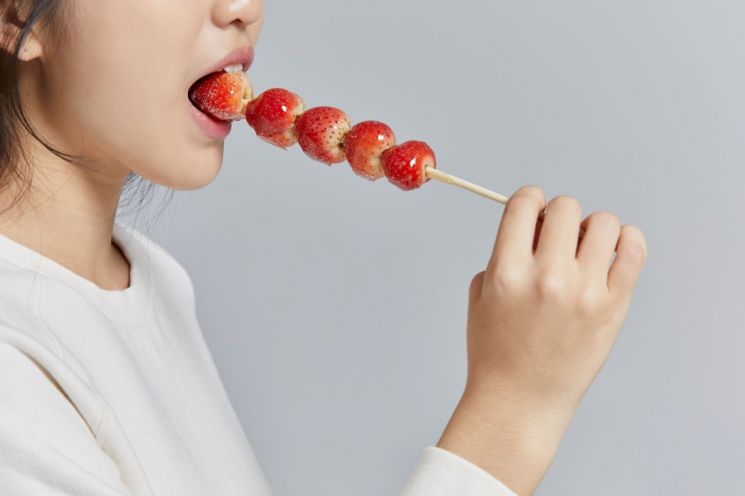 A study has found that the brain's response to delicious-looking food does not turn off even when one is full. Getty Images
After becoming full, the participants reported that their desire for the food had significantly decreased, and behavioral assessments also showed that they assigned lower value to the food.
However, the brain responses were different. The electrical activity in the brain regions associated with reward appeared at nearly the same level as before eating, regardless of satiety or conscious evaluation. Even when completely full, a strong response to images of food was maintained.
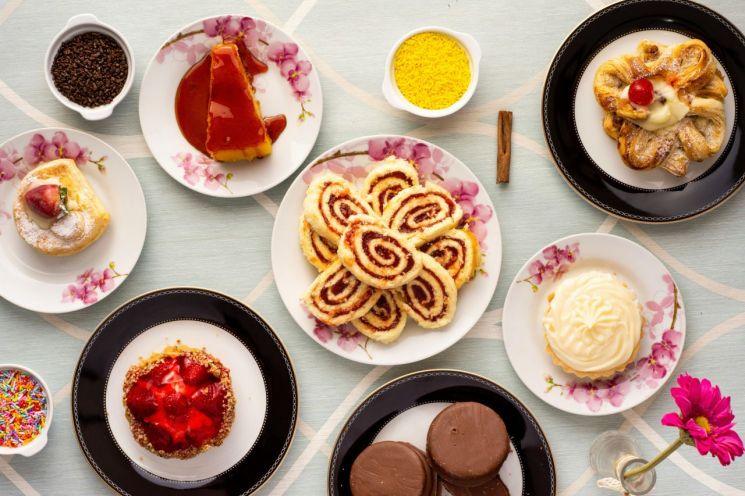
The research team explained that these results suggest the response to food cues may be a 'habitual response.' This means that an automated reward response has formed by repeatedly associating certain foods with pleasure over a long period.
Dr. Sambrook stated, "No matter how full you are, your brain does not try to lower the reward value of that food," and added, "Even if you feel you don't want it, the moment you see the food, your brain continues to fire reward signals."
He further noted, "This kind of habitual brain response can operate independently of conscious decisions. If you find it hard to stop snacking late at night or can't refuse sweets even when full, the issue may lie not in self-control, but in neural circuits built into the brain."
© The Asia Business Daily(www.asiae.co.kr). All rights reserved.