Backlash After AI Technology Deal With U.S. Department of Defense
Ban on Mass Surveillance Clause Added
"We Rushed to Announce the Deal"
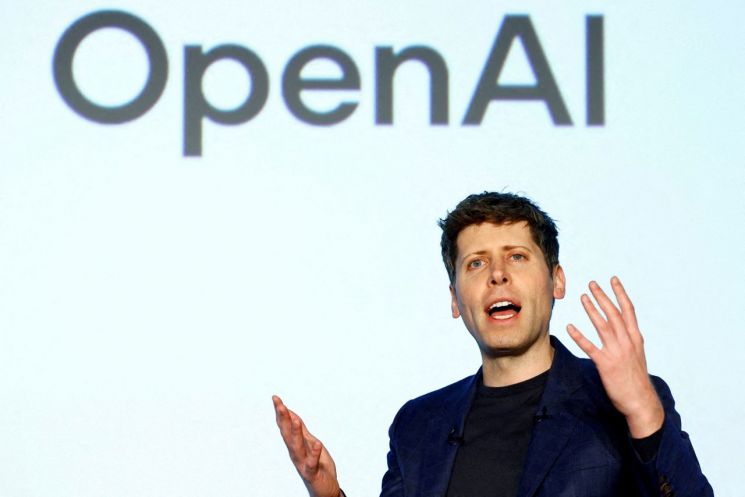
Sam Altman, CEO of OpenAI, announced that a "ban on mass surveillance" clause will be added to the company's artificial intelligence (AI) technology supply contract with the U.S. Department of Defense. The deal became controversial as it was signed just hours after rival Anthropic refused to enter into a similar agreement with the U.S. Department of Defense.
On March 2 (local time), CEO Altman posted a lengthy message on X (formerly Twitter), stating, "To clarify our principles, we are working to add a clause to the contract with the Department of Defense," and announced that a ban on mass surveillance clause would be included.
He also explained that the contract will specify that, in accordance with the Fourth Amendment, the National Security Act of 1947, and the Foreign Intelligence Surveillance Act of 1978, AI systems must not be intentionally used for domestic surveillance of U.S. residents or citizens. He added, "It has also been confirmed that intelligence agencies under the Department of Defense, such as the U.S. National Security Agency (NSA), will not be able to use OpenAI services."
CEO Altman stated, "The Department of Defense understands that it is restricted from intentionally tracking, surveilling, or monitoring U.S. residents or citizens," and added, "We wanted to clarify this point, as it is important to protect the freedoms of Americans and there is significant public attention on this issue."
He said, "Major decisions for society must be made by the government," and continued, "We want to have a voice, share our expertise, and fight for the principles of freedom, but we also know exactly how the system works." He further emphasized, "Since many have asked, I will say this: if we ever receive an order that we believe is unconstitutional, we would choose to go to jail rather than comply."
Altman also reflected on the hasty announcement of the contract with the Department of Defense. He admitted, "We should not have rushed to announce this on February 27. This issue is very complex and requires clear communication," and acknowledged, "As a result, we appeared opportunistic and careless."
OpenAI's agreement with the Department of Defense became controversial as Anthropic, which had clashed with the Trump administration, refused to sign a similar deal. CEO Altman has previously expressed support for Anthropic’s position on this matter.
The U.S. Department of Defense had been using Anthropic's AI model "Claude." However, when the department's request to utilize Claude for military purposes without restrictions was ultimately rejected, the Department criticized Anthropic and designated the company as a "supply chain risk." All Department of Defense partners must prove that they do not use products or services from companies designated as supply chain risks. Some estimate that if Anthropic is excluded from the supply chain, the impact could reach as much as 200 million dollars.
OpenAI's course of action, which contrasted with that of Anthropic, drew both internal and external criticism. According to U.S. business media CNBC, some critics launched a campaign to stop using OpenAI's "ChatGPT" and switch to Anthropic's Claude. In fact, Claude has become the most downloaded free app on the Apple App Store.
CNBC analyzed that CEO Altman's clarification was also intended to reassure internal staff. Many OpenAI employees supported Anthropic's decision to refuse the contract last week. They also signed an open letter opposing the decision to designate Anthropic as a supply chain risk.
© The Asia Business Daily(www.asiae.co.kr). All rights reserved.