Jeonnam's 'Small School Specialization Model' Finds Its Footing
Transformed Into Unique Learning Hubs for Maritime, Golf, AI, and More
A Wave of Transfers to Schools Like Mokpo Seosan and Hwasun Cheongpung
As the nationwide decline in the school-age population continues to force schools to close across the country, small schools in Jeonnam Province are drawing attention for a remarkable phenomenon: their student numbers are actually increasing.
According to the Jeonnam Provincial Office of Education on March 3, the number of elementary, middle, and high school students in Jeonnam has plummeted by 52.2% compared to the year 2000. The cumulative decrease over the next three years alone is projected to reach 15,498 students, highlighting the severity of the education crisis caused by the 'demographic cliff.'
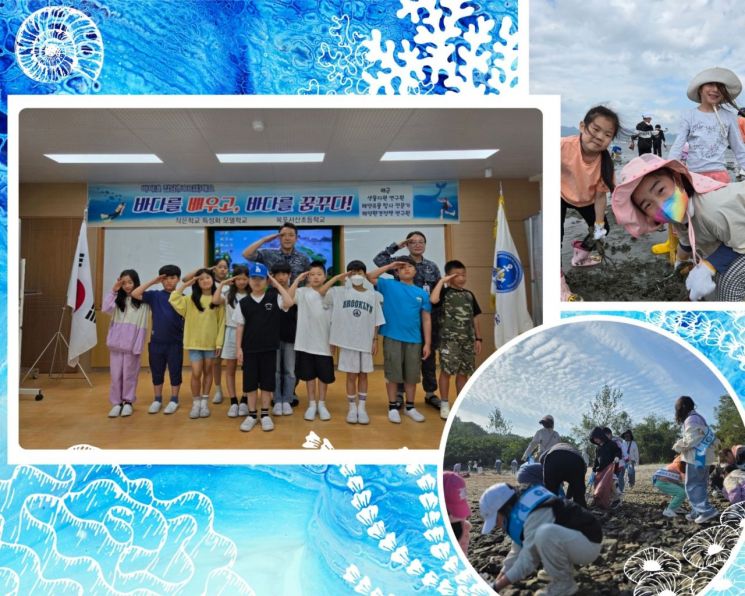 Mokpo Seosan Elementary School has received great response since introducing 'Experience-Centered Marine Specialized Education' from this year. Provided by Jeonnam Provincial Office of Education
However, even amidst these grim prospects, the 'Small School Specialization Model Schools' are producing clear results. An analysis by the Provincial Office of Education of the eight schools participating in this program over the past two years showed that five schools experienced an increase in student numbers.
The remaining three schools also managed to halt the decline and maintain their student populations, demonstrating a so-called 'decoupling' effect, in contrast to the average downward trend in Jeonnam. The creative curricula tailored to local characteristics and meticulous care provided by the 'Jeonnam-Style Small School Specialization Model' are being hailed as a new solution to overcoming the regional education crisis.
A prime example of success is Mokpo Seosan Elementary School. Leveraging its geographical advantages near the sea and port, the school introduced 'Experience-Centered Maritime Specialized Education' this year. Professional maritime exploration projects, conducted in partnership with institutions such as Mokpo Maritime University and Mokpo Maritime Police Station, quickly gained a positive reputation among parents, prompting a wave of transfers from students at larger neighboring schools.
As a result, in 2026, the school is expected to have two first-grade classes, with the total student body growing to around 80. Likewise, Hwasun Cheongpung Elementary School overcame the threat of closure through its culture and arts specialization program. Its creative convergence curriculum, which encompasses everything from scriptwriting, acting, filming, to music production under the theme of movie making, captured the hearts of both students and parents.
Buoyed by these successes, Cheongpung Elementary School will increase its number of classes from five to six next year, and the affiliated kindergarten, which had been closed, will reopen in 2026. In addition, Yeonggwang Gunnan Elementary School, which operates personalized programs for each student, and Goheung Daeseo Middle School, notable for its international exchange-oriented curriculum, both achieved remarkable results with student numbers increasing by over 30% compared to the previous year.
Yeosu Hwayang Elementary School, Shinan Palgeum Elementary School, Gwangyang Jungdong Elementary School, and Jangseong Seosam Elementary School are also consistently attracting students. The Provincial Office of Education has announced plans to expand support, noting that 'Jeonnam-Style Small Schools' are increasingly recognized not just as places that maintain school operations, but as institutions offering differentiated learning experiences. In particular, to ensure the sustainability of the program, the support period will be extended to at least two years, and in 2026, the number of specialized model schools will be expanded to 15.
The newly designated schools include Gangjin Omcheon Elementary School (entrepreneurship and career education based on business mindset), Hampyeong Gisan Elementary School (golf development school), and Jindo Seo Elementary School (AI digital creation school), among seven others, each offering curricula that leverage the unique strengths of their regions and institutions. Furthermore, clusters led by education support offices, such as Gokseong (linked with K-FOOD) and Jangheung (regional coexistence), will be established to provide additional support.
Kim Jongman, Director of the School-Age Population Policy Division, stated, "Small schools are key hubs for future education that grow together with the local community. Through quality specialized education focused on the growth of each individual student, we aim to create an educational ecosystem where children come to learn and communities are revitalized together."
© The Asia Business Daily(www.asiae.co.kr). All rights reserved.