U.S.-Iran Conflict Could Expand to Hit Corporate Digital Infrastructure
AWS Faces Disruptions in UAE
Iranian Hacking Risks Cannot Be Ignored
Companies and Governments Must Prepare
As military tensions rise in the Middle East, the modern front lines of warfare are shifting beyond physical battlegrounds to include digital infrastructure such as cloud platforms and data centers.
With the conflict between the United States and Iran intensifying and the nature of warfare rapidly expanding into the cyber domain, there are growing concerns that the core targets for direct attacks or supply chain infiltration could now be the cloud regions and AI data centers at the heart of global corporations.
In particular, data centers-once primarily focused on preparing for natural disasters-are now exposed to the existential threat of "geopolitical risk," prompting urgent calls for both governments and companies to overhaul their digital defense systems.
According to major international media reports on March 3, U.S. intelligence agencies have recently assessed that Iran-linked groups are likely to attempt low-intensity cyberattacks against the United States and its allies amid heightened tensions in the Middle East. The Cyber Security Center under the Canadian government warned of potential Iranian cyber threats immediately after the outbreak of hostilities. U.S. officials believe that low-intensity cyber provocations, such as website defacement or distributed denial-of-service (DDoS) attacks, are highly likely. To respond proactively to such threats, the United States and Israel have already launched extensive cyber counteroffensives.
The United Kingdom has also advised companies to increase their alertness. British authorities stated, "Companies linked to the Middle East should prepare for an increased likelihood of hacking attempts," and noted the possibility of indirect damage through the supply chain.
According to the security industry, possible scenarios include DDoS attacks, ransomware, wiper (data-destructive malware), and hack-and-leak incidents involving the theft and exposure of sensitive information.
Iran has long built up its technological capabilities in the cyber domain and has significant strengths in this area. There is a strong possibility that it will employ asymmetric strategies using these capabilities. In the past, the United States has been concerned about Iran's potential to carry out cyberattacks on key domestic infrastructure facilities.
Rafe Pilling, Head of Threat Intelligence at security company Sophos, said, "As Iran considers multiple options, there is a growing possibility that its affiliates and hackers could launch cyberattacks on military, commercial, or civilian targets connected to Israel and the United States."
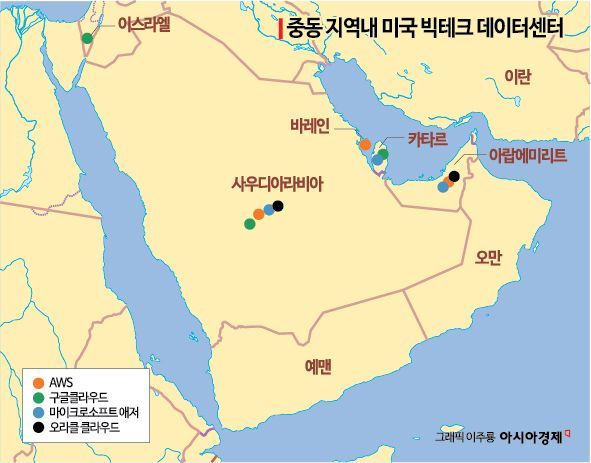
The potential for military attacks on cloud infrastructure, which has become an essential element in corporate management, is also a new variable. Already, a fire caused by falling debris occurred near an Amazon Web Services (AWS) data center in the United Arab Emirates (UAE), and some AWS regions have reported connectivity issues. Although AWS stated that only certain services were affected and that recovery efforts are underway, concerns remain.
Past incidents where issues with AWS led to major disruptions for airlines and media organizations serve as reminders that such concerns could become a reality at any time.
AWS has not specified whether the recent incident was caused by a military attack, but in the current climate of heightened tensions in the Middle East, it demonstrates how geopolitical risks can become a variable in the operation of global IT infrastructure.
Data centers have previously prepared for natural disasters and power outages, but the possibility of military conflict has generally been considered a low-probability event. For this reason, the vulnerability of data centers in wartime scenarios is now being highlighted.
Some observers are focusing more on the potential for cyber infiltration via the supply chain than on direct military strikes. Global companies are heavily dependent on cloud services, managed service providers (MSPs), and software-as-a-service (SaaS) solutions. Even if a particular company is not attacked directly, a breach affecting a partner or service provider could result in indirect damage.
A security industry insider stated, "Recent attacks increasingly target managed service providers or cloud accounts before going after a single company directly. Such attempts are likely to increase amid geopolitical conflicts."
Recently, the Middle East has attracted attention as a destination for major investments by global big tech companies in AI data centers. High-performance GPU clusters and large-scale computing infrastructure are being established one after another. The U.S. government has authorized the supply of Nvidia GPUs to its allies in the Middle East, such as the UAE and Saudi Arabia. Microsoft is pushing ahead with the installation of large-scale data centers. Should attacks by the U.S. and Israel on Iran spark anti-American sentiment across the region, these investments and export authorizations could also be affected.
AI data centers are highly concentrated in terms of power, cooling, and networking. When failures occur, recovery can require a long time and lead to service delays. This is why companies need to be thoroughly prepared.
© The Asia Business Daily(www.asiae.co.kr). All rights reserved.