Global Security Concerns on the Rise
Macron: "Modernizing Nuclear Deterrence"
Calls for 'T-Dome' in Taiwan
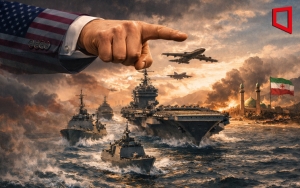
As the armed conflict between the United States and Iran shows signs of prolonged escalation, concerns over security are spreading across Europe and Asia. France has officially announced plans to strengthen its nuclear forces for the first time in over 30 years, while security experts in Taiwan are calling for a rapid build-up of its air defense network.
![France Expands Nuclear Arsenal... Taiwan Urgently Needs Air Defense Network [US-Iran War]](https://cphoto.asiae.co.kr/listimglink/1/2026030311000759197_1772503206.jpg)
According to the Associated Press and other sources, on March 2 (local time), French President Emmanuel Macron visited the Ile-Longue naval base in Brittany, western France, where he stated, "It is the President's responsibility to ensure that our nuclear deterrent retains its credible destructive power both now and in the future," adding, "We will continue to modernize and strengthen our nuclear deterrence capabilities." This statement is being interpreted as a de facto shift away from the reduction policy maintained since the end of the Cold War.
President Macron emphasized the need to strengthen Europe's strategic autonomy, citing Russia’s invasion of Ukraine, China’s military build-up, and the possibility of a shift in U.S. security priorities. After the end of the Cold War, France gradually reduced its nuclear warheads from over 500 to an estimated 290 today. However, France has now adopted a policy of not disclosing the exact number of nuclear warheads it possesses, unlike in the past.
France is also considering expanding the scope of nuclear deterrence cooperation with other European countries. Currently, the only countries in Europe possessing nuclear weapons are the United Kingdom and France, while U.S. tactical nuclear weapons are deployed in some North Atlantic Treaty Organization (NATO) member states, including Germany, Belgium, the Netherlands, and Italy. With France mentioning the 'Europeanization' of its nuclear forces, calls for Europe’s own nuclear umbrella are likely to gain further momentum.
Meanwhile, in Taiwan, which faces military pressure from China, a heightened sense of security crisis has emerged. According to the South China Morning Post (SCMP), there is a growing call in Taiwan to reinforce its multi-layered air defense system, dubbed the "Taiwan Iron Dome" (T-Dome), following the U.S. airstrikes on Iran.
Zhou Y?ping, a retired air force officer, told SCMP, "This conflict has shown that integrated intelligence networks and electronic warfare superiority determine the battlefield," adding, "Taiwan must strengthen its intelligence, surveillance, and reconnaissance (ISR) systems and command and control capabilities." Su Tzy-yun, chief analyst at the Institute for National Defense and Security Research (INDSR) under Taiwan’s Ministry of National Defense, also stated, "It is more urgent than ever to build a multi-layered defense network and enhance resistance to jamming to counter China’s complex missile and drone threats."
There is also growing attention within online communities to the performance of Iran’s air defense systems. According to SCMP, some netizens have linked the stalled passage of Taiwan’s special national defense budget-including funding for a multi-layered air defense system-to this issue, with multiple posts urging the opposition to stop blocking the bill. Since pro-independence Taiwanese President Lai Ching-te announced the bill late last year, the opposition has blocked its passage, citing the need for oversight and review of fiscal priorities.
© The Asia Business Daily(www.asiae.co.kr). All rights reserved.