"Strengthening Human Rights Competencies of School Members
and Improving Support Systems"
The National Human Rights Commission of Korea has recommended a "human rights-friendly school policy" focused on redesigning school environments with human rights at the center.
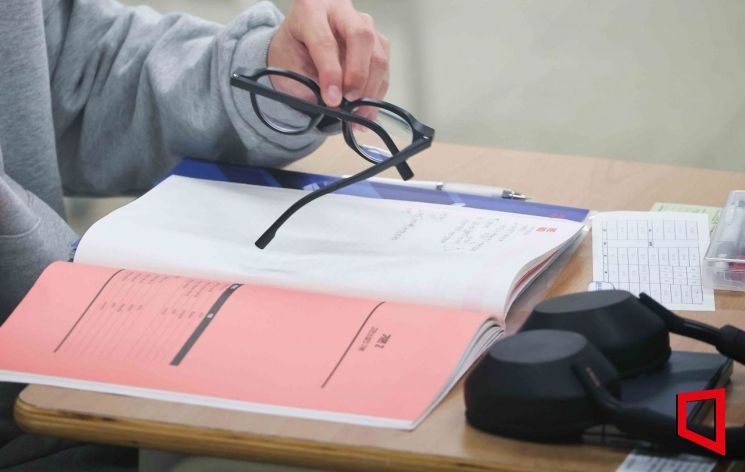 On the morning of November 13, last year, when the 2026 College Scholastic Ability Test was conducted, examinees were preparing for the exam at Yongsan High School in Yongsan-gu, Seoul. Photo by Joint Press Corps
On March 3, the commission announced that it had recommended the "human rights-friendly school policy" to the Minister of Education and the superintendents of education in all 17 metropolitan and provincial regions on February 12. This recommendation was developed through expert consultations and by gathering opinions from relevant organizations.
The commission identified strengthening the human rights competencies of school members as a key task. It emphasized the need to institutionalize human rights education for all school members, enhance teacher training, guarantee student participation in the school management committee, and establish the legal basis for autonomous bodies such as student councils, teacher councils, and parent associations. The commission also stressed the importance of improving the human rights-based school evaluation system to comprehensively assess the overall school culture.
The commission also pointed out the need to improve the system supporting educational activities. It called for the enhancement of a "customized integrated support" system for students experiencing difficulties in learning, emotions, or behavior, and for the deployment of professional staff to distribute responsibilities that are currently overly concentrated on teachers. Proposals were also made to strengthen special education within general schools, such as securing sufficient special education teachers and relaxing criteria for establishing special classes.
Furthermore, the commission recommended resolving school conflicts through alternative dispute resolution bodies at the education office level, rather than relying on judicial procedures, and restructuring student guidance to focus not only on prohibiting corporal punishment but also on safeguarding human rights. Additionally, it emphasized the need to explicitly define the rights of students and teachers, and to establish institutional measures to address issues such as teachers' health rights, work burden, and workplace harassment.
A commission official stated, "We hope this recommendation will be reflected in relevant laws and policies, serving as an opportunity to guarantee the human rights of all school members."
© The Asia Business Daily(www.asiae.co.kr). All rights reserved.