FKI Releases Report on 'K-GX and Transition Finance Activation'
2035 NDC and 4th ETS Allocation Confirmed
Corporate Costs Estimated at 26.9 Trillion Won for 2026?2030
Steel, Semiconductors, and Oil Refining Among Most Impacted Sectors
The Federation of Korean Industries (FKI) has estimated that, due to the '2035 National Greenhouse Gas Reduction Target (NDC)' and the 4th Emissions Trading Scheme (ETS) Allocation Plan, both finalized at a Cabinet meeting on November 11, Korean companies will face emissions permit purchase costs totaling 26.9 trillion won over the next five years (2026-2030).
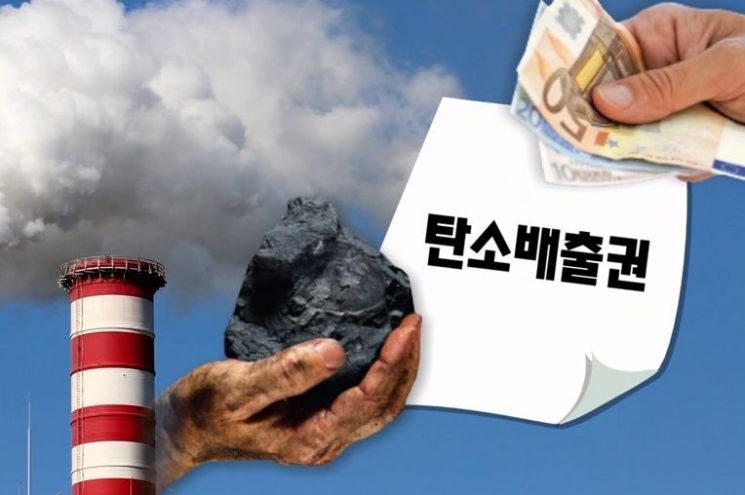
On December 3, FKI announced this outlook in its report titled 'Policy Tasks for K-GX Implementation and Transition Finance Activation.' The report was published on November 26. In the report, FKI also proposed policy measures related to transition finance as a way to ease the burden on the industrial sector.
Previously, the Korean government confirmed the NDC at a Cabinet meeting and significantly strengthened the greenhouse gas reduction obligations for industry. The 2035 NDC aims to reduce total greenhouse gas emissions by 53-61% compared to 2018 levels by 2035, with the industrial sector assigned a reduction target of 24.3-31%. Furthermore, the pre-allocated amount of emissions permits for industry during the 4th ETS period (2026-2030) has been reduced by 18.6% compared to the 3rd period (2021-2025).
As a result, the business community forecasts that the financial burden on companies related to emissions permits will increase, as the proportion of permits allocated through paid auctions rises and the number of free allocations decreases. FKI specifically noted that the cost burden for emissions permits in the power generation sector could drive up electricity rates through climate and environmental charges, resulting in a double burden for industry.
According to FKI's report, among the key industries in which Korean companies are most active, the steel sector is expected to bear the highest cost for purchasing emissions permits, estimated at approximately 1.3756 trillion won. This is followed by semiconductors (914.7 billion won), oil refining (914.7 billion won), petrochemicals (435.2 billion won), and cement (215.6 billion won).
The report also emphasized the need for a public-private partnership transition finance ecosystem to support the shift of high-carbon-emitting industries to clean energy. The Korean government identified transition finance as a key policy to strengthen industrial carbon competitiveness in its national agenda announced in September, and plans to establish 'transition finance guidelines' by next year. FKI argued that to fully relieve the burden on companies, both the public and private sectors must work together, not just the government alone.
To this end, FKI explained that, at the initial stage of market formation for transition finance, government-led policy finance should be activated, referencing Japan's example. The core idea is to raise funds needed for carbon reduction and related projects using public resources, such as government bond issuance. In Japan, since 2021, the government has established guidelines for transition finance and has actively utilized financial support measures such as interest subsidies. Notably, Japan's largest issuer of transition bonds is its own government, which became the world's first to issue 1.6 trillion yen in national bonds for this purpose in 2024. Japan is also pursuing the issuance of a total of 20 trillion yen in government bonds over the 10 years starting in 2023.
However, FKI added that policy finance alone may have fiscal limitations in meeting the demand for carbon-neutral investments, so in the medium to long term, private capital participation in the market must be encouraged. Japan is also using policy finance to help raise a total of 150 trillion yen in transition finance from the private sector over the next 10 years, starting in 2023. The European Union (EU) is utilizing public-private partnership finance by allocating an additional 50 billion euros to its internal financial program 'InvestEU' and leveraging the fundraising mechanisms of sub-funds such as the EFSI to attract private capital.
FKI also predicted that many companies would face difficulties in developing concrete plans related to the ETS and stressed that the government should proactively establish industry-specific roadmaps to serve as guidelines for transition planning. FKI suggested that Korea should look to Japan's example, where roadmaps have been created for the 10 major industries, including steel and petrochemicals, to help companies develop their own transition plans.
FKI further proposed that a portion of the revenue the government collects from paid allocations in the ETS should be used as funding for transition finance. The EU has clearly designated the use of fiscal revenues from paid allocations in the ETS for innovation funds, modernization funds, and social funds. The Japanese government has also announced plans to use revenue from paid allocations in the ETS, which is scheduled to be introduced in 2026, as a repayment source for transition bonds.
Lee Sangho, Head of the Economic and Industrial Division at FKI, stated, "In the short term, high-emission industries facing difficulties in reducing greenhouse gases are confronted with the burden of transition costs to comply with climate policies. Policy support to activate transition finance is needed so that Korean companies can smoothly develop innovative technologies and secure international competitiveness."
© The Asia Business Daily(www.asiae.co.kr). All rights reserved.