National Assembly Approves Motion to Arrest Choo Kyungho
Decision on Detention Expected Next Week
Ruling Party to Press for Dissolution if Detained
Dismissal Would Offer Opposition a Chance to Overcome Rebellion Narrative
The decision on whether to detain Choo Kyungho, a lawmaker from the People Power Party who is accused of obstructing the National Assembly's vote to lift martial law during the 12·3 Martial Law, will be made next week. As the fate of the party hinges on whether it faces dissolution or overcomes the rebellion narrative depending on Choo's detention, tension is mounting within the People Power Party.
On the 27th, the National Assembly passed the motion to arrest Choo Kyungho, led by the Democratic Party of Korea, with 172 votes in favor, 4 against, 2 abstentions, and 2 invalid votes. The People Power Party left the chamber and did not participate in the vote. As a result, whether Choo will be detained depends on the court's pretrial detention hearing. Political circles expect the hearing to take place on December 1 or 2, with a decision likely to be made on the anniversary of the martial law on December 3.
Previously, the special prosecutor for the rebellion case requested an arrest warrant for Choo Kyungho on charges of participating in important duties related to the rebellion. Choo, who was the floor leader of the People Power Party at the time of the martial law declaration on December 3 last year, is accused of changing the location of the party caucus to prevent lawmakers from participating in the vote to lift martial law. Choo, however, maintains that he was unaware of the martial law in advance and that changing the caucus location was unavoidable due to restricted access to the National Assembly at the time.
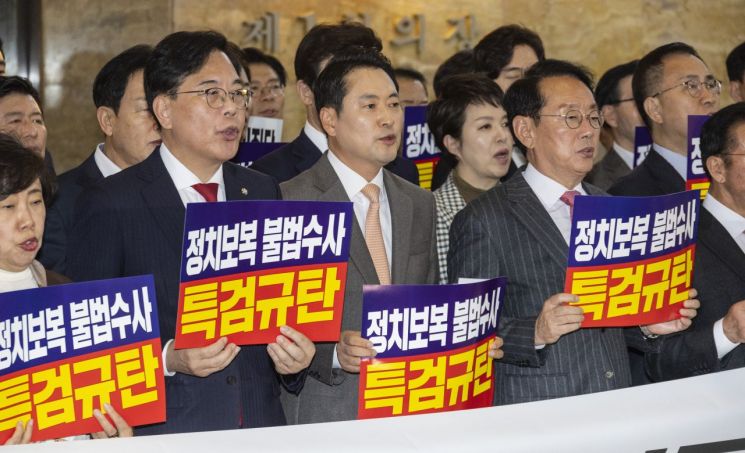
The People Power Party expects the arrest warrant to be dismissed. This expectation is based on the fact that courts previously dismissed arrest warrants for former Prime Minister Han Ducksoo, former Justice Minister Park Sungjae, and former Prime Minister Hwang Kyoahn. Choi Sujin, the People Power Party's chief spokesperson for the floor, said after a party strategy meeting, "There was not a single case where the vote on martial law was actually obstructed, so I believe most of the warrants will be dismissed."
If the arrest warrant is dismissed, the party may find a way to escape the rebellion narrative. The situation could shift to the argument that the ruling party has been oppressing the opposition with an excessive 'rebellion witch-hunt,' allowing the party to intensify its offensive against the government and the ruling party. There is also hope that this could help boost the party's stagnant approval ratings. A member of the People Power Party leadership commented, "This will be a key turning point to respond effectively to the Democratic Party's rebellion offensive. The previously scattered attacks on the ruling party will also gain momentum."
On the other hand, if Choo is detained, the party will face a critical survival crisis. The pressure from the ruling party to dissolve what it claims is an unconstitutional party is likely to intensify. Jeong Cheongrae, leader of the Democratic Party of Korea, warned at a leadership meeting that "If even Choo Kyungho, a key party official, is detained, public calls for dissolving the unconstitutional party will grow louder." There is also a possibility that the prosecution's investigation will expand to other lawmakers. In this case, the party may be forced to fight an uphill battle under the rebellion narrative until next year's local elections.
Since the decision on detention coincides with the first anniversary of the martial law, it is expected to be a major variable in the party's strategy. As internal disagreements erupt over whether and how to apologize for the martial law, Jang Donghyuk, leader of the People Power Party, continues to deliberate on the party's message for the anniversary. If the arrest warrant is dismissed, the party is expected to focus more on attacking the ruling party rather than issuing a public apology, and with greater freedom of action, it may seek to broaden its support base. A two-term People Power Party lawmaker said in a phone interview, "It is not a simple issue because we need to defend against the Democratic Party's rebellion narrative while also reflecting and reforming. The leadership's concerns must be deep."
© The Asia Business Daily(www.asiae.co.kr). All rights reserved.