Centered on Stakeholders Rather Than Experts
High Risk That Committees Will End With Members Merely Repeating Their Own Arguments
Expert Advisors Needed to Support Committee Deliberations
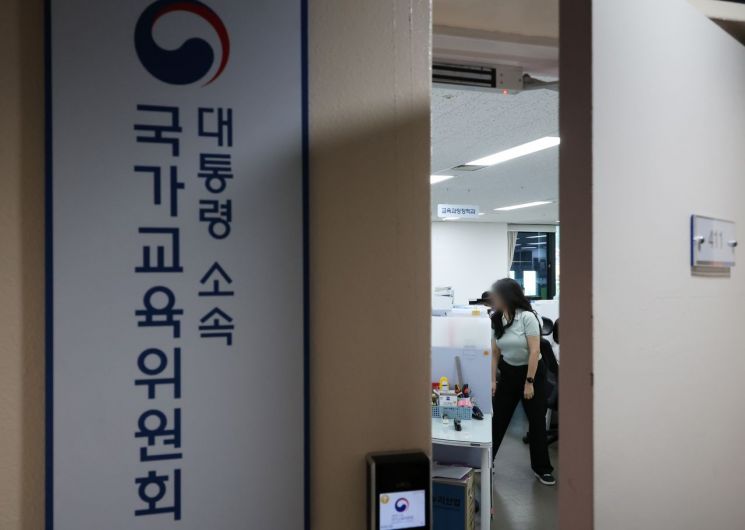
The National Education Commission is accelerating the formation of nine special committees, but concerns have been raised that the effectiveness of their operations may be compromised due to the lack of "expert advisors (offices)" to support the activities of these committees. There are criticisms that operating special committees centered solely on stakeholders representing field opinions makes it difficult to set agendas and reach consensus, highlighting the need for a professional support system capable of comprehensively analyzing budgets, laws, and policies.
On the 26th, Lee Deoknan, Head of the Education and Culture Team at the National Assembly Research Service (former President of the Korean Society of Educational Law), said in an interview at the National Assembly Research Service in Yeouido, "For the nine special committees to achieve meaningful results, there must be expert advisors who have a comprehensive understanding of education budgets, laws and systems, and policies."
Currently, the National Education Commission has "Expert Committees, Special Committees, and the Public Participation Committee," but these are merely categorized by topic and do not serve as organizations capable of policy analysis and coordination required during actual discussions. Lee emphasized that, in order to prevent special committees composed of various stakeholders from operating in a disorganized manner, it is essential to have educational experts who can provide objective analysis and neutral policy opinions.

He expressed concern that if committees continue to be composed mainly of field stakeholders, the members might simply repeat their own arguments and the six-month activity period could end without progress. He pointed out that, in some cases, the composition of certain special committees seems more like a gathering of stakeholders than of "education experts." For example, the Early Childhood Education Special Committee, launched on the 25th, brought together individuals who had previously participated in the National Assembly's early childhood private education forums, while the High School Education Special Committee, which is set to discuss improvements to the high school credit system, includes many teachers who have opposed the credit system.
Lee stated, "Not only the members of the National Education Commission's special committees but also the expert advisors often more strongly represent specific groups than demonstrate educational expertise," adding, "Since these are not positions meant to represent particular political factions or organizations, it is necessary to have personnel with expertise that encompasses budgets, laws, and policies."
He further explained that the role of expert advisors needed by the National Education Commission is "similar to that of expert advisors in the National Assembly's standing committees," stating, "They should analyze the vast information from the executive branch, provide objective and neutral reports, and based on these, the special committees should conduct their discussions."
He emphasized, "Just as expert advisors in the National Assembly's standing committees are responsible for core support such as reviewing bills in their areas of expertise, there must be personnel who can perform these key functions. Only when they provide reports that are objective, neutral, and professional can the special committees carry out meaningful activities." He added, "If the committees continue to operate in a way where members simply participate as representatives of their own groups and then leave, the special committees could end up like a 'Bongsunga Hakdang' (a term referring to a disorganized or ineffective group)."
Meanwhile, the National Education Commission completed the formation of the "High School Education Special Committee" on October 28, followed by the "Talent Powerhouse Special Committee" on November 4, the "Higher Education Special Committee" on November 18, and the "Early Childhood Education Special Committee" on November 25. The formation of the remaining committees-Restoration of the School Community, Education in the AI Era, University Admissions System, Democratic Citizenship Education, and Humanities and Social Sciences Special Committees-will be completed soon. The National Education Commission plans to incorporate the outcomes from the nine special committees into the draft of the mid- to long-term National Education Development Plan, which is scheduled to be announced in September next year.
© The Asia Business Daily(www.asiae.co.kr). All rights reserved.