Across Mexico, anti-government protests have erupted, led primarily by Generation Z-young people in their 20s and 30s born in the mid-to-late 1990s and early 2000s.
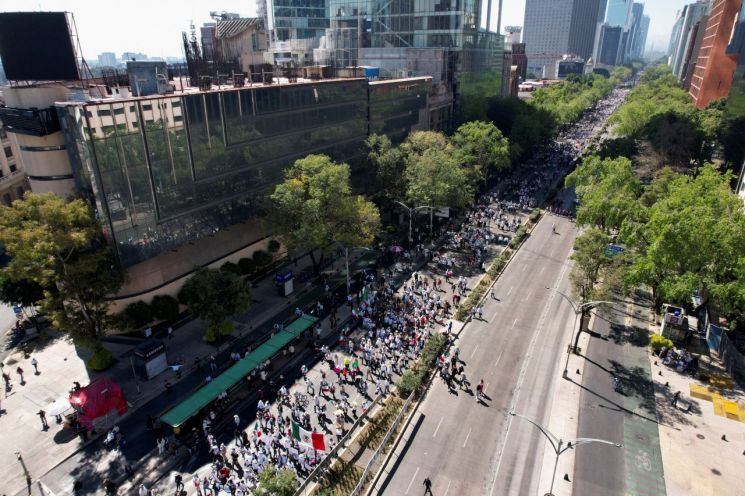 On the 15th (local time), anti-government protests are taking place in Mexico City, the capital of Mexico. Photo by Reuters Yonhap News
According to major foreign media outlets such as the Associated Press on the 15th (local time), thousands of people participated in large-scale anti-government demonstrations throughout Mexico, including the capital, Mexico City.
This protest was spearheaded by Generation Z youth, with opposition-leaning middle-aged and older adults joining in, expanding its scale. The demonstrators criticized the surge in violence by drug trafficking cartels, the government's inadequate response, and corruption within the political establishment.
In particular, anger was further fueled by the shooting death of Carlos Manso, the mayor of Uruapan in Michoac?n state, on November 1. He had been an outspoken advocate for a tough response to cartel violence.
In Mexico City, some masked protesters toppled security barriers set up around the presidential palace, while police used tear gas to forcibly disperse the crowd. A total of 120 people were injured in the protests, including 100 police officers, and about 20 protesters were reportedly arrested on charges such as illegal assembly.
The group leading the protests, called "Generation Z Mexico," stated on social media, "We do not support any political party. We represent young Mexicans who are exhausted by violence, corruption, and abuse of power."
Meanwhile, President Sheinbaum of Mexico claimed that the conservative opposition is systematically inciting Generation Z protests. On the other hand, political and business figures such as former President Vicente Fox and Mexican tycoon Ricardo Salinas Pliego expressed support for the demonstrations.
© The Asia Business Daily(www.asiae.co.kr). All rights reserved.