Meeting with Syrian President Held Behind Closed Doors
Syria: Essential for Realizing the Middle East Peace Initiative
■ Broadcast: The Asia Business Daily 'So Jongseop's Current Affairs Show'
■ Host: Political Specialist So Jongseop
■ Producer: PD Ma Yena
■ Guest: Reporter Lee Hyunwoo
Ahmed Alshara, the President of Syria and a former Al-Qaeda fighter, made a historic first visit to the White House. This marks the first time a Syrian president has visited the White House, and the fact that he is a former member of a terrorist organization has caused a major stir in American society. Right-wing groups, who form the core base of support for President Trump, strongly opposed the meeting, but Trump made a bold decision for what he described as a greater vision of Middle East peace.
Controversy Over Al-Qaeda Background... Entire Meeting Held Behind Closed Doors
![Former Al-Qaeda Leader Makes Historic White House Visit... Why Trump Reached Out [Current Affairs Show]](https://cphoto.asiae.co.kr/listimglink/1/2025111416231718539_1763104996.jpg) On the 10th (local time), U.S. President Donald Trump (left) greeted Syrian President Ahmed Alshara (right) during his visit to the White House. Photo by AP Yonhap News
On the 10th (local time), U.S. President Donald Trump (left) greeted Syrian President Ahmed Alshara (right) during his visit to the White House. Photo by AP Yonhap News
President Alshara's past is at the center of controversy. Born into a wealthy Syrian family that emigrated to Saudi Arabia, he grew up in a secular environment among the intellectual class of the Middle East. However, the September 11 attacks in 2001 and the subsequent Iraq War completely changed the course of his life. Immersed in the anti-American sentiment spreading among Middle Eastern youth at the time and drawn to Islamic fundamentalism, he dropped out of university and volunteered to join Al-Qaeda's Iraq branch.
After serving as a fighter for about five years, he was captured by U.S. forces in a 2006 battle and held in a detention camp for five years. Upon his release, he returned to Syria to participate in the civil war and was active in organizations affiliated with Al-Qaeda. However, 2016 marked a turning point as the group he belonged to officially severed ties with Al-Qaeda. He then consolidated several Syrian rebel groups to form Hayat Tahrir al-Sham (HTS), and in December 2024, he succeeded in overthrowing the Al-Assad regime and taking power.
Because of this background, he was listed on the U.S. terrorist watchlist. President Trump only removed his name from the list two days before Alshara's arrival in the United States for the meeting. In addition, rather than using the main entrance typically reserved for foreign heads of state, he was directed to use a side entrance at the White House, a clear effort to avoid excessive public attention on the meeting.
Syria: Essential for Trump's Middle East Peace Initiative
![Former Al-Qaeda Leader Makes Historic White House Visit... Why Trump Reached Out [Current Affairs Show]](https://cphoto.asiae.co.kr/listimglink/1/2025111416261818546_1763105177.jpg)
The reason President Trump took on such a significant political risk by inviting President Alshara is clear. Syria occupies a pivotal position for advancing U.S. strategic interests in the Middle East. For the Trump administration's efforts to broker a ceasefire between Israel and Hamas and realize a broader Middle East peace plan to succeed, Syria must remain under a pro-American government.
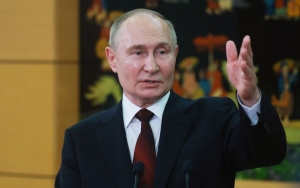
Under the previous Al-Assad regime, Syria was a pro-Russia and pro-Iran state. Russia leased Syrian air and naval bases, gaining a foothold for involvement in regional conflicts, and in return, provided military protection for the Al-Assad regime. In effect, Syria played the most crucial role in Russia's Middle East strategy.
However, with the collapse of the Al-Assad regime, the situation has changed. The current Syrian interim government has stated that it will temporarily maintain the lease agreements with Russia, but in reality, there is a strong possibility of shifting toward a pro-American stance. This is because, for Syrian rebel forces, Russia has long been the nation supporting their adversaries. If cooperation with the United States deepens, it is expected that the existing agreements will naturally be dissolved.
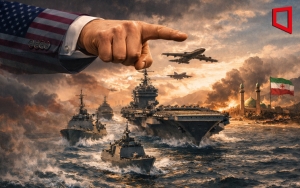
If Syria establishes itself as a pro-American government or at least as a neutral state between the U.S. and Russia, it could serve as a vital buffer zone to prevent further escalation in the Middle East. Numerous pro-Iranian militias are based around Syria, and a pro-American Syrian government could significantly curb their activities. It would also help block Russian and Iranian military intervention in the region, thereby greatly improving regional stability.
Recently, Syria has been actively pursuing a pro-Western policy. In March, it announced a new constitution and declared its intention to adopt open and secular policies. The government has proclaimed a break from Islamic fundamentalism and appointed female ministers, aiming to become a modern and pragmatic state like Turkiye or Dubai. Democratic elements such as the separation of powers and women's rights have been strengthened compared to the previous regime, earning international praise.
However, there are still causes for concern. The law requiring public officials to be Muslim remains in place, and the president retains the authority to directly appoint 30% of all members of parliament. While the Syrian government describes these as 'transitional measures,' there is criticism that the country still falls short of being a true democracy. If the regime changes or a coup occurs, these laws could potentially be abused as tools of dictatorship.
Above all, Syria's political foundation remains fragile. The current ruling force, HTS, is not a single unified organization but a coalition of hundreds of Islamic fundamentalist groups and militias. Given the wide spectrum, it is uncertain how long this integration can last. Furthermore, while the regime change in Syria took place as Russia and Iran were preoccupied with the war in Ukraine and tensions with Israel, there is a high likelihood that these two countries will intervene in Syrian affairs again once their external issues are resolved.
Domestic Backlash and Sanctions on Syria... Many Hurdles Remain
![Former Al-Qaeda Leader Makes Historic White House Visit... Why Trump Reached Out [Current Affairs Show]](https://cphoto.asiae.co.kr/listimglink/1/2025111416285218547_1763105332.jpg)
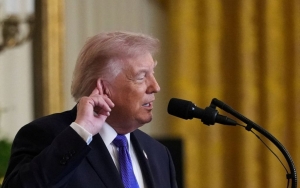
President Trump's decision has sparked intense controversy within the United States. In particular, right-wing groups-Trump's core supporters who chant "Make America Great Again (MAGA)"-are vehemently opposed. For them, issues related to Islam are highly sensitive, and the fact that a former Al-Qaeda member entered the White House was a shock of a different magnitude.
The bigger challenge is Congress. The so-called 'Caesar Act,' a sanctions law against Syria enacted in 2019, remains in effect. This law imposes powerful sanctions not only on countries that engage in direct financial or arms transactions with Syria but also on third parties through secondary boycotts. The problem is that normalization of diplomatic relations between the U.S. and Syria is only possible if this law is lifted, but it cannot be repealed by presidential authority alone.
With congressional approval required, the Democratic Party is naturally opposed, and even a significant number of Republicans are negative. The Trump administration is trying to persuade Congress by arguing that the Syrian interim government is pursuing a pro-Western course and that President Alshara is not the same as he was in the past, but hardline conservatives remain unconvinced. Criticism has even emerged, questioning, "How can you make political deals with such people?"
The deepening partisan divide in American politics is also a major obstacle. Recently, the government barely avoided a shutdown through a last-minute agreement, making it unlikely that the Democrats will support any Syria-related legislation. If diplomatic normalization stalls, the Syrian government may not wait for U.S. support and could turn back to Russia. In that case, President Trump's Middle East peace initiative could be at risk of falling apart. Amid the complex dynamics of the Middle East, the direction Syria will take depends on developments in the coming months.
![Former Al-Qaeda Leader Makes Historic White House Visit... Why Trump Reached Out [Current Affairs Show]](https://cphoto.asiae.co.kr/listimglink/1/2025111416291018548_1763105350.jpg)
© The Asia Business Daily(www.asiae.co.kr). All rights reserved.