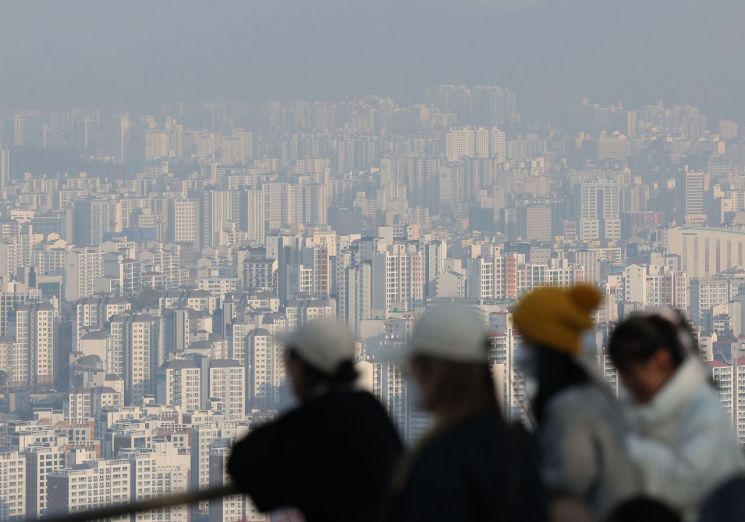
Last year, the homeownership rate among households in South Korea reached its highest level since national statistics began to be compiled. Nearly 1 million individuals purchased at least one home in 2024, but among the 20s and 30s age groups-those typically seeking to buy their first home-the number of homeowners declined for the third consecutive year.
According to the "2024 Housing Ownership Statistics" released by the National Data Office on November 14, the average price of homes in the top 10% by officially assessed value was 1.34 billion won (market price approximately 1.942 billion won), an increase of about 90 million won from the previous year.
In contrast, the bottom 10% averaged 30 million won (market price about 43 million won), a decrease of 1 million won. The average price of the top 10% was 44.7 times that of the bottom 10%, up from 40.5 times in 2023, indicating that the gap between expensive and inexpensive homes has widened.
The proportion of households owning a home was 56.9% as of November 1, 2024, up 0.5 percentage points from 56.4% in 2023. This is the highest figure since related statistics began in 2015, when the rate was 56%.
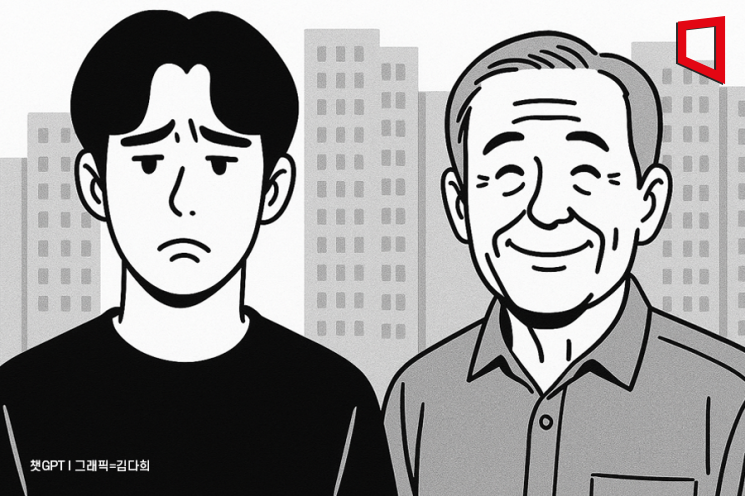
The household homeownership rate has shown an upward trend as demand for homeownership has steadily increased. However, for households headed by someone in their 30s, the rate was 36% last year, down 0.6 percentage points from 36.6% the previous year. For those under 30, the rate was 9.4%, nearly 1 percentage point lower than the previous year's 10.3%.
Homeownership rates increased in all age groups above 40, but only the 20s and 30s saw a decline. The homeownership rates for those in their 40s (60.3%), 50s (65.1%), 60s (67.9%), 70s (71%), and those aged 80 or older (64.3%) all reached record highs.
The National Data Office explained, "The trend of declining homeownership among those under 40 and increasing rates among those 50 and older has continued for three consecutive years. In addition to structural factors such as population decline among those under 30 and in their 40s, high housing prices have made it more difficult for younger age groups with relatively less financial capacity to own homes."
In the year leading up to November 1, 2024, a total of 818,000 people who previously did not own a home became homeowners. Meanwhile, 365,000 people went from being homeowners to not owning a home.
Of all homeowners in 2024 (15,976,000 people), the majority-13,599,000 people, or 85.1%-owned only one home. Those owning two or more homes numbered 2,377,000, accounting for 14.9%, a decrease of 0.1 percentage points from the previous year. The proportion of female homeowners was 46.4%, up 0.2 percentage points from the previous year.
As of November 1, 2024, 1,113,000 people purchased at least one home in the previous year. For the second consecutive year, the number of annual home buyers exceeded 1 million.
Of these, 1,068,000 people (95.9%) bought one home, 33,000 (3.0%) bought two homes, and 5,000 (0.4%) bought three or more homes.
818,000 people moved from being non-homeowners to homeowners.
Meanwhile, 641,000 people saw their number of owned homes decrease, and 365,000 people went from being homeowners to non-homeowners.
The total number of homeowners stood at 15,976,000, an increase of 357,000 people (2.3%) from the previous year. The number of homes owned by these individuals reached 17,058,000, up by 316,000 units (1.9%).
© The Asia Business Daily(www.asiae.co.kr). All rights reserved.