Discussion on Building U.S. Navy Vessels in South Korea
Meaningful Progress on Uranium Enrichment
and U.S. Support Secured for Spent Nuclear Fuel Reprocessing
U.S. Investments to Proceed Within South Korea's Economic Capacity
White House Also Releases Joint Fact Sheet
Auto Tariffs Formalized, Approval for Nuclear Submarine Construction
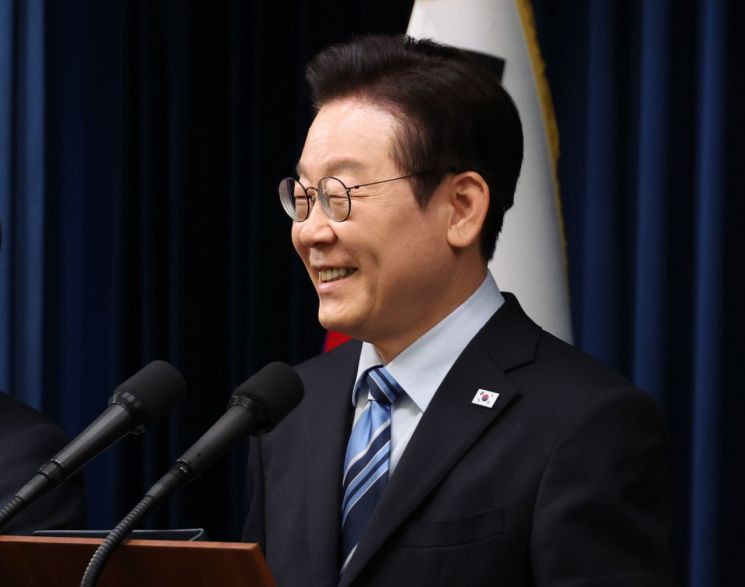
On November 14, President Lee Jaemyung personally announced the results of the "Joint Fact Sheet (JFS)"-the outcome of the South Korea-U.S. trade and security negotiations-at the presidential office in Yongsan, stating, "South Korea and the United States have agreed to pursue the construction of nuclear-powered submarines." President Lee's direct presentation of the fact sheet during a live broadcast was not originally scheduled, reflecting the significance of this agreement.
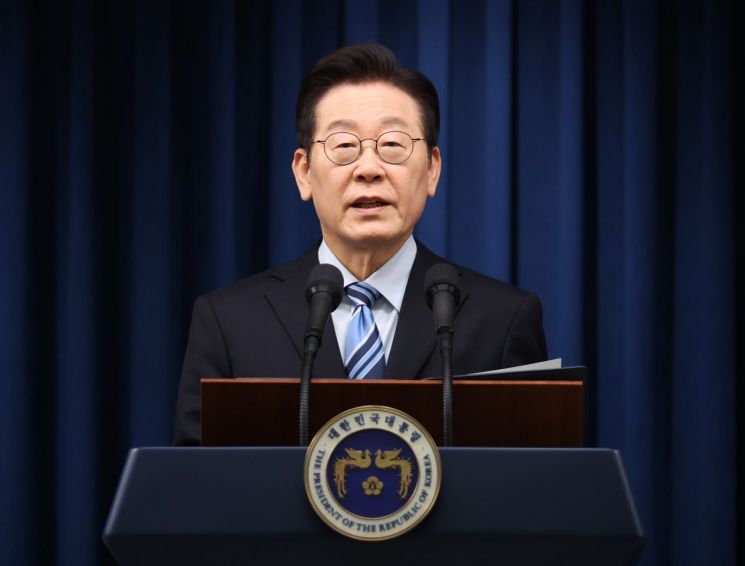
On this day, President Lee said, "The joint fact sheet, which contains the agreements reached during the last two South Korea-U.S. summits, has been finalized," adding, "As a result, the long-standing variables in our economy and security-namely, the South Korea-U.S. trade negotiations and security consultations-have been conclusively settled."
President Lee stated, "Due to internal strife and the resulting national and social turmoil, South Korea started trade tariff negotiations later than other countries. However, based on the solid trust of the South Korea-U.S. alliance, we demonstrated mutually beneficial wisdom grounded in mutual respect and understanding," adding, "Both South Korea and the United States have achieved the best possible outcome based on common sense and reason."
He dismissed concerns about potential economic shocks from the South Korea-U.S. trade agreement, which includes a $350 billion investment fund for the United States. President Lee explained, "Both governments have confirmed that investments will proceed only within a range our economy can sufficiently bear and only for commercially viable projects," adding, "Worries in some quarters that these investments amount to de facto grants disguised as investments in projects with little prospect of joint returns have been clearly dispelled." He also stated that the partnership will be expanded to include sectors such as nuclear power, artificial intelligence (AI), semiconductors, and future high-tech industries, including shipbuilding.
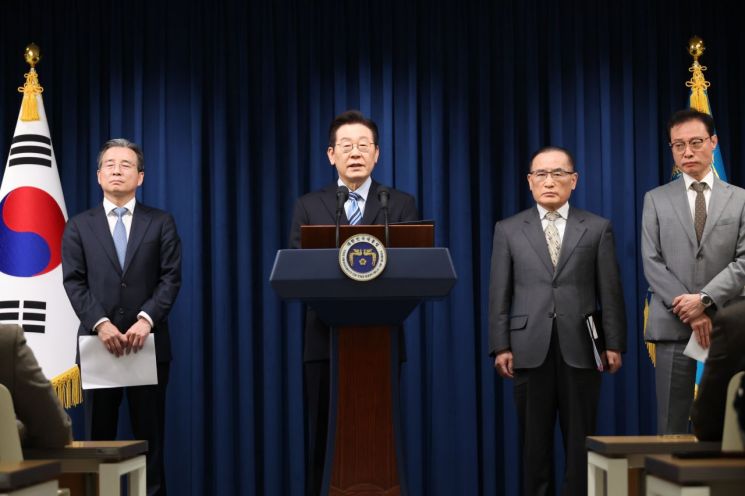
Regarding South Korea’s long-cherished goal of constructing nuclear-powered submarines, President Lee said that the two countries have reached a consensus. In particular, they agreed to seek institutional improvements to allow the construction of U.S. Navy vessels in South Korea. President Lee said, "We have also succeeded in securing U.S. government support for expanding our authority over uranium enrichment and spent nuclear fuel reprocessing," adding, "I consider this a very meaningful advancement."
In this regard, the Donald Trump administration in the United States also officially announced on November 13 (local time), "The United States has approved South Korea's construction of nuclear-powered submarines." The White House stated this in the joint fact sheet of the South Korea-U.S. summit posted on its website. The White House added, "To advance the requirements of this shipbuilding project, including fuel procurement, the United States will closely cooperate with South Korea." Furthermore, the White House stated, "Within the framework of the South Korea-U.S. nuclear cooperation agreement and in compliance with U.S. legal requirements, the United States supports procedures leading to South Korea's peaceful use of civilian uranium enrichment and spent nuclear fuel reprocessing."
President Lee said, "We have agreed to seek institutional improvements to allow not only U.S. merchant ships but also U.S. Navy vessels to be constructed in South Korea." He further stated, "The United States has once again reaffirmed its firm commitment to the continued stationing and expansion of extended deterrence for U.S. Forces Korea," adding, "We have declared our proactive role in the defense of the Korean Peninsula through strengthened national defense and the transfer of wartime operational control, and the United States has strongly expressed its support for this position."
This is the first time in 107 days since the conclusion of the tariff negotiations that the South Korean and U.S. authorities have agreed on specific implementation methods. On July 30, the two countries reached a broad agreement on tariff negotiations. The South Korean government proposed a $150 billion shipbuilding-exclusive "MASGA (Make American Shipbuilding Great Again)" project and a $350 billion investment fund for the United States, while the United States agreed to lower reciprocal tariffs from 25% to 15%. However, details such as how the fund would be managed and which items would be subject to tariff reductions had not been finalized.
The specifics of the negotiations were dramatically settled during a summit between President Lee Jaemyung and U.S. President Donald Trump on the sidelines of the 2025 Asia-Pacific Economic Cooperation (APEC) summit on October 29. The agreement was reached on the contentious issue of the proportion of cash investment in the U.S. investment fund. The South Korean side insisted on limiting cash investment to $15 billion per year, while the United States maintained a cap of $25 billion. Although differences remained until the day before the summit, the United States proposed a limit of $20 billion per year on the day of the meeting, which accelerated the negotiations.
However, President Lee cautioned that the conclusion of the trade and security consultations is "just the beginning," stating, "The silent war among nations to protect their national interests will continue. It is clear that the uncertainties of the international community will not be resolved in the short term."
President Lee continued, "All the more, we need the bold courage and meticulous preparation demonstrated during the South Korea-U.S. negotiations," emphasizing, "We must strengthen our national power, protect our national interests, and improve the lives of our people based on our united strength." He added, "The government will vigorously expand the horizons of diplomacy based on competent and pragmatic diplomacy that delivers results, diversify export markets, connect the world, and stride toward becoming a global leading nation that bridges the present and the future."
President Lee also stressed the importance of stable relations with neighboring countries in the region, saying, "As uncertainties in the international community deepen, it becomes increasingly important to maintain stable relations with neighboring countries." He pointed out, "It is extremely foolish to exclude others without reason simply because their positions and views differ from ours in the harsh international order," adding, "What we need now is precisely such a pragmatic attitude."
Meanwhile, President Lee said, "Next week, I will depart for South Africa to attend the G20 Summit," adding, "The government will work more proactively to create an environment where our citizens and businesses operating abroad can work with peace of mind."
© The Asia Business Daily(www.asiae.co.kr). All rights reserved.