Strengthening the Residents' Autonomy Council Begins
Over a Decade of Pilot Operations Highlights Limitations
Expanding Effectiveness Through Joint Public-Private Operation
Yoon Hojung: "Nationwide Expansion for Balanced Development"
Discussions are beginning on implementing the "Residents' Autonomy Council," which has been largely symbolic for over a decade, on a nationwide scale. Although this organization allows residents to directly discuss local issues, gather opinions, and reflect them in policy, it has faced criticism for being little more than an "administrative bystander" due to the lack of legal institutionalization.
According to government ministries on November 14, the Ministry of the Interior and Safety has recently begun formulating a detailed manual for the full-scale, nationwide operation of the Residents' Autonomy Council.
The Residents' Autonomy Council was introduced in 2013, when a legal basis was established under the Special Act on Decentralization and Balanced Regional Development for its pilot installation and operation. However, as no follow-up measures for legal institutionalization were taken, only pilot operations have been conducted in about 1,300 regions over the past decade. In some areas, even with high resident participation, the lack of authority to implement collected opinions has highlighted the limitations of local autonomy.
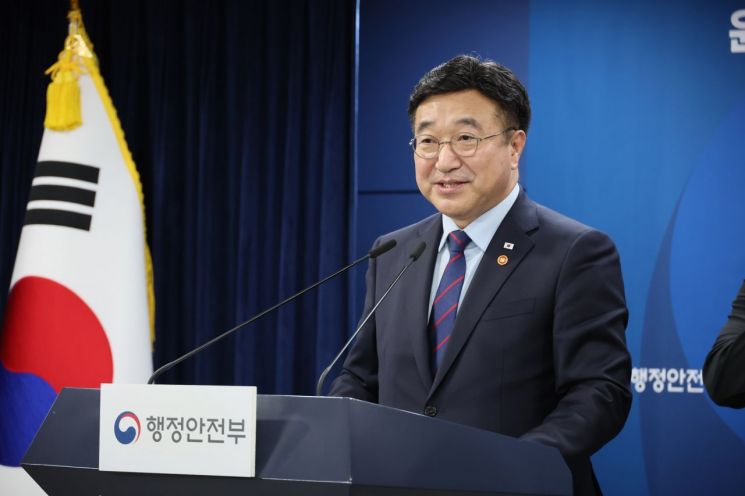 On the 5th, Minister Yoon Hojung held a briefing at the Government Seoul Office in Jongno-gu, Seoul, announcing the vision and 10 core tasks of the Ministry of the Interior and Safety. Photo by Yonhap News
However, following the launch of the new administration, the Ministry of the Interior and Safety has set a policy to revise the Local Autonomy Act to include a legal basis for the Residents' Autonomy Council and implement it nationwide. Internally, the ministry has also begun discussions to strengthen the system.
First, the existing system will be reviewed. In regions currently operating a Residents' Autonomy Council, all cases where residents' opinions have been reflected in policy, as well as cases where collected opinions were not delivered, will be identified and comparatively analyzed.
A new system will also be established for nationwide operation of the Residents' Autonomy Council. Plans include joint operation by the public and private sectors, linking with other projects or systems, and developing customized systems for regions facing population decline and risk of local extinction.
There are also plans to address situations where the Residents' Autonomy Council cannot function properly due to financial issues. Measures under consideration include institutionalizing financial support from the central or local governments, or creating a residents' autonomy fund using resident taxes. This issue is expected to be further detailed through the enactment or revision of relevant ordinances.
The ministry is also looking into advanced overseas examples, with particular attention to the United Kingdom's "Parish Council," a representative residents' autonomy organization. As the lowest tier of local government in the UK, residents autonomously handle local affairs through this body. In some cases, they maintain independence by securing finances through a form of local tax.
The Ministry of the Interior and Safety plans to establish a detailed reform plan for the Residents' Autonomy Council by the first half of next year and will also work towards legal institutionalization. The current plan is to transfer the pilot project provisions from the National Balanced Development Act to the Local Autonomy Act to secure a legal basis for full-scale implementation.
Minister Yoon Hojung is personally leading the initiative. While announcing the ministry's organizational restructuring plan, he designated the Residents' Autonomy Council as a key project of the new administration. Minister Yoon stated, "By expanding the Residents' Autonomy Council nationwide, we will draw out direct resident participation and mobilize all the capabilities of the community through the social solidarity economy to address the crises of local extinction and the challenges of balanced development." He also unveiled the establishment of a new "Autonomy Innovation Office" to oversee the council, remarking that "the philosophy of Yoon Hojung-style local autonomy is embedded within it."
© The Asia Business Daily(www.asiae.co.kr). All rights reserved.