From November 13, Japanese Police Deployed for Bear-Killing Operations
As bear sightings have surged in Japan, resulting in casualties, the police have decided to directly take on the task of killing bears.
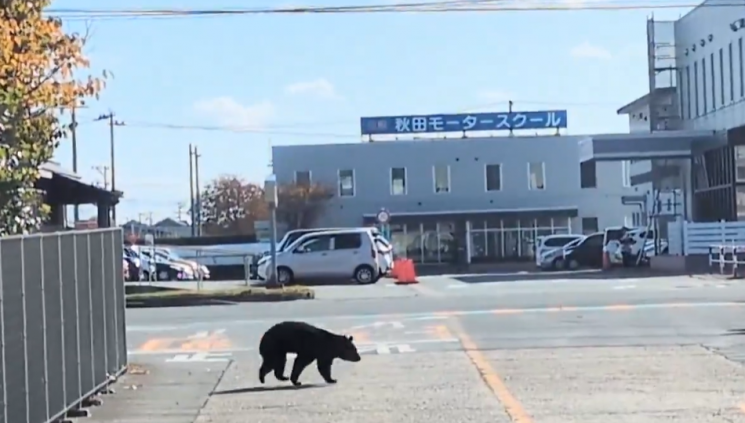
According to the Mainichi Shimbun on November 13, Japanese police will be deployed from this day to kill bears using rifles. The deployment period will last until the threat is under control.
Recently, bear sightings in urban areas of Japan have increased significantly compared to previous years. In the first half of this year alone, there were more than 20,000 reports of bear sightings, and casualties have continued to occur. As of the end of October, the number of deaths caused by bear attacks reached 12.
In response, the Japanese government has secured personnel for bear hunting by mobilizing the Self-Defense Forces and retired police officers, and has begun to improve capture equipment and install fences. However, as it was deemed difficult for hunting associations, which had previously been responsible for killing bears, to cope with the situation alone, the police have been temporarily assigned this task.
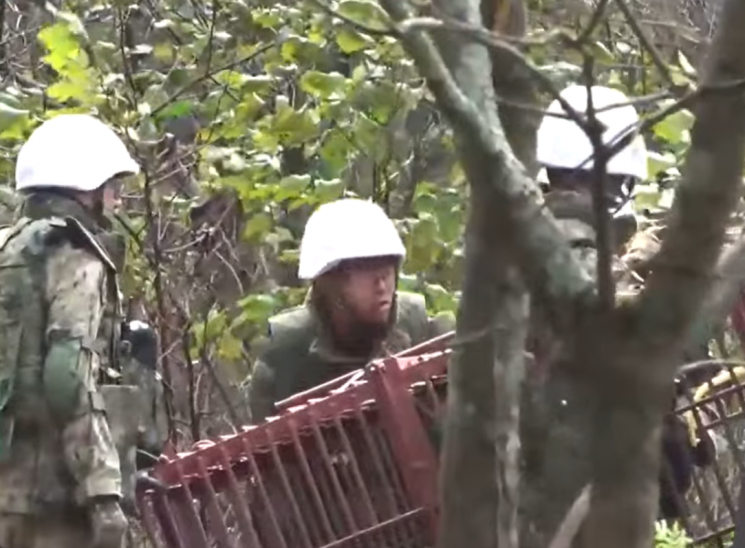 Japan Self-Defense Forces capturing a wild bear. Screenshot from Japanese media Nippon Television News Network (Nittere).
If further damage occurs in other regions, additional deployments will be considered. The National Police Agency also sent an official notice to police departments nationwide the previous day, outlining procedures for responding to bear shootings.
The National Public Safety Commission revised its regulations on November 6 to allow for the use of rifles to kill bears, and with the new rules taking effect on November 13, police are now able to carry out this mission.
In the Iwate and Akita regions, each police team consists of four members, with two teams assigned to each prefecture. Of these, two members per team are responsible for shooting with rifles, meaning there are a total of eight marksmen across the two regions.
Firearms will only be used on bears that appear in residential areas, not in the mountains.
The deployed units will operate on a rotational basis. For the first week, they will work with hunting associations to study bear behavior, identify sighting locations, and conduct shooting drills. For the following two weeks, they will be tasked with actual bear-killing operations.
Japanese internet users have generally responded positively, calling this a "realistic response." One commenter pointed out, "This concerns the lives of residents, and it was abnormal for private hunting associations to have been responding essentially as volunteers."
There were also opinions emphasizing that human safety should come first. Another user said, "If it is a matter of choosing between bears and humans, human life should take priority," expressing support for police involvement. Some noted that restrictions on firearm use in urban areas had delayed the response. One user commented, "Because of legal regulations, it was difficult to kill bears in city areas until they left," and described the recent regulatory changes as "a measure that reflects reality."
There were also calls for expanding specialized units. Comments included, "Dedicated police units should be established in areas with frequent bear sightings," and "Personnel should be increased through the winter to accumulate experience."
© The Asia Business Daily(www.asiae.co.kr). All rights reserved.