New Initiatives Include Entrance Preparation Funds for Elementary Students and Bus Fare Support for Low-Income Children and Youth
Mayor Lee Min-geun: "We Will Maintain Zero Debt and Steadily Pursue Key Projects"
On November 13, the city of Ansan, Gyeonggi Province, announced that it has submitted its budget proposal for next year, totaling 2.3299 trillion won, to the city council. This represents an increase of 70.2 billion won compared to this year's budget of 2.2598 trillion won.
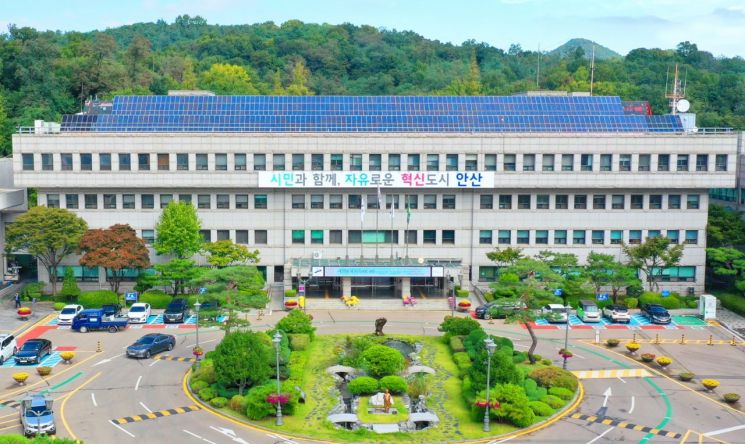
The general account stands at 2.0534 trillion won, up 67.9 billion won from this year, while the special accounts have increased by 2.3 billion won to reach 276.5 billion won.
A city official explained, "Despite the limitations of available resources and a challenging fiscal environment, we prioritized future industries, growth infrastructure, and the stabilization of citizens' livelihoods when allocating the budget."
The city especially plans to focus investments on its five key administrative goals: a citizen-centered city, an advanced innovative city, a city of welfare and culture, a city of future education, and a city of transportation and environment.
The budget proposal gives top priority to 15.6 billion won for 249 resident-requested projects collected by Mayor Lee Min-geun through on-site dialogues with citizens. In addition, it includes funding for youth settlement support, such as basic youth income (5.7 billion won), youth monthly rent assistance (5 billion won), youth rental deposit loan interest support (100 million won), and youth moving expense support (40 million won).
To foster the creation of an advanced innovative city and support corporate growth, the city will fund the operation of a small and medium-sized enterprise (SME) support center (300 million won), a project to nurture promising SMEs (1 billion won), and export logistics expenses for SMEs (50 million won).
For the restructuring of the Banwol National Industrial Complex, the city will implement projects such as establishing a robotics vocational training center (1 billion won), supporting technology innovation at Ansan Smart Hub (420 million won), and nurturing future industries. The budget for preliminary procedures to develop a free economic zone is also included in next year's proposal.
In the social welfare sector, 1.0543 trillion won, or 51.35% of the general account, has been allocated. Major projects include child allowances (31.9 billion won), basic living allowances (122.2 billion won), and disability pensions (15.7 billion won). Next year, the city will newly provide health checkup expenses for social welfare facility workers within the jurisdiction.
New projects to bridge the education and information gap include operating a career counseling center (200 million won) and providing entrance preparation funds for elementary school students (320 million won). The city will also invest 30 billion won in educational expenses to provide quality education and foster local talent.
In the transportation, environment, and urban sectors, the budget includes projects such as the construction of a new entrance at Hanyang University Station on the Shin Ansan Line (3 billion won), the establishment of a new GTX-C Sangnoksu Station (4.4 billion won), public transportation fare reimbursement (10.7 billion won), free transportation for senior citizens (2 billion won), and the operation of a public bus management system (9.4 billion won). Notably, next year’s budget also newly includes 18 million won to support bus fares for low-income children and youth.
Mayor Lee Min-geun stated, "While maintaining zero debt, we will steadily pursue key projects to deliver tangible results that citizens can truly feel."
The city council is expected to finalize next year's budget after deliberation and approval next month.
© The Asia Business Daily(www.asiae.co.kr). All rights reserved.