Tax Subcommittee of the National Assembly’s Planning and Finance Committee
Tentative Agreements Reached on Non-Contentious Bills First
Key Issues to Be Discussed as Early as the 20th
The Tax Subcommittee of the National Assembly’s Planning and Finance Committee held a meeting on the 12th and reached a tentative agreement on amendments to the Framework Act on National Taxes and the National Tax Collection Act, including changes to the calculation method for late payment penalties, a survey of delinquent taxpayers, and the rationalization of the detention system. The ruling and opposition parties are easing into discussions by first addressing non-contentious bills on which there is little disagreement, with plans to later tackle more controversial issues such as separate taxation of dividend income, corporate tax, and inheritance tax.
According to the National Assembly on the 13th, the Tax Subcommittee convened the previous day to focus on government- and lawmaker-proposed amendments to the Framework Act on National Taxes and the National Tax Collection Act. The proposed amendments to the Framework Act on National Taxes discussed include a revision of the calculation method for late payment penalties after the designated payment deadline and the inclusion of dunning notice delivery costs in the late payment penalty. The proposed amendments to the National Tax Collection Act include the rationalization of the survey and detention system for delinquent taxpayers.
These bills aim to establish a legal basis for the activities of the National Tax Delinquency Management Division, which will be launched next year to verify the economic status of all delinquent taxpayers and respond to malicious tax evaders. As of this year, the cumulative amount of national tax delinquency stands at 110.7 trillion won, an increase of 12 trillion won compared to five years ago.
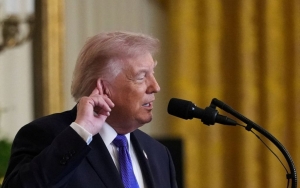
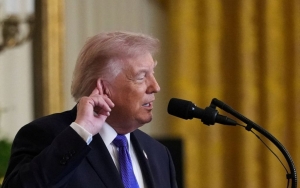
![[Tax Focus] Warming Up with Non-Contentious Bills... Contentious Bills Await Discussion](https://cphoto.asiae.co.kr/listimglink/1/2025111310400316245_1762998003.jpg)
The subcommittee also held some discussions and reached a tentative agreement on an amendment to the Income Tax Act that would include expenses for arts and physical education academies and sports facility education for lower-grade elementary school students (second grade and below) as eligible for tax deductions. Both the ruling and opposition parties recognize the need to amend this law. Park Sooyoung, a member of the Tax Subcommittee from the People Power Party, explained, "Since it was the first day, we focused on bills with little disagreement." Given that there are 516 bills to be reviewed-twice as many as during last year’s regular session-the strategy is to first review and tentatively agree on non-controversial bills, while bills with disagreements will be set aside for additional discussion or deferred, which is expected to speed up the process. It is also anticipated that behind-the-scenes coordination will continue for bills likely to require further discussion or deferral.
The Tax Subcommittee plans to address relatively non-contentious issues first at its next meeting, scheduled for the 17th. In addition to including lower-grade elementary school arts and physical education academy fees in the deduction scope, the agenda will cover the introduction of a tax credit for childcare product purchases, adjustments to the special tax deduction limit for insurance premiums and the addition of new eligible insurance items, and raising the income threshold for tax deductions under the small business and small enterprise savings plan-all amendments to the Income Tax Act aimed at supporting low- and middle-income households.
High-profile and contentious bills, such as those concerning separate taxation of dividend income, inheritance tax, corporate tax, and education tax, are expected to be discussed as early as the 20th. For separate taxation of dividend income, the parties must agree on lowering the maximum tax rate to 25% and easing the conditions for separate taxation. While the government and ruling party are open to lowering the maximum tax rate, they are more reserved about easing the application conditions. In contrast, there is a sharp divide over the proposed 1 percentage point increase in the corporate tax rate: the government and ruling party view it as a ‘normalization’ to restore insufficient tax revenue, while the opposition is concerned about encouraging companies to move overseas. An amendment to the Education Tax Act, which would double the education tax rate imposed on financial and insurance businesses with annual revenue exceeding 1 trillion won from the current 0.5% to 1.0%, has also become a matter for negotiation after the People Power Party presented an alternative. Chairman Park stated, "It would be less burdensome to base it on the two- to three-year average revenue or net profit," adding, "I think there is room for the committee members to discuss this further."
© The Asia Business Daily(www.asiae.co.kr). All rights reserved.