Last week, I traveled to southern Texas with my children. I was anxious even before we left. News reports warned that, due to the federal government shutdown-which resulted in temporary suspension of work-air traffic controllers, now working without pay, were taking leave and picking up second jobs to make ends meet, causing frequent flight delays and cancellations. My worries became reality. Every flight, from New York to Dallas and from Houston back to New York, was delayed by about three hours. Amid this shutdown-induced “aviation chaos,” I consoled my children, telling them we were lucky our flights weren’t canceled altogether.
In the United States, shutdowns have become almost routine. Every year, disputes between the two parties over the following year’s budget priorities, interests, and political calculations lead to standoffs. Inconveniences like flight delays are no longer surprising.
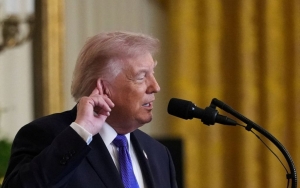
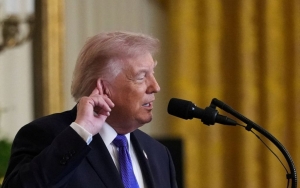
However, this particular shutdown drew special attention because it set a new record for duration. It surpassed the previous record of 35 days set during Donald Trump’s first administration, now occurring under his second term. With the Republican Party holding majorities in both the House and Senate, Trump, wielding immense presidential authority, has continued his unilateral approach, favoring dominance over compromise and cooperation. Although the shutdown has finally come to an end, this record-breaking episode encapsulates the essence of American politics in the Trump era.
Trump is running his second administration in an unprecedented manner. He openly attacks his rivals, mocks his critics, and repeatedly threatens to fire those who do not align with his preferences. He does not hesitate to push through with the logic of power.
In fact, John Bolton, who served as National Security Advisor during Trump’s first term before becoming a critic, was recently indicted on charges of leaking classified information. Jerome Powell, Chair of the Federal Reserve, faces ongoing public ridicule and pressure to resign for not lowering interest rates as Trump desires. Federal Reserve Governor Lisa Cook was also dismissed over mere allegations of mortgage fraud, only to be reinstated by a court decision. Trump’s leadership style and rhetoric remain abrasive and unfamiliar. Political polarization in the United States has deepened, and the space for dialogue and compromise continues to shrink.
The greater problem is that there is no force to keep Trump in check. His advisors are filled with “yes-men,” and the Republican Party remains under his political shadow. The opposition Democratic Party lost its presence after consecutive defeats in last year’s presidential and midterm elections. Although the Democrats recently won mayoral and gubernatorial races in New York, New Jersey, and Virginia, many attribute these victories to a backlash against Trump rather than to the party’s own strength.
In this Trump era, many speak of a changed America. Even setting aside the “America First” foreign policy, domestically, the disappearance of common sense and justification, the concentration of power without checks, and extreme polarization between factions are increasingly evident.
Yet this political landscape is not unique to the United States. In South Korea as well, the reality of a powerful government backed by a dominant parliamentary majority, the normalization of partisan confrontation, and the absence of cooperative governance mirror the Trump-era America. The ruling party’s demands for the resignation of the Chief Justice, unilateral legislative pushes for “judicial reform” such as increasing the number of Supreme Court justices and introducing constitutional complaint procedures, and the prosecution’s decision to drop appeals in the Daejang-dong case involving the president all shake the foundations of the separation of powers. Minimal checks and balances on authority are hard to find. Meanwhile, the opposition has rapidly disintegrated after the declaration of martial law and impeachment crisis under former President Yoon Sukyeol, leaving it virtually invisible.
Unilateral exercise of power, the disappearance of checks and balances, and extreme factional politics-today, the political landscapes of South Korea and the United States appear different yet strikingly similar. Common sense is faltering, and justification is vanishing. We may be living in an era where abnormality has become the new normal in politics.
© The Asia Business Daily(www.asiae.co.kr). All rights reserved.