From Strengthening Math and Science Education in Primary and Secondary Schools to Transforming the Four Major Institutes into AI Hubs,
Pursuing 'People-Centered' Innovation
"Building a Foundation for Nobel Prize Ambitions with Predictable Research Environments and Continuous Support"
The government will significantly increase the graduate scholarship recipient rate from 1.3% in 2025 to 10% by 2030, and the monthly Research Life Incentive program for master's and doctoral students will be expanded to 55 universities nationwide.
This comprehensive support plan has been introduced to establish a stable foundation for the growth of science and technology talent and to drive innovation in the research ecosystem.
On November 7, the Ministry of Science and ICT announced the "Plan for Securing Science and Technology Talent and Education Innovation," prepared in collaboration with related ministries, at the national briefing session titled "Korea, Dreaming Again of Being a Nation of Science and Technology," held at the National Science Museum in Daejeon.
This measure was developed amid intensifying technological hegemony competition in fields such as AI, quantum, and advanced biotechnology, based on the recognition that "people are the true source of national competitiveness."
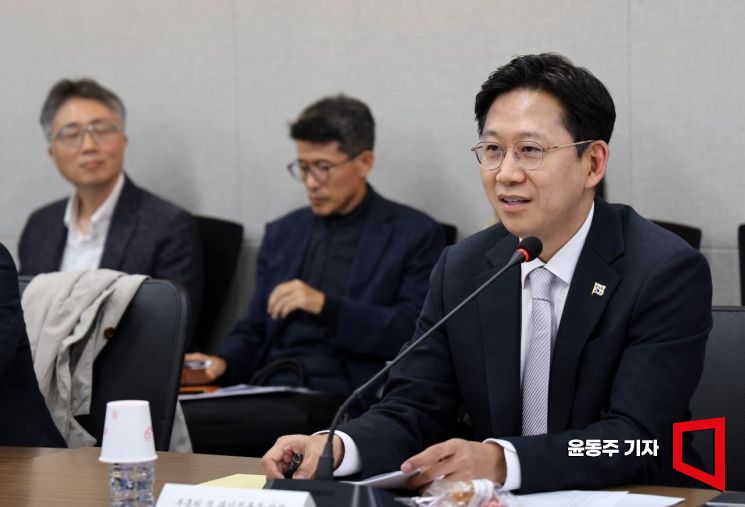 Science and ICT Minister and Deputy Prime Minister for Science Baek Goon is speaking. Photo by Yoon Dongju
Cultivating Science and Technology Seeds in Primary and Secondary Education, and Greatly Expanding Graduate Scholarships
The government aims to nurture the seeds of future talent starting from primary and secondary education. It plans to expand online experimental platforms and science exploration programs to broaden the base of mathematics and science education and reduce regional disparities.
AI- and coding-based inquiry education will also be strengthened so that students can naturally explore career paths in science and technology fields.
A Ministry of Science and ICT official explained, "The cultivation of science and technology talent is not an issue to be addressed only after university, but must be prepared from the primary and secondary school stages," adding, "We will focus on fostering interest and confidence in science through inquiry-centered mathematics and science education."
In particular, the government has placed emphasis on creating an environment where graduate students and early-career researchers can immerse themselves in research without financial burdens.
The graduate scholarship recipient rate, currently at 1.3%, will be raised to 10% by 2030, and the Research Life Incentive program will be expanded to 55 universities nationwide.
Fellowship programs for graduate students in science and engineering will also be greatly increased, supporting opportunities for autonomous research from the laboratory stage.
Baek Goon, Deputy Prime Minister and Minister of Science and ICT, emphasized, "The future of science and technology depends on young researchers being able to continue their research in a stable environment," adding, "We will improve the structure that forces researchers to juggle both studies and livelihood, and create a system where researchers are respected as individuals."
Four Major Institutes of Science and Technology, Including KAIST, UNIST, DGIST, and GIST, to Become AI Transformation Hubs
To respond to the AI era, the four major institutes of science and technology-Korea Advanced Institute of Science and Technology (KAIST), Ulsan National Institute of Science and Technology (UNIST), Daegu Gyeongbuk Institute of Science and Technology (DGIST), and Gwangju Institute of Science and Technology (GIST)-will be designated as AI Transformation (AX) hubs.
Each institute will strengthen connections with nearby science high schools and universities to serve as regional AI talent development hubs. Additionally, through university science AI research centers and the AI-X National Talent Development Project, they will provide project-based practical training utilizing GPUs and data.
The government has set a goal to foster "ambidextrous science and technology talent" capable of using AI as a tool to conduct research and solve problems. The core of this initiative is to move AI education beyond general university liberal arts and expand it to focus on research sites and industrial problem-solving.
By 2030, the government aims to attract 2,000 outstanding and early-career researchers from overseas to strengthen the domestic research ecosystem. To this end, the job-seeking visa period will be extended from two years to three years, and the internship period will be increased from six months to twelve months. Furthermore, the fast-track for permanent residency and naturalization will be expanded from the four major institutes to general universities to encourage foreign researchers to settle in Korea.
The Ministry of Science and ICT stated, "We will establish an open ecosystem where domestic and foreign researchers grow together within a global research network."
Establishing a Research-Immersive Environment and Spreading a Challenging R&D Culture
The government will also pursue research environment innovation, such as the phased abolition of the Project Based System (PBS) and the expansion of research funding autonomy, so that researchers can focus on their core research.
The plan is to strengthen both the autonomy and responsibility in research fund management, reduce excessive administrative paperwork, and introduce the NEXT Project, a challenging mission-oriented research initiative, to create an evaluation system that recognizes "meaningful failure" as well as success. Through these measures, the government aims to restore a researcher-centered creative research ecosystem and support stable research and development (R&D) investment.
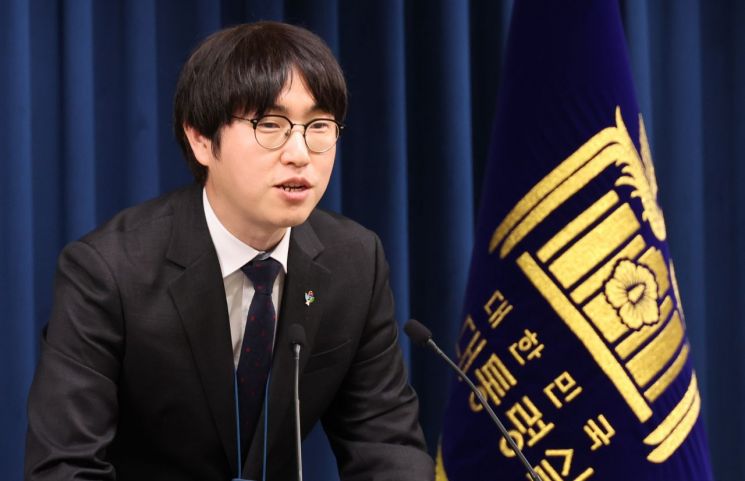
Ha Jungwoo, Chief of AI Future Planning at the Presidential Office, stated at the briefing, "Research worthy of a Nobel Prize requires at least 10 to 20 years of steady inquiry and verification as long-term scientific research," adding, "For basic science research to create new innovations by combining with advanced technologies such as AI, predictable and continuous support is absolutely necessary."
He continued, "It is important to have an environment where research in various fields can continue steadily without being swayed by trends," and emphasized, "The policies announced today are the starting point for creating such a research culture, and this consistent policy commitment must become the foundation that leads to Nobel Prizes."
Through these measures, the government has presented a vision to establish a "research and development system centered on people." The goal is to strengthen the autonomy and responsibility of researchers, reduce unnecessary administrative burdens, and build a stable R&D investment base to create a society where "research becomes a dream."
Deputy Prime Minister Baek stated, "To lead the AI era, people must be prepared before technology," adding, "We will create a virtuous cycle in which outstanding talent gathers to produce innovative results, and those results, in turn, attract more talent."
© The Asia Business Daily(www.asiae.co.kr). All rights reserved.