The Device Distribution Act to Be Repealed on July 22
Smartphone Prices Expected to Drop Amid New Galaxy Z Launch and SK Telecom Hacking Incident
In October 2014, the government implemented the Act on the Improvement of the Distribution Structure of Mobile Communication Devices (commonly known as the Device Distribution Act). Until then, people generally believed that mobile phones were essentially free. In other words, as long as you subscribed to a mobile service and paid the monthly fee, you would receive a mobile phone at no cost. Both then and now, the most expensive plans offered by the three major carriers (SK Telecom, KT, and LG Uplus) are around 100,000 won per month, while the cheapest are about 30,000 won per month.
An executive who worked at a telecom company at the time said, "Before the Device Distribution Act, you could sign up for a 30,000 won monthly plan and still receive the latest high-end phone for free." However, he added that "market conditions were a variable." When competition to attract subscribers was fierce, it was indeed possible to get an expensive phone for free even with a cheap plan. Of course, when carriers were less enthusiastic about recruiting subscribers, as is often the case these days, customers had to stay locked into expensive plans for longer periods.
Even so, it was possible to obtain a mobile phone at a much lower price than today. This led to shorter phone replacement cycles. According to the "2013 Smartphone Replacement Rate and Cycle in Major OECD Countries (April 2014)" report published by the Ministry of Science, ICT and Future Planning, South Korea had the shortest replacement cycle among the 33 OECD countries surveyed, at 15.6 months in 2013. Market research firm Counterpoint Research reported that as of 2023, the average smartphone replacement cycle in Korea was 33 months. This means the replacement cycle has been increasing by about 1.7 months each year. As phones have become more expensive, people are more reluctant to upgrade, resulting in longer device lifespans.
Typically, when signing up for mobile service, customers enter into a two-year contract. If they switch services within two years, they must pay a penalty. Before the Device Distribution Act, people would automatically get a new phone every two years, and in many cases, even before the contract ended. However, now that smartphones are so expensive, it is common for people to continue using their old phones for about a year after their contract ends, unable to afford a new one. But this will change after July 22. On December 26, 2024, the National Assembly decided to repeal the Device Distribution Act, with the repeal taking effect on July 22.
Moreover, the market is already heating up. After being unable to accept new subscribers for a while due to the SIM card hacking incident and watching its customer base shrink, SK Telecom resumed new sales on June 24. As a result, it is currently possible to purchase the latest high-end phones for a nominal 'zero won.' However, this comes with conditions, such as using a high-priced plan of around 100,000 won for six months and then continuing with a plan of at least 40,000 won thereafter. For example, just a few months ago, you had to commit to a 100,000 won plan for nine months and then a plan of at least 50,000 won. In any case, mobile phone prices have recently dropped significantly.
 On the 28th, customers visiting an official SK Telecom certified agency in Mapo-gu, Seoul, are receiving guidance from staff regarding SIM card arrivals. SK Telecom plans to offer free SIM card replacement services to subscribers starting today. April 28, 2025. Photo by Kang Jinhyung
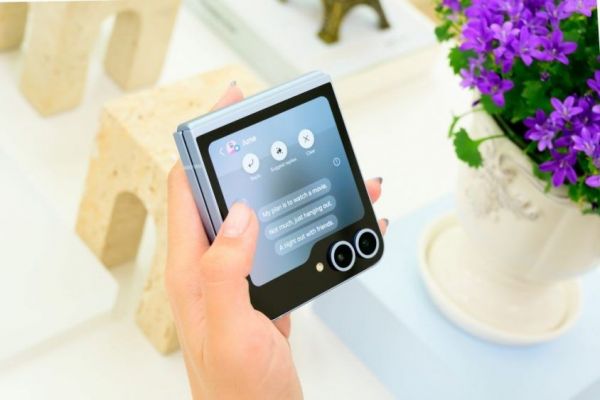
That is not the end of the story. Samsung Electronics is about to launch its flagship Galaxy Z series smartphones in the Korean market. On July 9, Samsung will unveil the Galaxy Z Fold7 and Z Flip7 at the 'Galaxy Unpacked' event in New York, USA. Pre-orders will follow, and the official launch in Korea will take place at the end of July. Naturally, the release date will be right after the repeal of the Device Distribution Act, when the cap on device purchase subsidies will be lifted. When a new flagship phone is released, the prices of previous models drop sharply. In other words, the prices of the Galaxy Z Fold6 and Z Flip6 will fall.
In other words, the government is pouring fuel on a market already heated by the SK Telecom SIM hacking incident by repealing the Device Distribution Act, and Samsung is throwing in the spark of its latest flagship phones. There is no doubt that a major shake-up will hit the Korean telecommunications market after the end of July. Savvy consumers are already anticipating the possibility of purchasing the Flip6, which currently sells online for over 1.34 million won, for virtually nothing.
What Are 'Bus Phones,' 'After-Work Phones,' and 'Visit Phones'?
Still, many people doubt that phones costing over one million won will really be available for free. However, considering the market conditions before the Device Distribution Act, it is entirely possible. Several terms emerged to symbolize the fierce competition among carriers at that time, including new slang such as 'bus phone,' 'after-work phone,' and 'visit phone.'
Suddenly, a post would appear online saying, "Take bus number 1290." The number 1290 meant that, instead of the usual 24-month contract, you could get a 900,000 won subsidy with just a 12-month contract. This is where the term 'bus phone' originated. The launch price of the most popular phone in 2012-2013, the Galaxy S3, was 999,400 won. In short, the message was to contact them if you wanted a free phone.
There was also the term 'after-work phone.' Carriers provided sales incentives (rebates) to their dealers. As competition intensified, the incentive amounts increased. During a period of fierce sales competition, a carrier employee once asked a dealer if business was good, and the dealer replied, "If I sell just one, I can go home." This meant that selling just one phone, including the incentive, could earn them about one million won. In fact, searching for 'after-work phone' in the Naver Korean Dictionary yields an explanation. 'Visit phone' referred to the practice of visiting a specific location, such as 'Room 304 of Sindorim A Officetel,' to sign a contract and receive the phone. In other words, after seeing a 'bus phone' post online, you would go to a secluded office, close the door, sign the contract, and get your phone.
Even then, the government regulated mobile phone rates. However, simple regulation was not enough to curb competition. This led to the creation of the Device Distribution Act. Initially, many doubted whether the Act could truly stop illegal subsidies. However, immediately after the law passed, executives from all three major carriers were indicted, and the market cooled rapidly. The Device Distribution Act included provisions to punish even the CEOs of telecom companies. If a CEO unfairly intervened (by coercion, inducement, etc.) to ensure that device subsidies were given preferentially to certain subscribers, they could face up to three years in prison or a fine of up to 150 million won.
There were two main justifications for enacting the Device Distribution Act. First, there was criticism that only a minority benefited from free phones. For example, 'bus phone' posts would appear online briefly in the early morning hours and then quickly disappear. The designated locations to purchase these phones were usually in city centers. Therefore, people who were less tech-savvy or lived in areas without participating stores had to pay relatively high prices for phones that others got for free. In other words, if you were older and lived in a rural area, it was much harder to get a free phone. The second justification was the argument that the system led to waste. In 2013, the average phone replacement cycle in Korea was 15.6 months, compared to 19.2 months in the US and 29.2 months in Japan. The idea was that thriftiness was a virtue.
The Barriers to the Return of Free Phones
Of course, some believe that even with the repeal of the Device Distribution Act and falling smartphone prices, it will still be difficult to see the return of free phones. They point to changed market conditions. In 2015, Pantech, which had entered a workout program due to management difficulties in 2014, ceased domestic phone production. In 2021, LG Electronics exited the mobile phone business. As a result, Samsung Electronics is now the only domestic phone manufacturer.
The issue is that device subsidies are provided not only by carriers but also by manufacturers. For example, when there was too much inventory in the past, Samsung would approach SK Telecom and propose to add 50,000 won to the subsidy if SK Telecom would also contribute an additional 50,000 won, so they could sell the phones together. If SK Telecom refused, Samsung would approach KT. If KT was not interested, they would go to LG Uplus. Due to intense competition, carriers had no choice but to accept these proposals. In short, manufacturers played a decisive role in providing subsidies.
But that is not all. At times, LG, losing ground to Samsung's subsidies, would offer to add another 100,000 won in subsidies and approach the carriers. Pantech would also have to respond. This fierce competition drove down phone prices. However, now Samsung is the only domestic phone manufacturer, with Apple as its only real competitor. But Apple is not a company that spends lavishly on subsidies to boost sales. As a result, Samsung has little incentive to engage in price competition as before. If phone prices do not fall as they once did, it is likely because the Korean phone market is now essentially a duopoly with only two competitors.
Will Consumers Really Benefit from the Era of Free Phones?
If smartphone prices drop to virtually nothing, will consumers really benefit? The answer is likely no. Consider household communication expenses since the Device Distribution Act was introduced. In 2013, the average monthly household communication expense was 152,800 won, but by 2023, it had fallen to 128,160 won. This is quite different from the communication costs consumers actually feel. The reason is the price of smartphones. In 2013, the most expensive phones cost up to one million won, but now prices have soared to two million won. Moreover, back then, smartphones were often nearly free. While official communication expenses dropped, consumers had to purchase much more expensive phones in installments, resulting in a significant increase in their perceived communication costs.
The government used the Device Distribution Act to raise phone prices while keeping service fees in check. After the Act is repealed on July 22, the opposite is likely to happen: phone prices will fall, and service fees will rise. The government holds the authority to approve mobile service rates. As subsidies decreased under the Device Distribution Act, carrier profits increased, giving the government justification to prevent rate hikes. Now, as subsidy spending rises again, it will be harder for the government to block rate increases. In order for carriers to continue investing in their networks, they will have to find ways to collect more money from consumers. In the short term, lower phone prices will benefit consumers, but in the long run, higher service fees will offset these gains.
On the other hand, the impact on manufacturers and carriers is clear. As the phone replacement cycle shortens and more smartphones are sold, manufacturers benefit. Carriers, however, face the difficult task of convincing both the government and consumers to accept higher service fees. In other words, it is highly likely that service fees will gradually rise. For consumers, the wisest choice may be to select a plan and upgrade their smartphone as soon as possible, during the period of most intense competition immediately after July 22.
© The Asia Business Daily(www.asiae.co.kr). All rights reserved.