During Trump's Presidency, Arms Exports Increased by 14%... Top 5 All US Companies
Former Defense Secretary Esper Criticizes Revolving Door Between US Politics and Defense Firms
[Asia Economy Beijing=Special Correspondent Jo Young-shin] Chinese media cited the 'International Arms Trade Trends Report' released by the Swedish think tank Stockholm International Peace Research Institute (SIPRI), claiming that the United States is promoting war crises while securing its own interests.
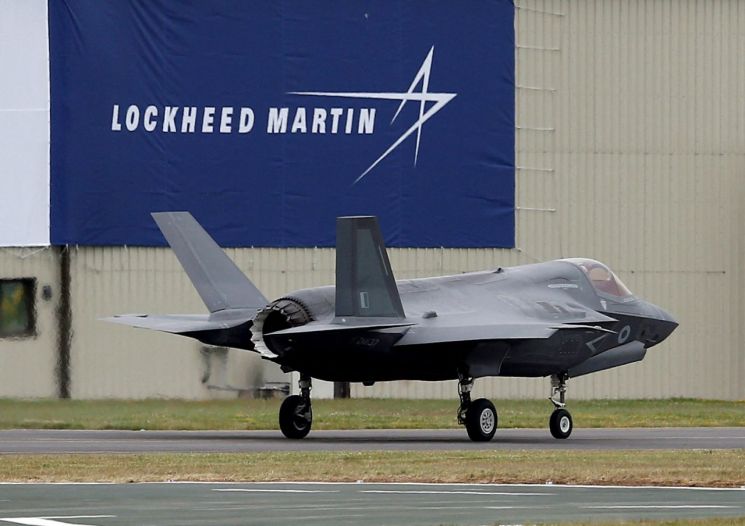
The state-run Xinhua News Agency reported on the 17th that the U.S. overseas arms sales increased by as much as 14% over the five years from 2017 to 2021 compared to the previous period (2012?2016). The agency also stated that the U.S. share of arms sales rose from 32% to 39%.
It pointed out that former President Donald Trump exported numerous weapons to other countries under the pretext of 'resisting communism,' which resulted in setting overseas arms sales as an important goal of national security and foreign policy.
Xinhua emphasized that the U.S. military-industrial complex flourished from 2018 onward.
In particular, it noted that Lockheed Martin's arms sales in 2020 reached a staggering $58.2 billion (approximately 71 trillion KRW), identifying Lockheed Martin as the biggest beneficiary of the new Cold War. This accounts for 11% of the total arms sales of the world's top 100 defense companies. Following Lockheed Martin, U.S. defense companies such as Raytheon Technologies, Boeing, Northrop Grumman, and General Dynamics swept the top five positions, the report added.
Xinhua reported that global arms trade volume decreased by 4.6% from 2017 to 2021 compared to the previous period. It also added that Russia, the world's second-largest arms exporter, saw its export value decline by 26% during this period.
The agency also criticized the revolving door between U.S. politics and the military-industrial complex. It emphasized that former Secretary of Defense Mark Esper, appointed by former President Trump, held a senior position at Raytheon Technologies. After stepping down as Secretary of Defense, Esper was rehired by the U.S. defense contractor Epirus, the report sarcastically noted.
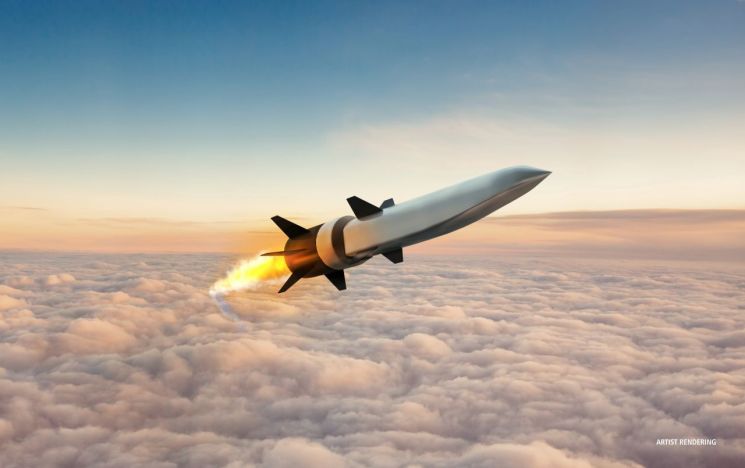
Xinhua reported that the stock prices of U.S. defense companies surged sharply due to the recent Ukraine crisis. It also mentioned that a senior executive at Raytheon Technologies shamelessly stated that tensions between Russia and Ukraine would create opportunities for overseas arms sales.
The state-run Global Times criticized U.S. politicians and defense companies, saying they are well aware that they can make huge profits through war, and that they incite and collude in conflicts and confrontations for their own interests. It added that U.S. defense companies have spent an enormous $2.5 billion (3 trillion KRW) on lobbying funds over the past 20 years.
Meanwhile, Zhao Lijian, spokesperson for the Chinese Ministry of Foreign Affairs, at a regular briefing held the previous day, responded to the U.S. State Department spokesperson's remark that a big country (Russia) cannot bully a small country (Ukraine) by saying, "The textbooks clearly show who invaded and started wars in Cuba and Panama in the 1960s, Grenada in the 1980s, Yugoslavia in the 1990s, and Afghanistan, Iraq, Syria, and Libya in the 2000s." He criticized U.S. foreign policy by stating that the world needs peace, justice instead of domination, and cooperation instead of confrontation, not war. He further accused the U.S. of requesting support (mediation) from China while imposing sanctions on China.
© The Asia Business Daily(www.asiae.co.kr). All rights reserved.