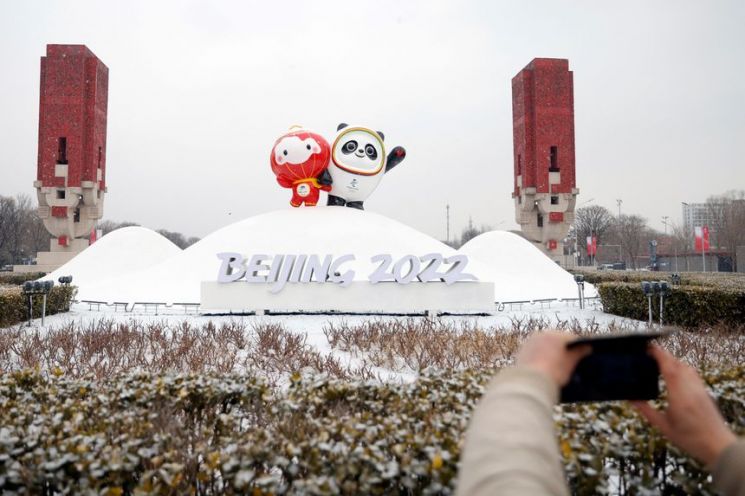
[Asia Economy Reporter Yujin Cho] The opening of the Beijing Winter Olympics is just around the corner, but the marketing enthusiasm of official sponsor companies is waning. Due to human rights abuses, Western countries such as the United States and Europe have launched a 'diplomatic boycott' of the Beijing Olympics, and as international criticism grows, it has become difficult to find the former prestige of the Olympics, once the biggest marketing stage of the year.
On the 23rd (local time), The Wall Street Journal (WSJ) reported that although the opening of the Beijing Winter Olympics is less than 10 days away, the top 13 International Olympic Committee (IOC) sponsors, including Visa, Procter & Gamble (P&G), and Coca-Cola, are not actively advertising the Olympics. These top-tier sponsors are companies that have paid a huge sponsorship fee totaling $1 billion (approximately 1.1925 trillion KRW) for the two previous Olympic Games in Sochi and Rio, passionately engaging in Olympic marketing.
Visa, headquartered in San Francisco, is not conducting press releases or social media marketing related to the Beijing Olympics. Visa, a long-time Olympic sponsor, has actively marketed as a long-standing sponsor of the Olympic payment system since the 1988 Calgary Winter Olympics. Even during the 2018 Pyeongchang Olympics, Visa promoted new technologies to be unveiled at the Olympics by counting down on Twitter starting 100 days before the opening.
Similarly, P&G, which ran a large-scale advertising campaign under the theme "Love Beyond Prejudice" during the last Pyeongchang Olympics, and Coca-Cola, which conducted massive TV advertisements worldwide, are quiet this year. Coca-Cola, which displayed an advertisement for its sponsored athlete Nathan Chen, a U.S. figure skater, in New York's Times Square 100 days before the Pyeongchang Olympics, did not run nationwide ads in the U.S. related to the Beijing Olympics this year. Coca-Cola stated that Olympic-related advertising campaigns will only be conducted in China but did not explain the reason.
P&G also avoided mentioning its advertising marketing plans related to the Beijing Olympics in the U.S., only stating that it would "focus on Chinese consumers."
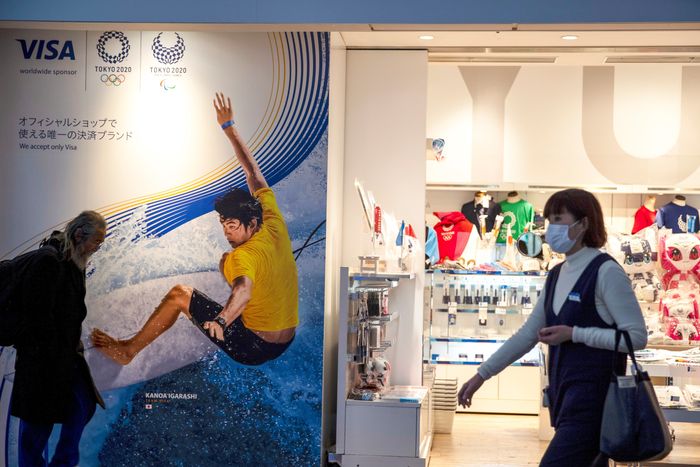
This unusual behavior by sponsors is due to awareness of international criticism of China's human rights abuses. Earlier, the U.S. officially announced a diplomatic boycott by not sending a government delegation, criticizing forced labor and detention camps in the Xinjiang Uyghur Autonomous Region, and Western democratic countries such as the UK, Canada, Australia, Japan, and Germany have followed suit. Additionally, over 200 human rights organizations worldwide have been sending letters urging the cancellation of Olympic sponsorships and broadcasting rights and holding protests to pressure sponsor companies.
Some of these sponsor companies have voluntarily raised their voices on human rights issues. Intel, a U.S. semiconductor company, was the only one among the five U.S. companies sponsoring the Beijing Olympics to agree that "China is committing genocide in Xinjiang" and requested the IOC to postpone the Olympics. Also, Coca-Cola raised issues regarding labor rights abuses in Qatar ahead of the football World Cup to be held in Qatar later this year. Coca-Cola, a major sponsor of FIFA, stated, "Human rights violations at the construction sites of Qatar World Cup stadiums are severe," and expressed that "we cannot just stand by and watch."
Despite such criticism, some companies continue marketing as in previous years. Swiss watchmaker Omega released a model commemorating the Beijing Olympics, stating that it "does not get involved in political issues." Rick Burton, who worked as the marketing director for the U.S. Olympic Committee (USOC) during the 2008 Beijing Olympics, said, "These companies that have made huge investments in sponsorship contracts have missed marketing opportunities on the global stage," adding, "Sponsors who also have to do business in China are now in a position to weather the storm."
© The Asia Business Daily(www.asiae.co.kr). All rights reserved.