Prolonged Social Distancing Leads to Depression or Anger Expression
Generational Conflicts Rise Amid Gwanghwamun Rally and Itaewon Club Spread
Self-Employed Face Survival Threats, PC Bangs and Academies Prepare Lawsuits Against Government
Psychologist: "Government Must Provide Predictable Signals to Reduce Public Anxiety"
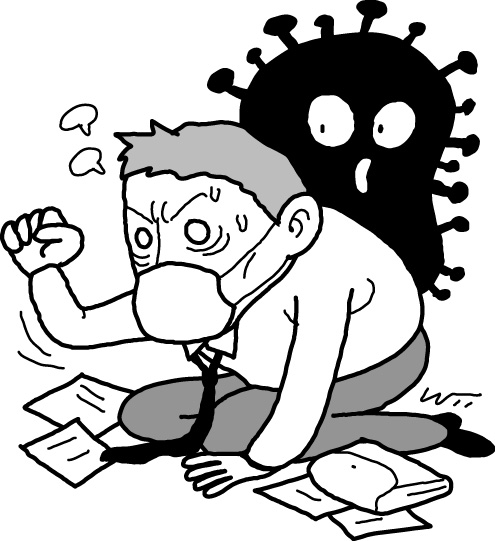
[Asia Economy Reporters Hyunju Lee, Byungdon Yoo, Donghoon Jung, Jeongyun Lee] Lee Youngjin (29, pseudonym), who is working from home. At first, she welcomed remote work because it saved commuting time and allowed her to take care of household chores in between. However, as time passed, feelings of lethargy began to overwhelm her. After the social distancing level was raised to 2.5, she could no longer go to cafes, and relieving stress with an evening drink became a thing of the past. She said, "I rely on food delivery and my living radius is limited to my home, so each day seems to pass meaninglessly."
People like Lee who complain of 'Corona Blue' are everywhere. Typical examples include freshmen who have never experienced campus life, engaged couples worried because they cannot hold weddings, and self-employed people facing livelihood difficulties. The problem is that as the period of feeling depressed lengthens, this psychological state can go beyond lethargy and reach 'anger.' Groups that insist on holding large-scale rallies, some people who mock social efforts by gathering for drinking parties or meetings, and unresolved lethargy inevitably become greatly shaken when they find a target for their anger. Professor Lee Dong-gwi of Yonsei University’s Department of Psychology said, "If policies that restrict behavior, such as social distancing, are repeatedly strengthened and weakened, anxiety about unpredictable situations arises, which can manifest as depression or anger," and advised, "The government should provide predictable signals that social distancing policies can be maintained in the mid to long term to reduce public anxiety."
◆'Corona Angry' as a Catalyst for Generational Conflict= On the 27th of last month, on a train passing through Dangsan Station on Seoul Subway Line 2, a passenger asked a man in his 50s to wear a mask. The man in his 50s, angered by this, took off his slippers and indiscriminately slapped the passenger’s cheek, and apparently still not appeased, even strangled another passenger’s neck. This video, filmed by a witness at the scene, spread through social networking services (SNS).
Such incidents tend to stimulate hatred toward specific genders and generations. Under the news, comments like "Is it those 50s and 60s again?" can be seen, implying "People in their 50s and 60s have once again obstructed quarantine." According to police data, from May 13, when mask-wearing on public transportation became mandatory, until the 25th of last month, 141 cases of conflicts due to refusal to wear masks on public transport were reported, with 151 people arrested. Among those arrested, 39% (45 people) were aged 60 or older, the highest proportion, followed by those in their 50s (38 people). The fact that middle-aged churchgoers largely attended the August 15 Gwanghwamun rally, which triggered the resurgence of COVID-19, also greatly intensified generational conflicts.
On the other hand, when the Itaewon club cluster infection occurred in May, many criticized the "irresponsible young generation." The social trend of dividing responsibility for social chaos by generation and attacking and blaming each other is repeating. Experts analyze that the generational conflicts embedded throughout society have been expressed due to COVID-19. Of course, this phenomenon is not limited to South Korea. Among American youth, the term "Boomer Remover" is used, a sarcastic phrase implying that COVID-19, which is particularly fatal to the elderly, is a disease that "removes" the baby boomer generation.
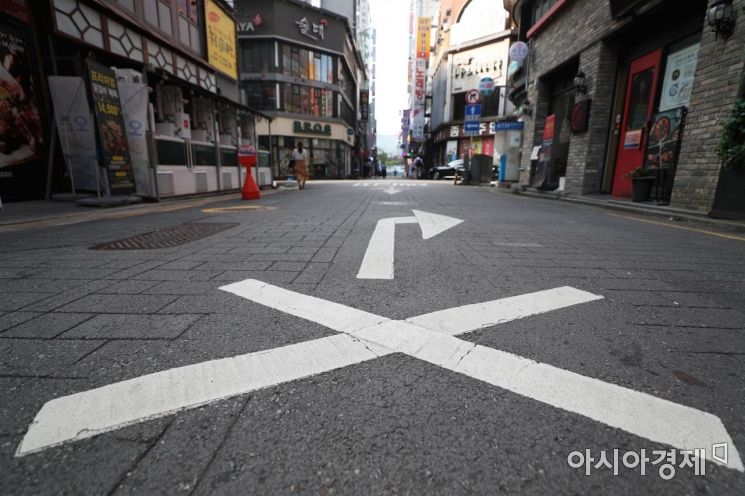
◆Self-employed People Facing Livelihood Crisis to File Lawsuits Against the State= For those who feel not just depression or anger due to COVID-19 but an actual "threat to survival," they want to legally hold someone responsible for the current situation. The target is the person responsible for quarantine failures, ultimately the state. Kim (pseudonym), who runs a PC bang in Songpa-gu, Seoul, said, "We complied with everything the government ordered?name lists, social distancing, temperature checks. But then we were labeled a high-risk facility and told to close. Rent and management fees still have to be paid. Who is responsible for this?" Most PC bangs have suspended operations since mid-last month, cutting off income for nearly a month. Many PC bang owners continue their livelihoods through substitute driving or delivery work.
However, PC bangs like Kim’s have little way to receive compensation from the government. According to Article 70 of the Infectious Disease Control and Prevention Act, government compensation is limited to "medical institutions where infectious disease patients have occurred or passed through, or private businesses closed by government order after the fact was made public by the government." Accordingly, PC bang owners plan to file lawsuits against the government seeking compensation for fixed costs such as rent and management fees, as well as business losses based on the average operating profit of the previous three months. Attorney Ham In-kyung of the law firm Kangham, who is handling the lawsuit, said, "Although a private loss compensation bill has been proposed in the political arena, it is uncertain when it will pass. There is no legal basis to claim compensation, so we are forced to seek our rights through litigation."
The situation is similar for another heavily impacted sector, "hagwons" (private academies). Following large hagwons with over 300 students, from this month, all hagwons with more than 10 students must close and conduct classes only online. The Korea Hagwon Federation met with Deputy Minister of Education Park Baek-beom to convey support measures related to the closure. If their demands are not met and social distancing continues, they plan to prepare a class-action lawsuit. Lee Won, president of the Korea Hagwon Federation, said, "We requested that small hagwons (with 10 or fewer students) be exempted, and for hagwons conducting online classes, we asked for support for remote learning equipment and measures to maintain tuition fees."
© The Asia Business Daily(www.asiae.co.kr). All rights reserved.