Korea National Oil Corporation (KNOC) has launched an emergency inspection to prepare for potential instability in oil supply and demand due to rapidly changing conditions in the Middle East.
On March 3, KNOC announced that it had urgently convened an "Oil Supply and Demand Crisis Response Task Force" meeting in response to the worsening situation in the Middle East and conducted a comprehensive review of its crisis response system. The meeting was held amid escalating risks of high oil prices originating from the Middle East, including U.S. and Israeli airstrikes on Iran and the potential closure of the Strait of Hormuz by Iran.
KNOC is operating its own crisis response task force in line with the government’s oil supply and demand crisis management system. At the meeting, the main focus was on reviewing step-by-step response measures, including the release of strategic oil reserves, the exercise of preferential purchase rights for joint stockpiles, and the import of overseas production volumes.
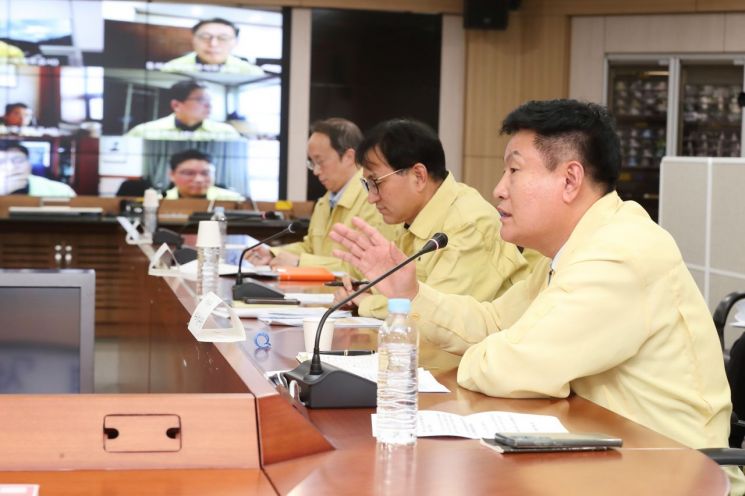 Jeon Byunghyuk, Head of Strategic Reserves Division at Korea National Oil Corporation (far right), is ordering a review of the response posture at the reserve bases during the Oil Crisis Response Task Force meeting related to the Middle East situation.
In preparation for increased volatility in international crude oil and petroleum product prices due to the Middle East crisis, KNOC also discussed measures to stabilize domestic oil prices. The company decided to strengthen daily price monitoring at each distribution stage and to continue promoting price stabilization measures through initiatives such as Opinet and the budget gas station program.
In particular, the strategic oil reserves managed by KNOC at nine stockpile bases nationwide are inventories held by the government to be released to the private sector in the event of oil supply disruptions caused by natural disasters or war. South Korea maintains several months’ worth of stockpiled oil, exceeding the International Energy Agency (IEA) recommended standard of 90 days, by combining government and private reserves.
KNOC has experience in releasing government oil reserves in cooperation with the IEA and others on five occasions: the 1991 Gulf War, Hurricane Katrina in the U.S. in 2005, the 2011 Libya crisis, the 2022 response to a global surge in oil prices, and the 2022 Russia-Ukraine war.
Choi Moonkyu, Acting President, stated, "At a time when public concern over energy supply and demand is growing due to global instability, the role of the corporation is more important than ever," and urged, "All employees must be thoroughly prepared so that emergency measures in line with government guidelines can be implemented without delay."
© The Asia Business Daily(www.asiae.co.kr). All rights reserved.