Reviewing the Parallel Implementation of Sections 122, 301, and 232 Following the U.S. IEEPA Ruling
Initiating the Development of Mid- to Long-Term Response Strategies
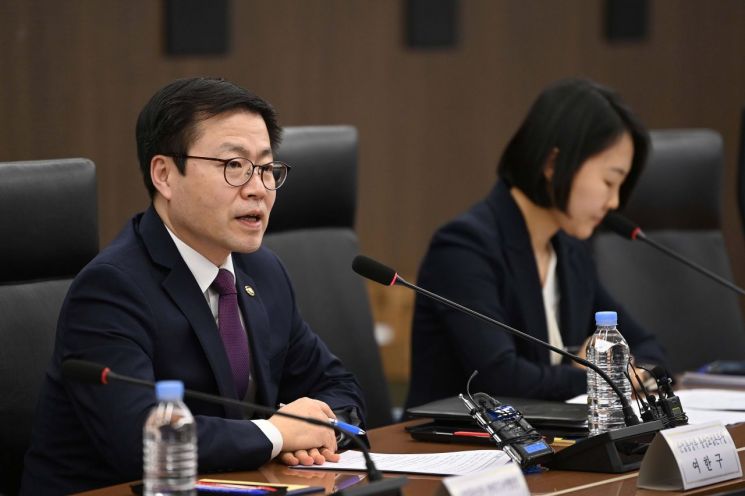 Yeohankoo, Director General of Trade Negotiations at the Ministry of Trade, Industry and Energy, is delivering the opening remarks at the "Experts' Meeting on Current Trade Issues with the U.S." held on the 3rd in the conference room of the Korea Chamber of Commerce and Industry in Jung-gu, Seoul. Ministry of Trade, Industry and Energy.
Hyeohangu, Head of Trade Negotiations at the Ministry of Trade, Industry and Energy, has launched an emergency review with industry and trade experts in response to changes in U.S. tariff policy.
On March 3, Hyeohangu presided over the "Expert Meeting on Current Trade Issues with the United States" at the Korea Chamber of Commerce and Industry in Seoul, attended by leading research institutions and academic experts in the fields of industry and trade.
This meeting was organized to examine the potential impact of U.S. tariff policy-which is shifting from a single-measure approach to a multi-layered and complex structure-on Korean industry and exports, and to discuss appropriate responses. Currently, the United States is reviewing the possibility of imposing global tariffs under Section 122 of the Trade Act, as well as initiating Section 301 investigations, even after the IEEPA (International Emergency Economic Powers Act) ruling. At the same time, it continues to maintain existing item-specific tariffs under Section 232.
Participants noted that U.S. tariff policy is being implemented not as single measures under individual laws, but rather as a combination of various policies. Accordingly, they agreed that it is necessary to consider not only the direct impact of individual tariff actions, but also the restructuring of global supply chains, response strategies of major trading partners, and the overall connection with the U.S. industrial policy framework.
Hyeohangu stated, "As tariff policy is showing signs of shifting to a more complex structure, this is a time when we need a strategic review that considers the possibility of structural change, beyond simply responding to short-term actions. The government will operate a comprehensive, whole-of-government analysis and response system to U.S. trade policy changes and will develop mid- to long-term response strategies."
© The Asia Business Daily(www.asiae.co.kr). All rights reserved.