"Less Than Half of Chinese Companies' Desired Purchase Volume"
"Upcoming U.S.-China Summit Will Be a Key Turning Point"
The U.S. government is reportedly considering a plan to limit exports of NVIDIA's artificial intelligence (AI) chip, the H200, to China, capping the volume at 75,000 units per company. The upcoming U.S.-China summit scheduled for later this month is expected to be a key turning point.
According to Bloomberg News on March 2 (local time), citing sources, "The U.S. government's restriction of H200 exports to China to 75,000 units per company is less than half the unofficial purchase requests made by Alibaba and ByteDance to NVIDIA." The report also stated that "AMD's MI325 chip may be included in the purchase cap."
This measure follows a previous restriction that limited the total export volume to China to 1 million units. A total of 1 million units is enough to build one of the world's largest supercomputers. However, 75,000 units would only allow a single company to build a medium-sized data center with a capacity of about 100 megawatts (MW).
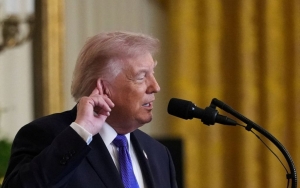
Previously, China refused to import the lower-performing H20 chip. In response, President Trump considered restricting exports of the next-generation "Blackwell" chip as well. However, he put the plan on hold after being dissuaded by senior advisers. As a result, the H200 emerged as a kind of compromise.
Last December, President Trump said that Chinese President Xi Jinping responded positively to the H200 proposal, and mentioned that Chinese regulatory authorities had instructed companies to prepare orders. The upcoming summit between the two countries is expected to be a significant watershed moment. Bloomberg reported that President Trump hopes to reach an agreement that would allow H200 exports to Chinese companies for non-military purposes.
However, hardliners inside and outside the administration expressed concerns that H200 exports would only accelerate the development and commercialization of AI models in China, while providing no benefit to the United States. The H200 had been regarded as the industry-standard chip for training and running AI software such as ChatGPT prior to the launch of the Blackwell chip last year.
Nevertheless, Jensen Huang, CEO of NVIDIA, persuaded President Trump. In a podcast last January, U.S. Secretary of Commerce Howard Lutnick explained that CEO Jensen Huang convinced President Trump to allow AI chip exports on the grounds that "they will contribute to a positive economic relationship with China" and that "overall, it will be positive for us as well." The idea is that by keeping Chinese AI companies dependent on the U.S., it could prevent Huawei from building the foundation it needs to compete globally.
He added, "Many people do not agree with this argument," but emphasized, "this is Jensen Huang's reasoning, and it is what the President has decided."
If these restrictions are implemented, uncertainty over NVIDIA's business in China is expected to increase further. NVIDIA currently generates no revenue from data center operations in China, and even if the U.S. grants export licenses, the company has previously stated it cannot be sure the Chinese government will approve them. Bloomberg reported that China is now in a position where it must balance its semiconductor industry nurturing policies with its AI companies' demand for high-performance U.S. chips.
© The Asia Business Daily(www.asiae.co.kr). All rights reserved.