Expansion of "Top Tier Visa" to Science and Research Sectors
Introduction of Region-Specific Visas
Minimum Wage Requirements Set for Foreign Workers
Measures to Prevent Downward Equalization of Domestic Wages
The government is set to shift away from a focus on low-skilled and low-wage foreign workers, moving toward mid- to long-term national strategies to improve immigration policies, with key initiatives including the attraction of high-skilled talent from overseas.
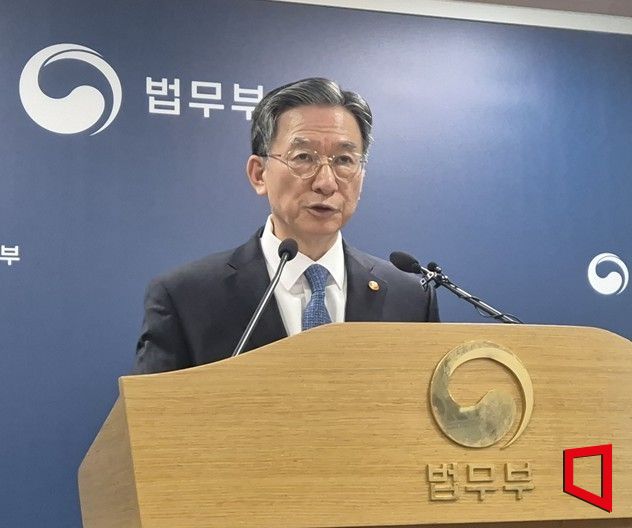 Justice Minister Sung-ho Jeong held a briefing on the "2030 Immigration Policy Future Strategy" on the afternoon of the 3rd at the Government Complex Gwacheon in Gwacheon-si, Gyeonggi Province, explaining future plans. Photo by Taewon Choi
Justice Minister Sung-Ho Chung announced this plan during a briefing on the "2030 Immigration Policy Future Strategy" held on March 3 at the Government Complex Gwacheon in Gwacheon, Gyeonggi Province. The 2030 Immigration Policy Future Strategy outlines the direction and standards for immigration policy through 2030, encompassing the attraction of high-skilled foreign talent, revitalization of the domestic economy, safe border management, social integration that resonates with the public, and protection of foreigners' human rights.
First, the scope of high-skilled talent will be expanded, and the cultivation of regional technical personnel within Korea will be accelerated. In particular, the issuance of the "Top Tier Visa," which provides comprehensive support for the settlement of top-tier talent in advanced industries, will be expanded. Previously, only "corporate employees" in eight advanced industries such as semiconductors, AI, and robotics were eligible. However, going forward, the eligibility will be expanded to include professors and researchers in the science and technology sectors.
To address workforce shortages in regional manufacturing, a new "Developmental Skilled Technical Worker Visa (E-7-M)," also known as the "K-CORE Visa," will be introduced. This marks a departure from the previous method of directly importing unskilled and low-educated workers from overseas, enabling systematic training of mid-level skilled foreign workers at domestic vocational colleges.
There are also plans to help high-quality foreign professionals and their families settle in local communities through the "Regional Immigration Package Program." To this end, a pilot "Regional Vitality Small Business Special Program" will be introduced to allow small business owners to employ foreigners, aiming to revitalize local commercial districts and promote balanced regional development.
To support business activities and talent attraction, the visa system and immigration administration will also be improved. The current employment visa system, which includes 10 categories and 39 types, will be simplified by skill level-high, medium, and low-based on industry type, making it easier to understand. The management of professional, non-professional, and general (short-term, long-term, permanent residency) employment visas will be integrated, accelerating the promotion of regional development and economic well-being.
With the expansion of foreign workforce introduction, the government will ensure the protection of domestic jobs. To safeguard citizens' jobs and working conditions (including wages), the Ministry of Justice will establish and operate a tentatively named "Foreign Worker Wage Advisory Committee" to set minimum wage requirements by industry type and foreign worker category. This is intended to prevent the standardization and lowering of wages for highly skilled domestic workers due to the inflow of foreign labor.
The Ministry of Justice will also introduce a tentatively named "K-Trust Corporate Stay and Employment Certification System." The core of this certification system is to provide incentives, such as automatic extension of foreign workers' stay permits, to companies that lawfully employ foreign workers and excel in human rights protection and stay management. "Visible security" measures, such as advance inspection notices and vehicle patrols, will also be strengthened.
Efforts will also be made to reduce conflicts between Koreans and foreigners, and to enhance the integration and protection of immigrants’ rights and interests. To prevent structural and entrenched conflicts, the government will utilize the Foreign Policy Committee system, as stipulated in Article 8 of the Framework Act on the Treatment of Foreigners in Korea, to seek solutions. Legal procedures will also be established to require the Ministry of Justice to regularly report major immigration policy matters, such as the "Basic Foreign Policy Plan," a government-wide mid- to long-term plan, to the National Assembly, the representative body of the people.
In addition, a "Social Integration Index" will be measured every three years to assess public acceptance of immigrants. To prevent the spread and reproduction of negative stereotypes and misunderstandings about overseas Koreans, awareness improvement projects will be conducted to enhance public perceptions of compatriots.
Long-term foreign residents will be required to complete social integration program training, and those wishing to reside long-term will be provided with Korean language education prior to entry. In particular, a specialized social integration program curriculum will be developed for compatriots to help them avoid difficulties caused by a lack of Korean language proficiency.
To this end, the Ministry of Justice will also expand and reorganize its Immigration and Foreign Policy Headquarters, the dedicated department for these matters. Minister Sung-Ho Chung stated, "The immigration policy of a government rooted in popular sovereignty must be designed on the basis of legal order and national consensus in our society," adding, "We will swiftly implement each task so that immigration policy can contribute to the national economy and the daily lives of the people."
© The Asia Business Daily(www.asiae.co.kr). All rights reserved.