61% of Salary Negotiators Received Raises
Average Raise Among Recipients: 7.5%
6 Out of 10 Say They Are Dissatisfied with Negotiation Results
This year, the proportion of office workers who received a raise during annual salary negotiations decreased, but the average rate of increase actually rose. However, the level of perceived satisfaction with the results of salary negotiations remained low.
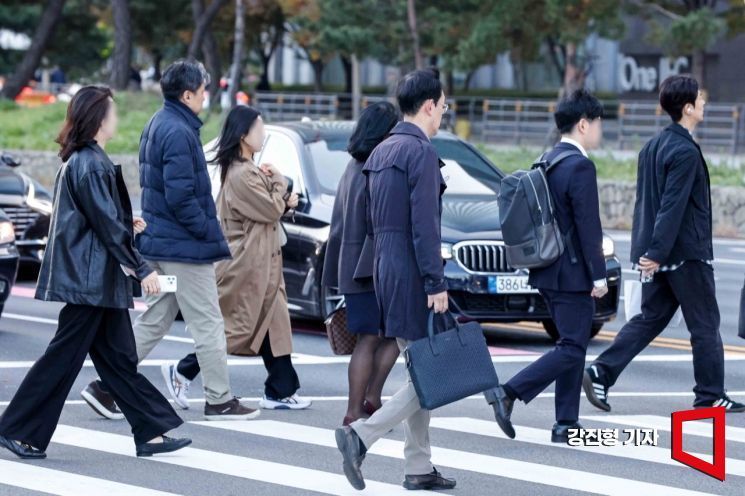
Salaries Have Risen... But Satisfaction Has Dropped
According to the results of the "2026 Annual Salary Negotiation Outcomes" survey conducted by HR tech company Incruit on 1,305 office workers as of March 3, 40.7% of respondents said they participated in salary negotiations this year. Of those, 61.4% succeeded in getting a raise. On the surface, this means that more than half achieved "results."
However, the proportion of employees who received a raise fell by 5.3 percentage points compared to the previous year. Although the average increase was 7.5%, up from 5.4% last year, the number of beneficiaries decreased. This is interpreted as a result of companies strengthening a "selective raise" strategy focused on performance, rather than granting broad-based increases. In fact, the proportion of respondents reporting a salary freeze reached 36.2%, the highest in the past three years, and 2.4% even experienced a pay cut.
By company size, the rate of salary increases was highest at public corporations and public institutions at 77.0%, followed by large corporations (67.1%), mid-sized companies (64.2%), and small businesses (55.2%). However, it is notable that the proportion of employees receiving raises declined across all types of companies compared to the previous year.
The key issue is perceived satisfaction. Among workers who participated in negotiations, 58.9% said they were dissatisfied with the result. "Somewhat dissatisfied" accounted for over 40%, and "very dissatisfied" was in the high teens. The proportion who requested a salary renegotiation was as high as 23.5%, and about half of those succeeded in receiving an additional raise.
However, in many cases, minds had already moved on. Some 52.9% of respondents said they considered quitting after negotiations, and over 90% cited salary as the main reason. In effect, salary negotiations became a "trigger" for considering a job change.

The Pitfall of Averages... Between 45 Million Won and 34 Million Won
The sense of deprivation surrounding salaries is underscored by another set of statistics. Recently, Assemblyman Park Sunghoon released National Tax Service data showing that the "2024 average total annual salary per person" was about 45 million won. On the surface, this is not a small amount.
However, the average is heavily influenced by high earners. The "median salary," which is the salary of the person in the exact middle when all wage earners are ranked by income, was just 34 million won. This means that more than half of office workers earn less than 3 million won per month. The gap between the average and the median value symbolically highlights the distortion in income distribution.
The higher the income bracket, the wider the disparity. The average annual salary of the top 0.1% approached 1 billion won, the top 1% was in the mid-300 million won range, and the top 10% exceeded 90 million won. To earn the average of 45 million won, one must be in the top 35%. In other words, the "average salary" already represents a considerably high-income group.
On the other hand, the reality is even harsher at the lower end. The average salary for the top 60% is 29 million won, for the top 70% it is 24 million won, and for the top 80% it drops to 16 million won. The fact that one in four wage earners makes less than 20 million won per year demonstrates that the dual structure of the labor market remains firmly in place.
© The Asia Business Daily(www.asiae.co.kr). All rights reserved.