Births Increase for Three Consecutive Years
First Net Inflow in 30 Years
Resident Population Surpasses 250,000
While many local governments across the country are facing population decline and the risk of regional extinction, Boseong County is presenting a new solution by achieving a clear V-shaped rebound.
On March 3, Boseong County announced that it ranked seventh nationwide with a total fertility rate of 1.32, according to the "2025 Birth and Death Statistics" released by the National Data Agency. This is an increase from 0.79 in 2022, achieved over three years. The turnaround in birth indicators, which had previously been on a downward trend, is seen as evidence of the effectiveness of the county’s policies.
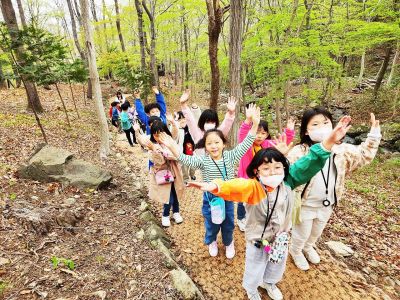 Enjoying the Safe Children's Playground at Jeamsan Natural Recreation Forest in Boseong. Provided by Boseong County
The number of births also continued to rise for three consecutive years, increasing from 81 in 2022 to 124 in 2025. The population decline rate improved from 2.7% in 2021 to 0.51% in 2025, indicating that the population structure has shifted from a period of rapid decline to a phase of stabilization.
There have also been changes in migration trends. For the first time since 1995, Boseong County recorded a net inflow of 380 people, with more people moving in than out. This is attributed to practical population inflows resulting from improved settlement conditions.
The base of the resident population is also expanding rapidly. According to the Statistics Data Center, as of May 2025, the transient population exceeded 250,000, about six times the size of the registered resident population.
The foreign population increased from 473 in 2022 to 1,504 in 2025, supporting the expansion of the region's economically active population and contributing to the revitalization of the local economy.
Such changes stem from an integrated population strategy connecting childbirth, youth, and settlement policies. Boseong County has strengthened early-life support by expanding childbirth incentives and childcare support (2023), introducing a basic birth allowance (2025), providing moving expenses for newlyweds, and distributing congratulatory gifts for newborns.
Additionally, it has established a settlement foundation that leads to marriage and childbirth through youth entrepreneurship projects, family business succession support, and policies to help young people settle in the region.
The policy implementation system has also been reorganized around the administration. In 2023, the Population Policy Division was established, and in 2025, the Youth Vitality Team was strengthened to build a dedicated organization for population response, thereby improving policy execution.
Furthermore, the Local Extinction Response Fund has been invested in improving settlement environments, such as expanding housing, jobs, and living services, designing a structure in which the influx of the transient population leads to an actual increase in the settled population.
An official from the county stated, "Achieving a total fertility rate of 1.32 demonstrates that Boseong County is a great place to raise children," adding, "We will continue to develop innovative policies that residents can truly feel, turning the risk of population extinction into a source of hope."
© The Asia Business Daily(www.asiae.co.kr). All rights reserved.