Gyeongju City Plans Reconstruction of 5.1m Three-Story Stone Pagoda
Pending Tasks Include Coordination with Museums and On-Site Technical Guidance
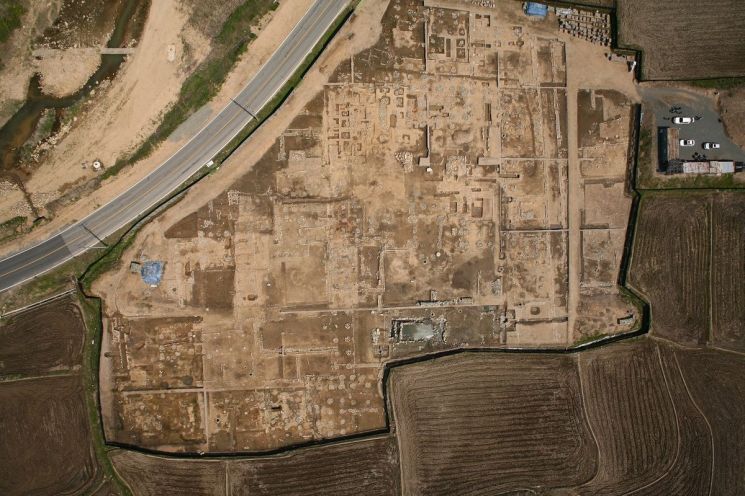
Attention is focused on whether the stone pagoda, which preserves traces of a Unified Silla temple, will once again emerge at the site of the temple in Inwang-dong, Gyeongju.
According to the National Heritage Administration on March 3, the National Heritage Repair Technology Committee recently conditionally approved the proposal to reconstruct a stone pagoda at the historic site of the Inwang-dong temple ruins in Gyeongju during a session of the Restoration and Maintenance Subcommittee.
The Inwang-dong temple site is presumed to be the remains of Inyongsa Temple, which was built to pray for the repose of Kim Inmun (629-694), the second son of King Taejong Muyeol. Excavations conducted over approximately ten years from 2002 confirmed the essence of Silla temple layout, featuring a central gate, twin pagodas, the main hall (Geumdang), and a lecture hall (Gangdang).
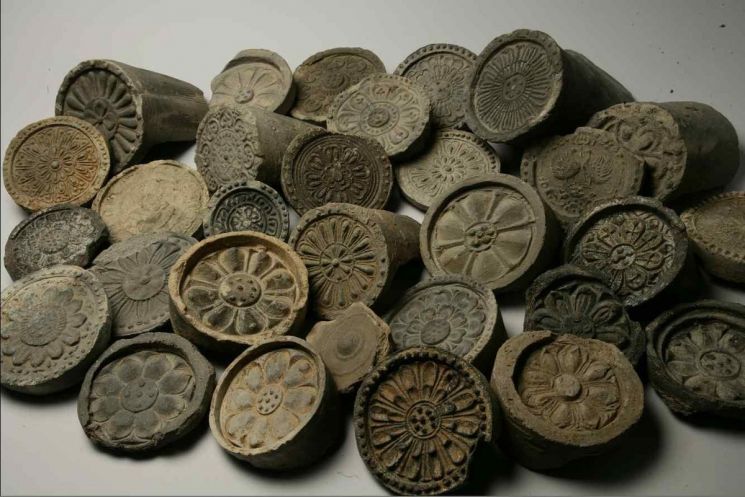
In particular, the discovery of a building foundation in the shape of the character 'A (亞)' at the site of the central gate, as well as traces of a tiled foundation-a feature mainly found in the Baekje region-attracted academic attention. Components of a stone pagoda in the Unified Silla style were also discovered. However, as no artifacts were found to definitively prove the temple’s name, the site was designated as a historic site in 2016 under the name "Inwang-dong Temple Ruins in Gyeongju."
Based on the excavation results, Gyeongju City is pursuing the reconstruction of both the eastern and western pagodas to restore the historic landscape of the site. Eighteen stone pagoda components-ten from the east pagoda and eight from the west pagoda-currently kept in the courtyard of the National Gyeongju Museum, will be returned to their original locations. In addition, twenty-four missing components will be newly crafted to construct a three-story stone pagoda standing 5.1 meters tall.
The National Heritage Administration approved the project, judging that returning the dispersed components to their original positions aligns with the purpose of cultural heritage restoration.
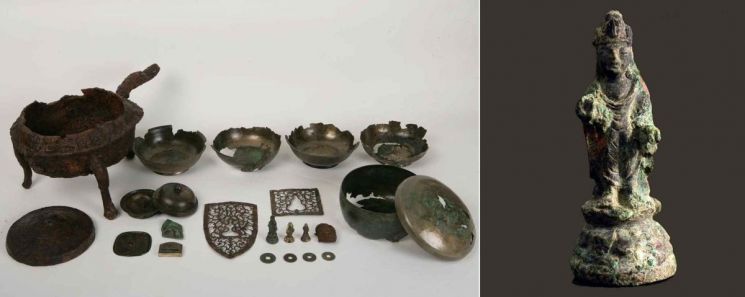
However, meticulous verification and consultation will be required before the actual stone pagoda can be erected. Discussions must be held with the National Museum of Korea and the National Gyeongju Museum, which currently possess the components, regarding their use. The positions of the eastern pagoda fragments must be thoroughly verified, and the assembly process for both old and new components must be carefully reviewed. The committee attached a condition to the approval, requiring that details such as the stability of the stone pagoda and reinforcement methods must be addressed according to on-site technical guidance during construction.
© The Asia Business Daily(www.asiae.co.kr). All rights reserved.