Iran: "No Negotiations with the U.S." as Attacks Target Neighboring States
Will Arab Nations Support the U.S.?...Fears of Escalation
![Trump Hints at Possible Deployment of Ground Troops in Iran... Middle East on Brink of Full-Scale War (Comprehensive) [U.S.-Iran War]](https://cphoto.asiae.co.kr/listimglink/1/2026030310554159180_1772502941.jpg) On the 2nd (local time), an F/A-18E Super Hornet fighter jet takes off from the USS Abraham Lincoln (CVN-72) aircraft carrier to support an airstrike operation in Iran. Photo by AP Yonhap News
On the 2nd (local time), an F/A-18E Super Hornet fighter jet takes off from the USS Abraham Lincoln (CVN-72) aircraft carrier to support an airstrike operation in Iran. Photo by AP Yonhap News
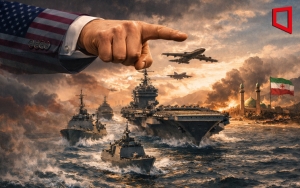
With U.S. President Donald Trump stating that he would deploy ground troops to Iran if necessary, the situation in the Middle East is growing increasingly volatile. If the United States moves beyond limited airstrikes and directly deploys ground forces to Iran, there are concerns that the conflict could escalate into a prolonged war. There are also worries that if Iran abandons negotiations entirely and moves toward long-term resistance, American casualties could increase significantly. Some observers warn that if Iran resorts to indiscriminate attacks on neighboring Middle Eastern countries and those countries respond militarily, the conflict could escalate into a full-scale war across the entire Middle East region.
◆Trump Hints at Possibility of Ground Warfare: "Not Hesitant About Deployment"
![Trump Hints at Possible Deployment of Ground Troops in Iran... Middle East on Brink of Full-Scale War (Comprehensive) [U.S.-Iran War]](https://cphoto.asiae.co.kr/listimglink/1/2026030310571259187_1772503031.jpg)
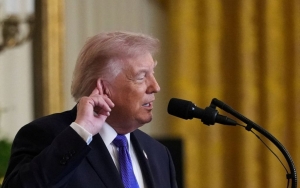
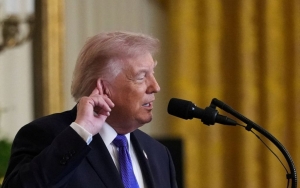
On the 2nd (local time), President Trump, in an interview with the New York Post, addressed the possibility of deploying ground troops, stating, "Other presidents have always said, 'There will be no ground troops,' but I am not hesitant about sending ground forces." He added, "It may not be necessary, or if it becomes necessary, we can send them." This statement is interpreted as a clear indication of his willingness to send ground troops to Iran if the situation demands it.
President Trump also suggested that the war with Iran could become a medium- to long-term conflict. Regarding the duration of the war with Iran, he said, "I don't care how long it takes," adding, "I expected it to take four to five weeks, but we have the capability to endure much longer." On the same day, in an interview with CNN, he stated, "We haven't even started hitting Iran hard yet. The big wave hasn't come," signaling the possibility of further large-scale attacks on Iran.
Should ground troops actually be deployed, there is a risk that the war with Iran could develop into a prolonged conflict. Following the death of Supreme Leader Ayatollah Ali Khamenei and the onset of U.S. ground troops entering Iranian territory, analysts suggest that Iran could claim a legitimate cause for prolonged resistance. There are also concerns that the economic recession and repression of the people-which had eroded the Khamenei regime's popular support-would be overshadowed by a narrative of martyrdom against the United States, bolstering the hardliners' position within Iran.
Linda Robinson, Senior Fellow at the Council on Foreign Relations (CFR), a U.S. think tank, explained, "The removal of Khamenei does not necessarily equate to regime change, as the Islamic Revolutionary Guard Corps (IRGC) essentially represents the Iranian regime." She added, "If Khamenei's death is perceived as martyrdom, it could provide hardliners within the IRGC with a justification for resistance, thereby laying the groundwork for a prolonged conflict."
◆Iran Holds Firm with a Hardline Stance: "No Negotiations with the U.S."
![Trump Hints at Possible Deployment of Ground Troops in Iran... Middle East on Brink of Full-Scale War (Comprehensive) [U.S.-Iran War]](https://cphoto.asiae.co.kr/listimglink/1/2026030310575759188_1772503077.jpg) On the 2nd (local time), a portrait of the late Ayatollah Khamenei, former Supreme Leader of Iran, was displayed in downtown Tehran. Photo by AP News.
On the 2nd (local time), a portrait of the late Ayatollah Khamenei, former Supreme Leader of Iran, was displayed in downtown Tehran. Photo by AP News.
Iran has also indicated its intention for a protracted struggle, launching indiscriminate attacks on neighboring Middle Eastern countries. According to CNN, the IRGC issued a statement warning, "Our enemies should realize that their happy days are over. They will not be safe anywhere in the world-not even in their own homes."
Ali Larijani, Secretary-General of Iran's Supreme National Security Council, who assumed overall military and security control following Khamenei's death, also made it clear that there would be no negotiations with the United States. In a post on the social networking service X (formerly Twitter), Larijani retweeted a Wall Street Journal (WSJ) report claiming that Iran was attempting to negotiate with the U.S. through Omani mediation, and responded, "We have no intention of negotiating," sharply criticizing, "Trump's delusional fantasy has plunged this region into chaos."
As Iran continues its drone and ballistic missile attacks, nine countries in the Middle East-including the United Arab Emirates (UAE), Bahrain, Qatar, and Kuwait-have been exposed to Iranian retaliatory strikes. Airports, high-rise buildings, hotels, and roads not associated with U.S. facilities have also come under attack.
Major energy facilities across the Middle East have also been targeted by Iranian attacks, resulting in operational disruptions. The Qatari Ministry of Defense announced that, on the previous day, two Iranian drones attacked a water tank at a power plant in Mesaieed, south of Doha, and an energy facility in northern Ras Laffan, respectively. Qatar's state-owned energy company, QatarEnergy (QE), stated that it had suspended liquefied natural gas (LNG) production at Ras Laffan, its key natural gas production site, following the Iranian attacks. A refinery in Ras Tanura, Saudi Arabia, was also hit by a drone strike, leading to a temporary shutdown of operations.
◆Will Arab States Turn to U.S. Support? ... Escalation Concerns Grow
![Trump Hints at Possible Deployment of Ground Troops in Iran... Middle East on Brink of Full-Scale War (Comprehensive) [U.S.-Iran War]](https://cphoto.asiae.co.kr/listimglink/1/2026030310595359195_1772503193.jpg) Warehouse in Sharjah, United Arab Emirates (UAE), on fire due to an airstrike by Iran on the 1st (local time). Photo by AP Yonhap News
Warehouse in Sharjah, United Arab Emirates (UAE), on fire due to an airstrike by Iran on the 1st (local time). Photo by AP Yonhap News
In response to Iran's indiscriminate attacks, there is speculation that Arab states-including Saudi Arabia, which had previously opposed U.S. military action against Iran and maintained a neutral stance-might intervene militarily. This has raised fears that the war could spread across the entire Middle East.
According to the Wall Street Journal (WSJ), Arab countries that had previously expressed differing opinions on Iran and Middle Eastern issues are now reportedly forming a united front, centered around Saudi Arabia and the UAE.
On the 1st, the foreign ministers of six countries-UAE, Bahrain, Saudi Arabia, Oman, Qatar, and Kuwait-along with the Secretary-General of the Gulf Cooperation Council (GCC), held a virtual meeting and condemned Iran's indiscriminate attacks, stating that they had caused widespread damage and calling them "treacherous attacks." In a statement released after the meeting, they emphasized, "We will take all necessary measures to protect national security, maintain stability, and defend our territories," warning that "this includes the option of responding to (Iran's) attacks."
William Wechsler, Director at the Atlantic Council, a U.S. think tank, noted, "On Saturday morning (the 28th of last month), many people in the Gulf region woke up angry at the U.S. and Israel, but by nightfall, they went to bed angry at Iran." He explained that while Iran sought to paralyze the economic infrastructure of key Gulf countries such as the UAE, Qatar, and Bahrain in an attempt to halt U.S. and Israeli military operations, this strategy has instead backfired, drawing fierce opposition.
On the 1st, Iranian Foreign Minister Abbas Araghchi addressed the Gulf nations, stating, "Do not direct your anger at us, but rather at the U.S. and Israel. Put pressure on them."
© The Asia Business Daily(www.asiae.co.kr). All rights reserved.