Government Holds Daily Emergency Response Meetings
Monitoring Potential Spillover of Volatile Oil Prices into the Real Economy
As the Middle East situation has become unpredictable following the United States and Israel’s attacks on Iran aimed at regime change, the South Korean government has been holding daily situation assessment meetings and is working to formulate a comprehensive, government-wide response. With Iran responding by attempting to blockade the Strait of Hormuz-a key artery for global crude oil transport-concerns are mounting over the impact on the Korean economy, which relies heavily on energy imports. Observers predict that, in the short term, a simultaneous surge in oil prices and exchange rates is inevitable, which will, in turn, affect prices, exports, and growth in the real economy. The government now finds itself compelled to consider scenarios in which prolonged conflict and escalation, coupled with increased trade uncertainty due to canceled reciprocal tariffs, could lead to an oil shock.
On the morning of March 3, the government held a “Joint Situation Assessment Meeting on the Middle East Situation” presided over by Lee Hyungil, First Vice Minister of the Ministry of Finance and Economy, to devise measures to prevent instability in the Middle East from spilling over into the real economy. Since March 1, the Ministry of Finance and Economy has been operating a “Joint Emergency Response Team” to monitor the Middle East situation, domestic and international financial markets, and the impact on the real economy, including energy, exports, shipping, aviation, and supply chains, around the clock, 24 hours a day.
In the event of any abnormal signs, the government will promptly take necessary action through a market stabilization program of at least 100 trillion won, in cooperation with relevant agencies. It also plans to strictly crack down on unfair practices, such as the dissemination of fake news that exploits investor anxiety, under a zero-tolerance “one-strike-out” policy. Vice Minister Lee stated, “Given the high degree of uncertainty, relevant agencies will keep all possibilities open and closely monitor developments,” adding, “We will convene daily emergency response meetings until the situation stabilizes in order to respond quickly to any changes.”
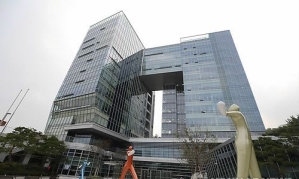
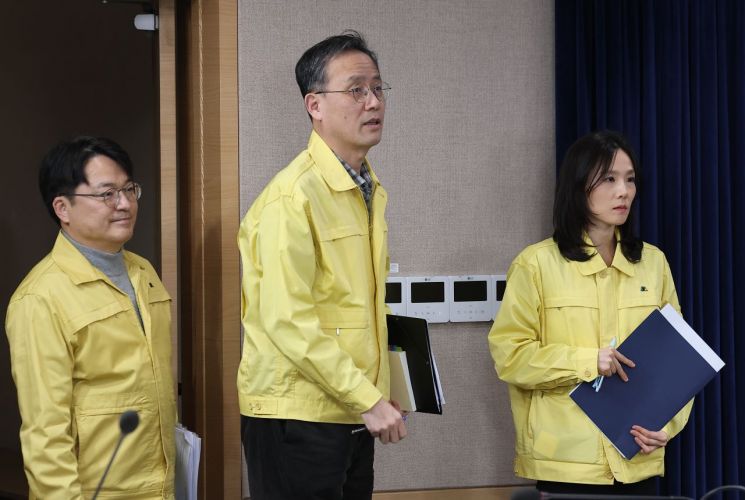 Lee Hyungil, First Vice Minister of the Ministry of Finance and Economy (center), is attending a briefing for the "Emergency Inter-Agency Meeting on Middle East Situation Assessment" at the Joint Briefing Room of the Government Seoul Building in Jongno-gu, Seoul, on the 2nd. Photo by Yonhap News
Industry-related ministries and affiliated public institutions have also simultaneously entered an emergency response posture. The Ministry of Trade, Industry and Energy immediately launched an “Emergency Response Team,” headed by the Director-General of Industrial Resources and Security, with all relevant departments participating, on February 28, the day the situation unfolded. A ministry official said, “We cannot rule out the possibility of increased market volatility depending on how the situation develops,” and added, “We will thoroughly manage to prevent a sharp rise in oil prices from excessively translating into domestic gasoline and gas prices, which directly affect consumers.” On the afternoon of March 3, Korea Electric Power Corporation will hold an emergency meeting attended by the CEO, all executives, and relevant department heads via video conference. The meeting will share the results of an energy situation assessment meeting presided over by the Second Vice Minister of the Ministry of Environment and Energy the previous day, review the response of Korea Electric Power’s overseas operations, and assess the impact on power supply and response plans.
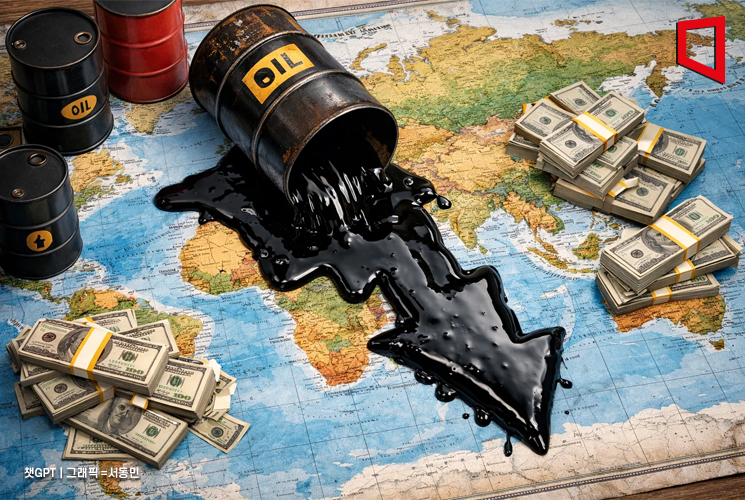
The government is closely monitoring the possibility that the fallout from this crisis could spill over into the real economy. As the United States continues joint attacks with Israel aimed at regime change in Iran, making it difficult to predict when the war will end, the government believes that a sharp rise in international oil prices is inevitable in the short term, regardless of how the situation unfolds. On March 2 (local time), the first trading day after the initial surprise attack by the US and Israel, international oil prices rose by 6.7% based on Brent crude. At one point during the session, prices soared more than 13%, surpassing 82 dollars per barrel. While some analysts believe that supply disruptions from this crisis may not be significant due to the recent oversupply phase, there are also concerns that a full blockade of the Strait of Hormuz-the world’s largest crude oil transport route-could trigger an oil-shock-level crisis, with devastating effects on raw materials, bond yields, and economic growth rates. Market research firm Capital Economics analyzed, “If the situation is prolonged, oil prices could jump to around 100 dollars per barrel, pushing global inflation up by 0.6 to 0.7 percentage points.”
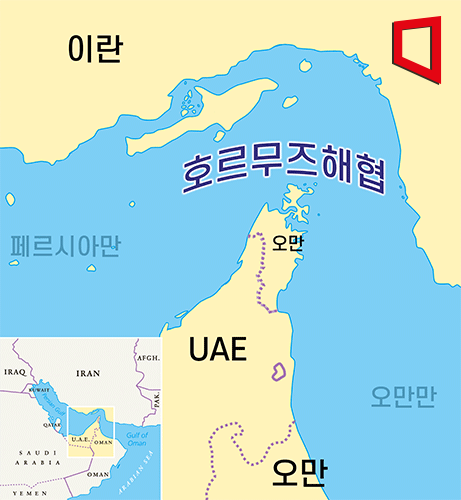
The government is watching for possible Iranian retaliation, such as a full blockade of the Strait of Hormuz or attacks on neighboring countries’ oil refining facilities. The Strait of Hormuz is the route for Middle Eastern crude oil imports to Korea, accounting for about 20% of the world’s crude oil and about 40% of maritime oil shipments. The Islamic Revolutionary Guard Corps (IRGC) has issued warnings that it will burn all ships attempting to pass through the strait, and as global shipping companies have begun suspending operations, the Strait of Hormuz is already no longer functioning as a normal transport route. According to the Ministry of Finance and Economy, “Although we hold sufficient oil reserves, we are also working to secure supplies from outside the Middle East in preparation for a possible blockade.”
Experts point out that the government should focus on minimizing risks in a situation where economic uncertainty has increased due to the cancellation of reciprocal tariffs and other factors. There are concerns that the risk of rising inflation due to soaring oil prices may undermine the effectiveness of expansionary fiscal policies aimed at achieving 2% economic growth. Kang Insu, Professor of Economics at Sookmyung Women’s University, stated, “In the short term, policy capabilities should be concentrated on price management,” adding, “If the situation is prolonged, the burden could spread throughout the real economy, so it is necessary to respond nimbly to volatility in exchange rates and oil prices.”
© The Asia Business Daily(www.asiae.co.kr). All rights reserved.