5,780 Transactions Recorded,
58% Spent at Daily Life Businesses
Application Criteria Eased for Intensive Registration Through End of March
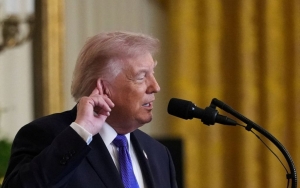
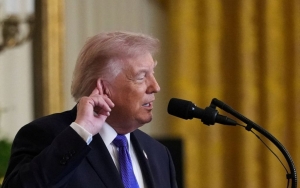
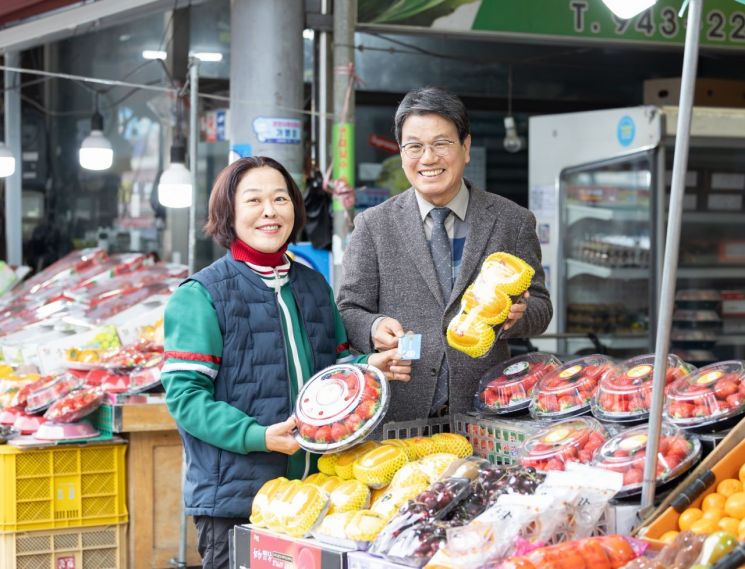 Kim Dong-gon, head of Cheongyang County, is purchasing fruit at a traditional market on the first day of basic income payment / Cheongyang County
The rural basic income program in Cheongyang County, South Chungcheong Province, which is being implemented for the first time in South Korea, had an immediate impact on the local economy as payments were spent directly on consumption from the very first day.
According to Cheongyang County on March 3, the total amount spent on the first day of distribution reached 5,780 transactions, totaling 192 million won. The average transaction amount was 33,000 won per payment. This indicates that the vouchers distributed were immediately used for everyday consumption.
By business type, daily life sectors such as restaurants and small business stores accounted for the largest share at 58.2%.
This was followed by hospitals and pharmacies (9.3%), and private educational institutes (3.7%). Residents in township areas prioritized using Hanaro Mart and gas stations, in accordance with the 50,000 won monthly spending cap.
The county expects this consumption trend to have a positive effect across traditional markets and neighborhood commercial districts.
Kim Donggon, head of Cheongyang County, visited Cheongyang Traditional Market to purchase fruit himself and listen to merchants’ feedback as part of on-site inspections.
The county has also eased application criteria to address blind spots in the policy.
The residency requirement for eligibility has been relaxed from "at least five days a week" to "at least three days a week."
In addition, even if applicants stay in another region during weekdays for work or study, they are eligible if they reside in Cheongyang for at least three days a week.
Furthermore, residents living in non-residential buildings such as farm huts, vinyl greenhouses, or containers can also apply if their actual residency is verified as beginning before the announcement date (October 20, 2025).
Additionally, those whose registered address is different from their actual residence can still qualify by providing supporting documents, and family members or legal guardians may apply on behalf of residents of out-of-county nursing facilities or hospital inpatients. The county will provide up to two months’ worth of payments at once.
Eligible residents must visit their local town or township administrative welfare center by the end of March to apply. Applicants should bring identification and proof of actual residency, such as utility bills for the past two months.
Kim Donggon stated, "We are seeing a virtuous cycle as basic income is recirculated within the community," adding, "Now that we have lowered the threshold, we will make sure not a single person is left out."
© The Asia Business Daily(www.asiae.co.kr). All rights reserved.