Another Wave of Instability Building in Financial Markets
iM Securities: "March Will Be a Critical Inflection Point"
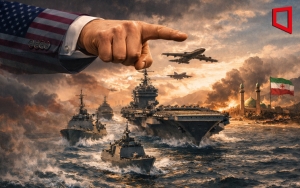
Following the large-scale US and Israeli military operation against Iran, international oil prices have become volatile and tensions have increased across global financial markets. However, some experts suggest that more attention should be paid to the recent surge in credit risk, rather than the Iran risk itself.
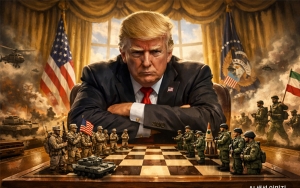
The US military action against Iran was, to a certain extent, a foreseeable step. President Trump has repeatedly attempted to resolve external risks early through military power, and given the upcoming midterm elections, it is highly likely that this stance will be maintained for the time being.
Iran Risk: Containable Due to Overwhelming US Military Power
!["Credit Risk May Pose a Greater Threat Than the Iran Risk" [US-Iran War]](https://cphoto.asiae.co.kr/listimglink/1/2026022711003255790_1772157632.png)
On March 3, Park Sanghyun, a researcher at iM Securities, outlined three scenarios that financial markets should prepare for in light of the current situation.
The first, an optimistic scenario, assumes that, as in Operation Midnight Hammer in June of last year, the military clash will be short-lived and the rise in oil prices will also be temporary.
The neutral scenario projects that even if the military clash persists somewhat, the overwhelming military power of the United States will prevent a blockade of the Strait of Hormuz. While oil price volatility would increase, the direct shock to the global economy would be limited.
The pessimistic scenario involves prolonged military conflict due to strong resistance from Iran, leading to a blockade of the Strait of Hormuz. In this case, persistently high oil prices could trigger another surge in inflation, similar to the period immediately following the Russia-Ukraine war in 2022. The Strait of Hormuz is a key chokepoint through which about 20% of the world’s oil shipments pass.
Among these scenarios, Park assessed the neutral scenario as the most probable. President Trump himself stated he “planned to attack for about four to five weeks,” and with midterm elections approaching, a prolonged conflict would be burdensome both for approval ratings and inflation. In fact, current oil prices are lower than they were during Operation Hammer last June, suggesting that markets are not yet treating the pessimistic scenario as their baseline assumption.
Is 'Credit' Risk the More Pressing Issue?
!["Credit Risk May Pose a Greater Threat Than the Iran Risk" [US-Iran War]](https://cphoto.asiae.co.kr/listimglink/1/2026012316291413753_1769153354.png)
While the Iran crisis continues, other types of instability are building in global financial markets.
On February 25, UK mortgage company Market Financial Solutions (MFS) filed for administration. MFS specializes in loans for rental properties and short-term bridge loans (high-interest, short-term loans designed to meet immediate funding needs), with a loan portfolio totaling 2.4 billion pounds (approximately 4.7 trillion won).
The core issue was not the bankruptcy itself. During the administration process, suspicions of “double pledging” emerged-allegations that assets already pledged as collateral were used as collateral elsewhere as well. Similar allegations were raised during the bankruptcy of US auto parts company First Brands and subprime auto lender Tricolor Holdings in November of last year.
Following this news, the KBW index, the leading US bank ETF, plunged 5.8% intraday. This was the biggest single-day drop since President Trump’s announcement of reciprocal tariffs in April of last year. The stock prices of major global asset management firms operating private credit funds, such as BlackRock and Apollo Global, also fell. Jamie Dimon, CEO of JPMorgan Chase, recently warned, “We are beginning to see signs similar to those before the 2008 financial crisis.”
The ripple effect of credit anxiety is now reaching big tech companies. The CDS (credit default swap, a type of insurance indicator for corporate default risk) levels of major AI firms such as Google, Amazon, Microsoft, and Oracle have recently climbed again, breaking previous highs. This reflects persistent doubts about the profitability of AI investments and concerns about the health of the private lending market, now compounded by the credit shock originating in the UK.
Although the situation has not escalated into a full-blown credit crisis, there is no denying that warning signals are flashing simultaneously in multiple areas. Park commented, “If the Iran-related geopolitical risk persists and high oil prices continue, the risk of credit distress will inevitably intensify and could spread further.”
However, if events unfold according to the previously mentioned “neutral” scenario and geopolitical risk dissipates during March, President Trump is highly likely to strengthen various liquidity policies and other stimulus measures to stabilize US financial markets. Park added, “From the perspective of the US and global financial markets, March is likely to serve as a critical turning point.”
© The Asia Business Daily(www.asiae.co.kr). All rights reserved.