Resident Briefing on Gyeongbuk Daegu Integration Held
Principles of Balanced Development and Local Autonomy Presented First
Andong City has emphasized the need for a cautious approach by arranging a direct communication opportunity with citizens regarding discussions on the administrative integration of Gyeongbuk and Daegu.
On January 26, Andong City announced that it had held the 'Gyeongbuk Daegu Administrative Integration Resident Briefing' to share the current status and key issues of the recently accelerated Gyeongbuk Daegu administrative integration initiative with citizens and to gather a wide range of opinions.
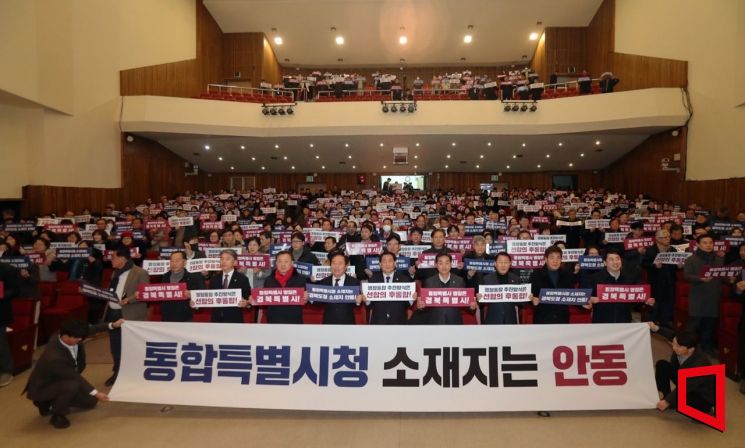
This briefing was organized to help citizens better understand the potential impacts and challenges of administrative integration across the local community, and to build consensus on the direction of future responses.
At the briefing, Andong Mayor Kwon Gichang stated, "Andong does not unconditionally oppose administrative integration itself," adding, "What matters is not the speed of integration, but its direction and sequence, and sufficient conditions and principles must precede it." He further emphasized, "Integration without balanced development could lead to new regional disparities."
During the event, citizens raised questions about changes to the administrative system resulting from integration, development strategies for the northern region, and issues related to autonomy and fiscal structure. Participants expressed the need for more concrete and practical explanations, given that these issues are directly linked to the region's future.
Andong City believes that although the administrative integration discussion is being promoted as a national task to address regional extinction, proceeding without a clear vision for balanced national development and sufficient social consensus could lead to regional conflict and administrative confusion.
Accordingly, the city presented several prerequisites that must be reviewed during the integration process: clarification of the location of the integrated special city hall; transfer of substantial autonomy and allocation of fiscal independence to basic local governments; establishment of a stable and consistent institutional foundation; reflection of regional identity in the name of the integrated special city; and the simultaneous promotion of effective strategies for the development of northern Gyeongbuk.
In particular, the city made it clear that a comprehensive development strategy to address the structural imbalance between the northern and southern regions must be developed alongside integration discussions, and that unless a balanced development plan reflecting the conditions and characteristics of each region is established, the practical effects of integration will inevitably be limited.
Andong City plans to continue sharing the process of administrative integration discussions with citizens, gathering diverse opinions, and responding in a way that can make a tangible contribution to the region's future and sustainable balanced development.
The discussion on Gyeongbuk Daegu administrative integration has now shifted from a matter of 'for or against' to the question of 'what kind of integration can safeguard the region's future.' The message emphasized by Andong City at this resident briefing is clear: before the outcome of integration, the process, design, and institutional mechanisms to ensure regional balance must be established first.
© The Asia Business Daily(www.asiae.co.kr). All rights reserved.