Subzero Temperatures Expected Nationwide on the Morning of the 22nd
First Cold-Related Death Reported
Special Caution Needed for Seniors and Those with Underlying Health Conditions
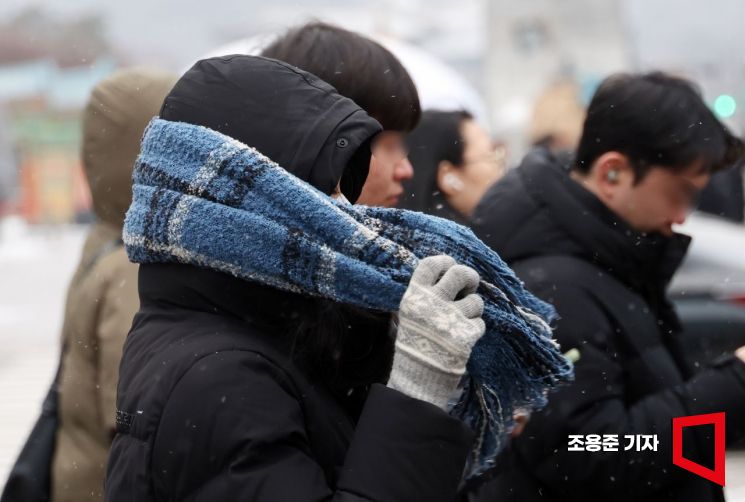 A office worker dressed in thick clothing is wearing a scarf at the Gwanghwamun intersection in Jongno-gu, Seoul. The Asia Business Daily DB
On December 22, most regions across the country are expected to experience extremely cold temperatures below freezing in the morning, making it necessary to take special precautions against cold-related illnesses, falls, and frostbite. In fact, during this winter season, the first cold-related death was reported in Jangseong County, South Jeolla Province. Cold-related illnesses are caused directly by exposure to low temperatures and can seriously affect the human body. The most representative conditions are hypothermia (systemic) and frostbite or chilblains (localized).
According to the Korea Disease Control and Prevention Agency's emergency room surveillance system for cold-related illnesses, on December 18, an elderly woman in her 80s in Jangseong, South Jeolla Province, was reported to have died from a cold-related illness. From the beginning of December, when the surveillance system was activated, through December 19, a total of 63 cases of cold-related illnesses, including presumed deaths, have been recorded.
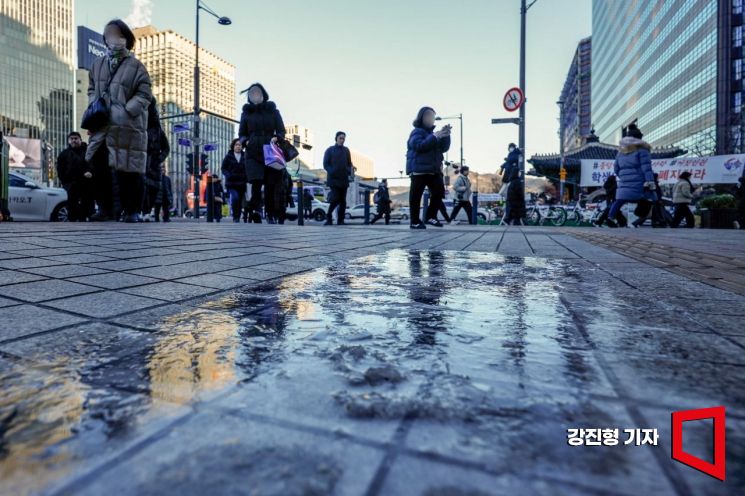 When rain or snow falls during severe cold, the sidewalks become icy, so extra caution is required. The Asia Business Daily DB
63 Cold-Related Illness Cases Reported in 20 Days, 41% Are Over 80 Years Old
Of the cold-related illness cases reported so far, 39 patients (61.9%) were male. By age group, the largest number of cases was among those aged 80 and older, with 26 patients (41.3%). Including these, patients aged 65 and older accounted for 43 cases (68.3%), making up the majority of all cases. By occupation, excluding homeless individuals, 26 patients (41.3%) were unemployed.
The most common illness was hypothermia, affecting 59 patients (93.7%). The highest incidence occurred between 6 a.m. and 9 a.m. (18 cases), followed by 6 p.m. to 9 p.m. (11 cases). The vast majority of cases (54 patients) occurred outdoors.
Since 2013, the Korea Disease Control and Prevention Agency has operated a "Cold-Related Illness Emergency Room Surveillance System" every winter to raise awareness and promote prevention activities for cold-related illnesses during cold waves. Last winter season (December 1, 2024 to February 28, 2025), a total of 334 cold-related illness cases (including 8 deaths) were reported through the surveillance system, representing a 16.5% decrease in patients and a 33.0% decrease in deaths compared to the previous year (400 cases, 12 deaths). The number of cold wave days increased by 1.1 days (from 3.2 to 4.3 days), and the average daily minimum temperature decreased by 2.5°C (from -1.9°C to -4.4°C).
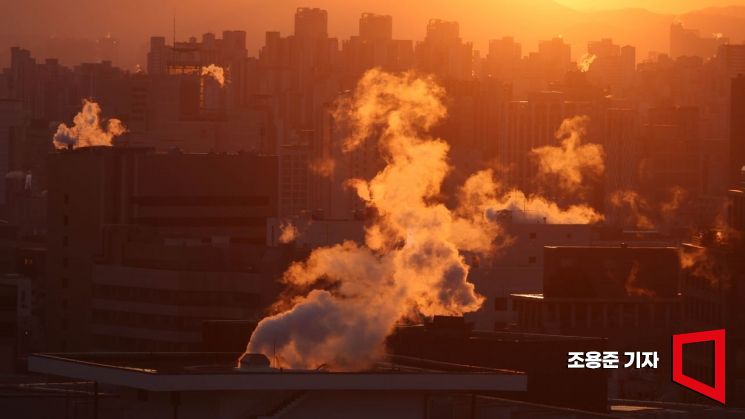 Buildings in downtown Seoul are emitting steam as heating systems operate amid a cold wave. Photo by The Asia Business Daily
8 Deaths Out of 334 Cold-Related Illness Cases Last Year... More Men Than Women, Half Are Over 65
The 2017-2018 winter season (December 2017 to February 2018), which saw the highest number of cold-related illness cases (631), also recorded the longest duration of cold waves (11.8 days) and the lowest minimum temperature (-5.5°C). In previous years, the occurrence of cold-related illnesses was closely linked to the number of cold wave days and minimum temperatures. However, over the past five years, the trend in cold-related illness cases has not shown a clear correlation with weather changes.
Last year, the incidence of cold-related illnesses was about 2.3 times higher among men (69.8%, 233 cases) than women (30.2%, 101 cases). By age group, the highest incidence was among those aged 65 and older (54.8%, 183 cases), and the majority of presumed deaths also occurred in this group (87.5%, 7 deaths). Notably, among those aged 80 and older, 30.8% (103 cases) of all patients and 75.0% (6 deaths) of presumed deaths were reported, confirming that the risk of cold-related illnesses increases with age.
By location, outdoor cases (74.0%, 247 cases) occurred about 2.9 times more frequently than indoor cases (26.0%, 87 cases). The most common locations were roadsides (25.4%, 85 cases), homes (18.3%, 61 cases), and residential surroundings (14.1%, 47 cases).
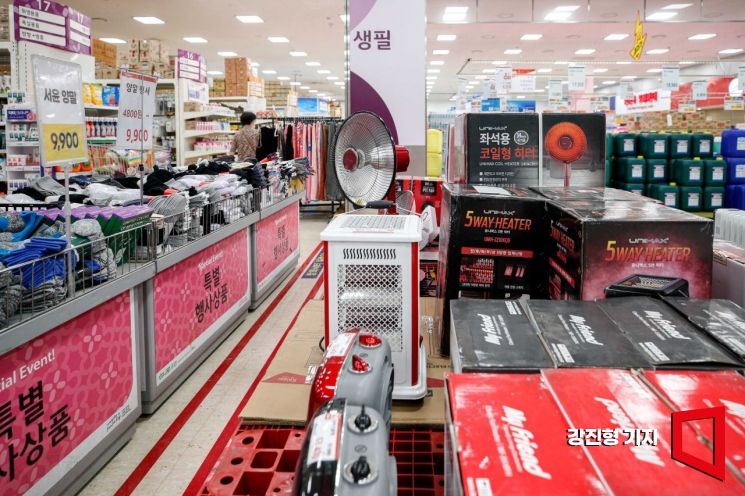 To prepare for the severe cold, it is necessary to have heaters and other cold-weather supplies ready. The Asia Business Daily Database
Special Caution Needed for Those Over 65, Roadsides, and Early Morning Hours
Comparing the relationship between age and location, among the 183 patients aged 65 and older, the most common places where symptoms occurred were roadsides (27.9%, 51 cases), homes (26.8%, 49 cases), and residential surroundings (20.2%, 37 cases). This highlights the importance of cold-related illness prevention in the daily lives of the elderly.
Additionally, the most common times for cold-related illnesses to occur were 6 a.m. to 9 a.m. (20.1%, 67 cases) and 9 a.m. to 12 p.m. (16.8%, 56 cases). Since temperatures drop significantly overnight, special caution is needed for morning activities.
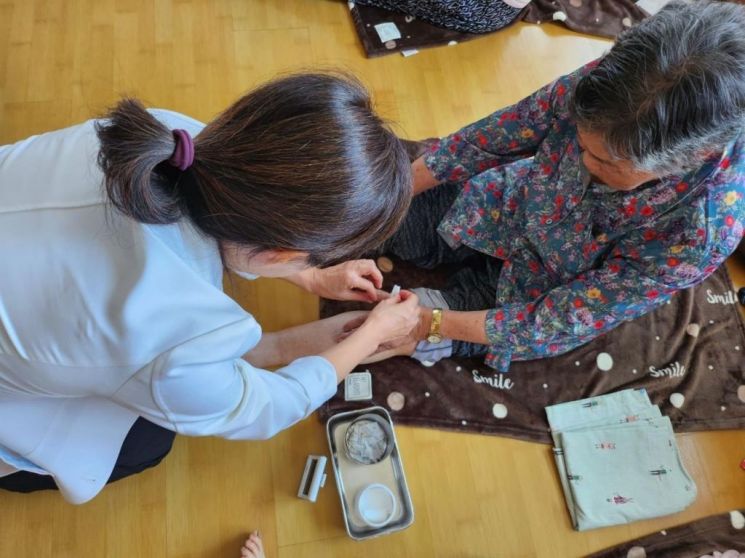 Hwaseong City is taking proactive measures to manage the health of vulnerable groups during the winter season. A city official is visiting elderly residents in the area to check on their health status. Hwaseong City
By region, Gyeonggi Province had the highest number of cold-related illness cases (19.5%, 65 cases), while Gangwon Province had the highest incidence per 100,000 people (2.8 cases). The incidence per 100,000 people was highest in Gangwon (2.8), followed by North Gyeongsang (1.5), North Chungcheong (1.4), and North Jeolla (1.3).
Since most cold-related illnesses and deaths occur among the elderly aged 65 and older, it is recommended that seniors avoid outdoor activities during cold waves and pay special attention to keeping warm both indoors and when going out. People with underlying health conditions should also be cautious, as sudden temperature changes can raise blood pressure and worsen symptoms.
For those with cardiovascular or cerebrovascular diseases, cold weather can activate the sympathetic nervous system, causing blood vessels to constrict, blood pressure to rise, blood viscosity to increase, and urine output to rise, which can lead to dehydration and worsen heart and brain conditions. Those with respiratory diseases may experience worsening symptoms due to bronchial constriction caused by dry and cold air. It is important to continue treatment for chronic conditions and exercise indoors at a suitable intensity every day. People with respiratory diseases should maintain consistent indoor temperature and humidity, practice good personal hygiene to prevent infections, and get vaccinated against influenza.
<Cases Requiring Special Attention During Cold Waves>
- Because their ability to maintain body temperature is weaker than that of healthy adults, they should avoid outdoor activities during cold waves and pay special attention to staying warm both indoors and when going out.
▶ People with chronic illnesses (cardiovascular and cerebrovascular diseases, diabetes, hypertension, etc.)
- Sudden temperature changes can raise blood pressure and worsen symptoms, increasing risk. Avoid sudden exposure to cold and refrain from excessive physical activity.
▶ Alcohol consumption
- Drinking alcohol may initially make you feel warmer, but it actually causes body temperature to drop rapidly, while reducing the ability to sense cold. Therefore, avoid heavy drinking and drink in moderation during cold waves.
▶ Falls (elderly, infants, and people with chronic conditions such as degenerative arthritis)
- Avoid icy roads, sloped or uneven surfaces, and stairs as much as possible. Use flat ground or elevators, and wear gloves to keep your hands out of your pockets while walking.
<Health Guidelines for Cold Wave Preparedness>
- Check weather information (such as wind chill) and minimize outdoor activities in cold weather.
▶ When going out
- Wear thermal underwear or dress in layers with thin clothes, and keep warm with gloves, scarves, hats, and masks.
- If your clothes or shoes get wet in cold weather, change into dry clothes and shoes as soon as possible.
▶ Lifestyle habits
- Engage in light indoor exercise, drink enough water, and eat a balanced diet.
▶ Indoor environment
- Maintain a proper indoor temperature and prevent the air from becoming too dry.
© The Asia Business Daily(www.asiae.co.kr). All rights reserved.