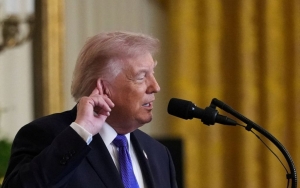
On December 3, President Lee Jae-myung revealed that, during negotiations with U.S. President Donald Trump over expanding South Korea's authority for civilian uranium enrichment and spent nuclear fuel reprocessing, he was offered a "50-50 partnership" for profit sharing.
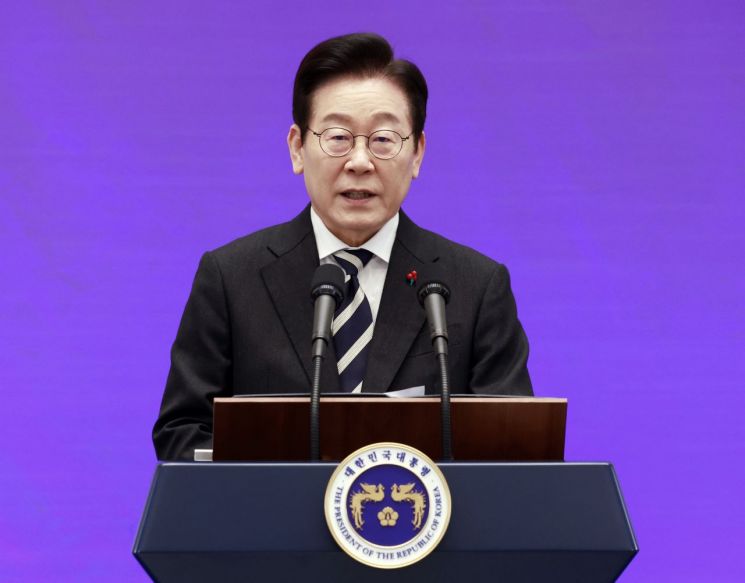 President Lee Jae-myung is speaking at the foreign press conference titled "Democracy Newly Chosen, One Year" held at the Blue House State Guesthouse on December 3, 2025. Photo by The Presidential Office Press Photographers Group, Yonhap News Agency
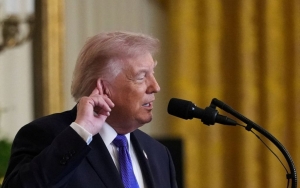
At a foreign press conference held at the Blue House State Guesthouse to mark the first anniversary of the December 3 Martial Law Declaration, President Lee, responding to a question about the roadmap for expanding nuclear fuel-related authority, said, "When I mentioned that we import 30% of our uranium from Russia, President Trump said, 'If you produce it yourselves, you'll have a surplus, so let's go into business together.' He then suggested a 50-50 partnership and asked Secretary of Commerce Howard Lutnick to take charge." Lee added, "I don't think this is a secret, so I'm sharing it," and further explained, "The partnership discussion went well."
However, President Lee said, "Nevertheless, I sense a cautious attitude and a feeling from some within the U.S. government that 'there's no need to rush' regarding the expansion of South Korea's authority for nuclear fuel enrichment and reprocessing." He continued, "I suspect the reason may be concerns about nuclear armament, which is why we have made it clear that we have no intention of developing nuclear weapons."
President Lee reiterated, "I want to make it clear to the world that we have neither the need nor the intention to pursue nuclear armament," and added, "Therefore, expanding authority for nuclear fuel enrichment and reprocessing does not violate nonproliferation norms."
When asked whether there are plans to locate enrichment and reprocessing facilities within South Korea, President Lee replied, "If we are able to do this autonomously, I don't think the location is a major issue," and added, "Whether the facilities are located abroad or domestically is a secondary matter." He also said, "If possible, it would be preferable to do it domestically."
© The Asia Business Daily(www.asiae.co.kr). All rights reserved.