Remarks at Cabinet Meeting
Calls for Action Ahead of First Anniversary of the 12·3 Martial Law Incident
On Coupang Scandal: Orders to "Strengthen Fines and Implement Punitive Damages"
Special Act on Relocation of Ministry of Oceans and Fisheries to Busan Passed at Cabinet Meeting
President Lee Jaemyung, approaching the first anniversary of the 12·3 Martial Law incident, stated, "The remarkable resilience of our democracy is now regarded as a new beacon of hope for democracies worldwide." He emphasized, "We must fully expose the hidden darkness of insurrection throughout the country and open wide the doors to genuine, just national unity." Regarding state violence crimes such as military coups, he urged, "They must be punished as Nazi war criminals were."
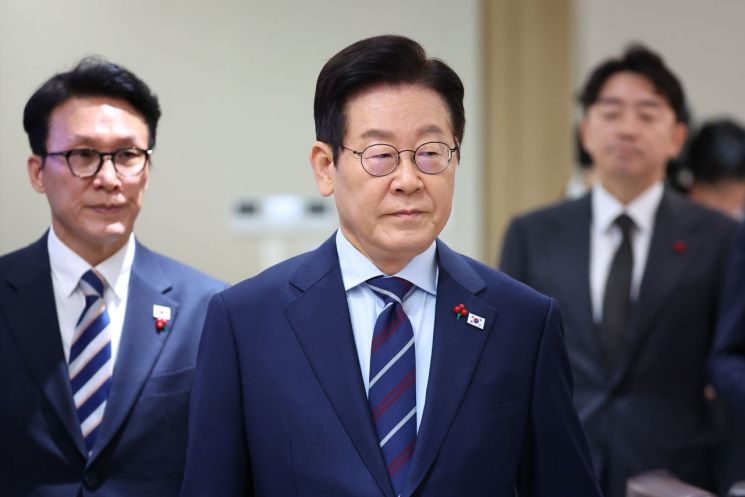
President Lee began his remarks by saying, "It has already been a year." During his opening address at the Cabinet meeting held at the Yongsan Presidential Office on December 2, he said, "On December 3 last year, the democracy and constitutional order that our people had won through bloodshed faced a grave crisis. Yet, the revolution of light, born from the collective intelligence of our citizens, drove away the darkness of insurrection's night and ushered in a new dawn for Korean democracy." He continued, "For the past six months, we have devoted ourselves to restoring the lives of our people and normalizing the state. Although we started later than other countries, we successfully concluded tariff negotiations with wisdom and confirmed the construction of a nuclear-powered submarine, thereby elevating our nation's strategic capabilities to a new level."
He went on to say, "The people's economy is also rapidly stabilizing and preparing for growth." He added, "We will present meaningful certificates, such as commendations, to the citizens who stood together to prevent martial law and defend constitutional order, and we will develop measures to properly commemorate the people's efforts and the spirit of popular sovereignty."
President Lee also called for strict punishment for state violence crimes. He stated, "As a matter of principle, statutes of limitations should not apply to state violence," adding, "Acts such as overturning the country through a military coup or infringing on individual human rights using state power must be punished for as long as the perpetrators live, just as Nazi war criminals were." He further argued, "As long as there are inherited assets, heirs should also be held accountable to the end. This is necessary to prevent recurrence."
Regarding the large-scale personal data breach at Coupang, President Lee stressed the need to swiftly identify the cause of the incident and hold those responsible strictly accountable. He said, "It is truly astonishing that although the scale of the damage is about 34 million cases, the company failed to detect the breach itself for five months after the initial incident." He urged, "Please mobilize all available resources to prevent secondary damage through the misuse of leaked information."
He also instructed officials to strengthen fines and implement punitive damages by referencing overseas cases. President Lee said, "We must take this opportunity to completely change the wrong practices and perceptions that neglect the protection of personal information, which is a core asset in the era of artificial intelligence and digital technology." He called for effective countermeasures and added, "In the era of a hyper-connected digital society, please establish and implement a new digital security system of a 'paradigm shift' level that encompasses both the private and public sectors."
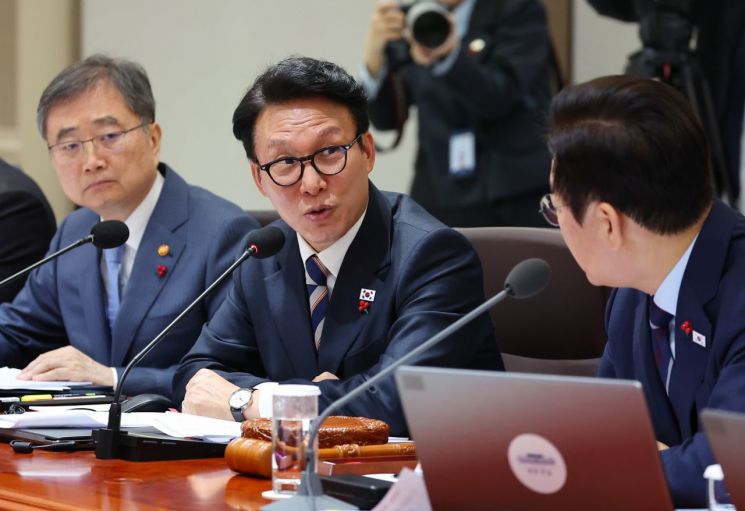
President Lee also appeared to address the recent political funding scandal centered around the Unification Church. He said, "Distinguishing between religion and politics is a truly important constitutional principle," warning, "If constitutional violations are left unchecked, not only will the constitutional order be destroyed, but events similar to religious wars could occur." He instructed the Ministry of Government Legislation to "review the case in Japan, where the dissolution of a religious foundation was ordered."
He again addressed the ongoing issue of wage arrears, which is currently under a comprehensive investigation, urging a policy approach through inter-ministerial cooperation rather than sticking to existing methods. President Lee noted, "As of the first half of this year, the amount of damages from wage arrears alone has exceeded a record 1.1 trillion won." He instructed, "Please conduct thorough on-site inspections and pursue measures to strengthen punishment for habitual offenders."
Meanwhile, President Lee received reports on the outcomes and follow-up plans for his attendance at the Group of Twenty (G20) summit and visits to the United Arab Emirates, Egypt, and T?rkiye; follow-up plans after the Korea-US fact sheet announcement; and the government's innovation strategy for the administration of popular sovereignty. After the Cabinet meeting was switched to a closed session, he directly reviewed the progress of instructions, and deliberated and resolved one promulgation of law, three bills, nine presidential decrees, and two general agenda items.
There were a total of seven laws related to the Lee Jaemyung administration's national agenda, including: the promulgation of the Special Act on Support for Relocating Institutions to Busan (for building a K-maritime powerhouse); partial amendment of the regulations on the composition and operation of the National Defense Innovation Committee (to establish a military system focused on combat missions through robust defense reform); partial amendment of the regulations on the establishment and operation of the National Integration Committee (to realize politics of integration and participation); and the enforcement decree on integrated support for local care, including medical and nursing care (to provide integrated care where people live), among others.
© The Asia Business Daily(www.asiae.co.kr). All rights reserved.