Mixed Reactions to Fact Sheet Release
Tariffs on Cars and Wood Products Cut from 25% to 15%
"Instability Resolved, Impact Eased"
"Trade Environment Worse Than During FTA Era"
On November 14, South Korea and the United States released the Joint Fact Sheet (JFS), a product of their trade and security negotiations. The two countries agreed to strengthen cooperation in strategic industries such as shipbuilding, energy, semiconductors, and pharmaceuticals. The United States will lower tariffs on Korean automobiles and wood products from 25% to 15%, while South Korea pledged to invest a total of $350 billion in the United States. However, experts are divided on the potential impact of this agreement on domestic industries.
President Lee Jaemyung announced the Joint Fact Sheet on this day, which is the outcome of the trade and security negotiations agreed upon during the South Korea-U.S. summit on October 29. The fact sheet contains most of the details of the "Korea Strategic Trade and Investment Agreement" revealed at last month's summit.
In the field of tariffs and trade, the United States will reduce reciprocal tariffs on South Korea to 15%, and South Korea will carry out a total of $350 billion in investments in the United States. Of this, $150 billion will be allocated to the shipbuilding sector, and $200 billion will be invested over the long term, within an annual limit of $20 billion. The investment areas are broadly defined to include "shipbuilding, energy, semiconductors, pharmaceuticals, strategic minerals, artificial intelligence (AI), quantum computing, and various other fields," effectively opening the door to investments in almost all sectors.
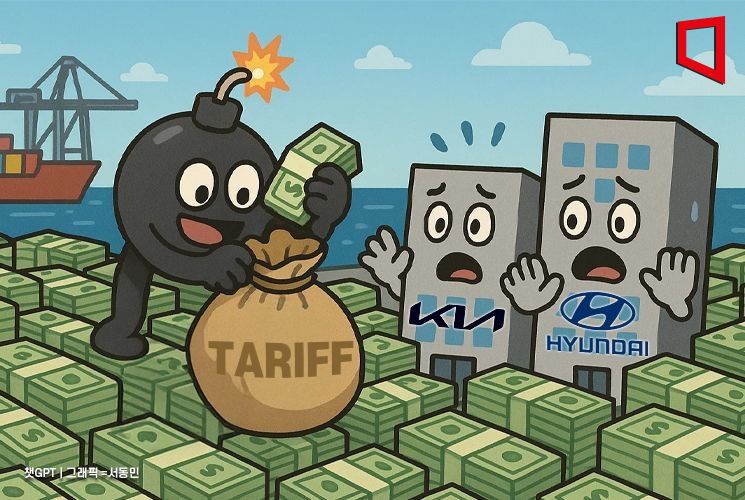
It was specified that tariffs on automobiles, auto parts, and wood products will be reduced from the current 25% to 15%, with no additional tariffs to be imposed. For pharmaceuticals, the tariff rate will not exceed 15%.
Experts' evaluations of the fact sheet were mixed. Some analysts believe that the reduction of reciprocal tariffs on certain items such as automobiles and wood from 25% to 15% will ease cost burdens for related industries. For Korean automobile and wood companies exporting to the U.S. market, price competitiveness is expected to improve and tariff risks will be reduced. Conversely, Korean companies importing U.S.-made wood and vehicle parts will also benefit from lower procurement costs, which is expected to have a positive effect on expanding trade between the two countries.
Han Areum, Senior Research Fellow at the Korea International Trade Association, stated, "This announcement is likely to resolve the instability that industries have experienced due to delayed agreements," adding, "In particular, the reduction of reciprocal tariffs to 15% for automobiles and wood derivatives will lessen the impact on these sectors."
Han also noted that the confirmation of local investments in U.S. shipbuilding and related sectors will have a positive effect on the industry. The agreement includes a plan to pursue institutional improvements that would allow Korean shipbuilders to participate in U.S. Navy vessel projects. Since there is currently a lack of facilities and workforce in the U.S., this could expand indirect order opportunities for Korea's shipbuilding and equipment industries.
However, some argue that since reciprocal tariffs had only been under review and never actually applied, the introduction of a 15% tariff is effectively the creation of a new tariff. Shin Sedon, Professor Emeritus of Economics at Sookmyung Women's University, explained, "Tariffs are increasing from 0% to 15%, so the domestic industry will not be in a more favorable position than before," and added, "The export environment has deteriorated compared to the Free Trade Agreement (FTA) era."
Kim Taehwang, Professor of International Trade at Myongji University, also commented, "Initially, South Korea expected its investment burden to be around $17.5 billion, but during the negotiations, this figure increased to $200 billion," evaluating that "this will be a burden on our economy." He further stated, "Going forward, we must negotiate well in the main round to minimize adverse effects."
© The Asia Business Daily(www.asiae.co.kr). All rights reserved.