NABO Focus Report by the Budget Office
Fire Blankets to Be Provided at EV Charging Facilities
"Fire Vulnerability of Each Charging Station Must Be Considered"
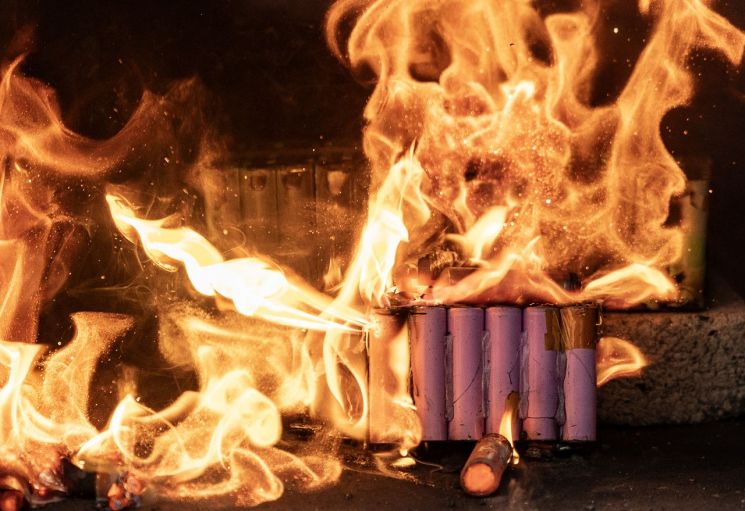
As concerns grow over the fire risks associated with electric vehicles, there are increasing calls for countermeasures. According to recent estimates, equipping battery charging stations with fire blankets to prevent large-scale incidents such as thermal runaway could require a budget of up to 214.8 billion won.
According to Issue No. 125 of NABO Focus, published by the National Assembly Budget Office on November 15, the additional fiscal expenditure required to mandate the installation of fire blankets at charging facilities is projected to range from a minimum of 38.2 billion won to a maximum of 214.8 billion won over the five-year period from 2026 to 2030.
The Budget Office assumed that fire blankets would be provided at electric vehicle charging stations managed by the central and local governments, and that in the case of apartment complexes, 60% of the purchase cost of fire blankets would be subsidized according to the number of households. The unit price of a fire blanket was estimated to be in the 3 million won range.
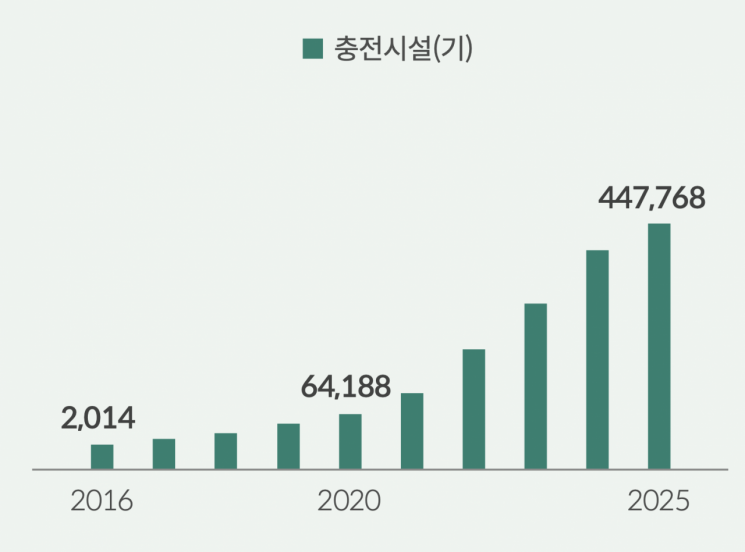
The number of electric vehicle charging stations has continued to increase, from 2,014 in 2016 to 447,768 as of last month. The number is expected to grow by 235 to 318 stations annually until 2030. Approximately 70% of charging facilities are installed in apartment complexes.
Furthermore, as concerns over electric vehicle battery fires have intensified, a total of 48 bills related to electric vehicle fire safety have been proposed in the 22nd National Assembly. These include bills to subsidize the installation of firefighting equipment at charging stations, add battery-related items to electric vehicle safety assessments, mandate regular inspections of charging facilities, and incorporate electric vehicle fire response into firefighter training.
Lee Miyeon, an analyst at the Budget Office, stated, "Fiscal requirements will vary depending on the types of firefighting equipment mandated for charging facilities and the scope of eligible recipients for cost support. Therefore, it is necessary to devise measures that maximize effectiveness within limited budgets." She added, "It is important to select the most cost-effective firefighting equipment for charging facility fires and to design detailed support schemes for installation costs, taking into account the fire vulnerability of each location where charging facilities are installed."
© The Asia Business Daily(www.asiae.co.kr). All rights reserved.