Government Announces "Stick" and "Carrot" Policies in Quick Succession
Following Launch of Task Force to Investigate Officials Involved in Martial Law,
New Measures Introduced to Invigorate the Public Sector
Abolition of Policy Audits, Caut
The government has taken both "stick" and "carrot" measures in quick succession to restore discipline within the public sector. Just one day after announcing the formation of the "Constitutional Respect Government Innovation Task Force (TF)" to investigate public officials who cooperated during the "12·3 Martial Law" incident, the government unveiled new measures to invigorate the public sector, including the institutional abolition of policy audits and a dramatic expansion of special rewards. Analysts interpret these moves as efforts to firmly enforce accountability while minimizing unrest among public officials.
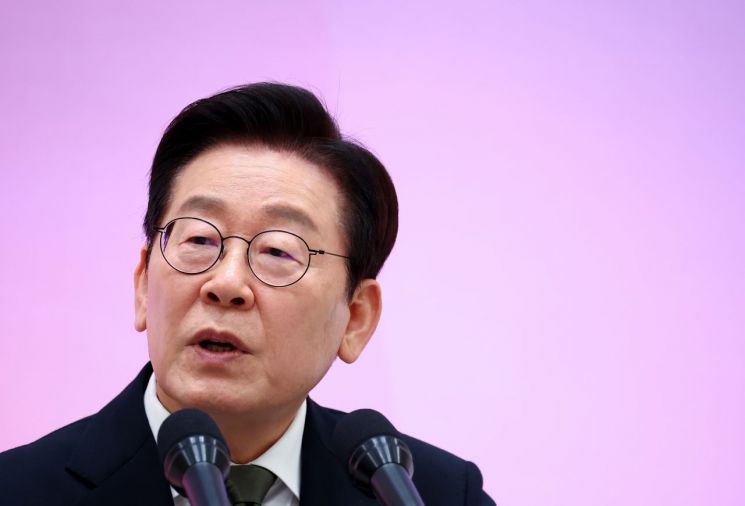
Kang Hoonshik, Chief of Staff to the President, has been operating the "Public Sector Vitalization TF," which on November 12 announced key measures to boost morale within the public sector. These include: ▲ abolition of policy audits by the Board of Audit and Inspection ▲ cautious investigations into abuse of authority charges ▲ improved treatment for disaster and safety officials ▲ a comprehensive overhaul of government duty shifts ▲ expanded incentives for outstanding public officials. In a briefing, Kang stated that the government would revise audit regulations this year and amend the Board of Audit and Inspection Act in the first half of next year to institutionalize the abolition of policy audits, aiming to eliminate the widespread "audit fear" among public officials. The TF, officially launched in July, has been operating for five months.
The process to abolish policy audits by the Board of Audit and Inspection is being carried out in stages. Choi Jaehae, who retired as Chairman of the Board on November 11, declared the abolition of policy audits in August, and the Board has since been operating its own reform TF. If the government revises the audit regulations within this year and pursues amendment of the Board of Audit and Inspection Act in the first half of next year, work could be conducted under the new system starting in the second half of the year.
In particular, the government will address the abuse of authority charge, which has been cited as a reason for passive performance among public officials. The plan is to improve investigation practices and clarify the legal definition of abuse of authority to prevent its misuse as a tool for political retaliation. Since July 29, when the Supreme Prosecutors’ Office was instructed to exercise caution in such investigations, only two indictments have been made. The government plans to amend the relevant criminal code in the first half of next year to support more proactive work by public officials.
Measures to improve working conditions and treatment were also announced. The government will significantly enhance the treatment of public officials in disaster and safety sectors, who are responsible for the safety and lives of citizens, as well as junior military officers. Specifically, the government will increase related personnel by 700, double the disaster and safety allowance, and provide special promotion opportunities. For junior military officers with less than five years of service, the base salary will be increased by up to 6.6%, allowances will be raised, and a future-preparation savings plan will be introduced. To this end, 130.4 billion won has been allocated in next year's government budget proposal.
The government will also expand the duty shift system and incentives for outstanding public officials. The goal is to fully implement remote duty shifts. The government also plans to gradually integrate agency duty shifts and 24-hour situation rooms. To minimize public inconvenience, artificial intelligence (AI) will be used to handle civil complaints. As a result, the government expects to save 16.9 billion won annually in duty shift expenses and to be able to increase the number of public officials by 1,712 due to reduced duty shift absences. Additionally, the government plans to grant exceptional rewards of up to 30 million won per person and expand preferential personnel treatment for public officials who achieve extraordinary results. Furthermore, five key initiatives have been announced, including improvements to the job rotation system and personnel management focused on expertise, to strengthen public sector capabilities in the AI era.
Analysis: Move Aims to Preempt Unrest in Public Sector Following Launch of 'Constitutional Respect Government Innovation TF'
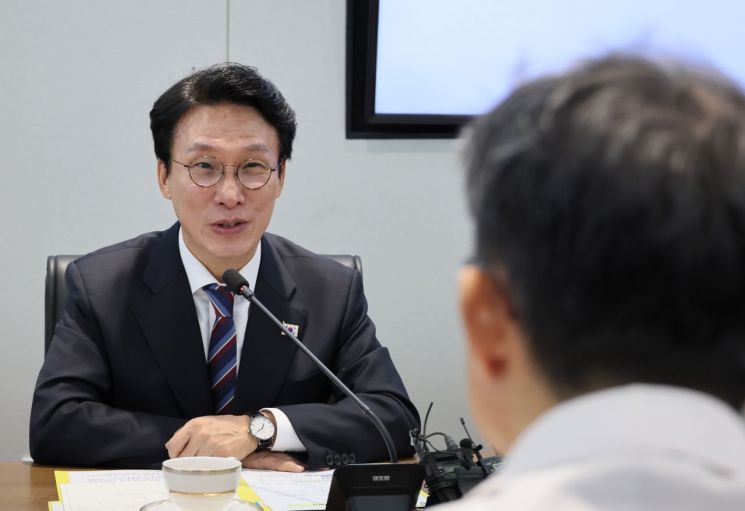
Some observers interpret the government’s bold measures to boost public sector morale as a "carrot" strategy to preempt unrest and rigidity among public officials following the launch of the "Constitutional Respect Government Innovation TF," which will be operated under Prime Minister Kim Minseok until February next year. Since the TF will investigate all public officials in 49 central administrative agencies, excluding presidential and independent agencies, and depending on their level of involvement in the "12·3 Martial Law" incident, criminal punishment, administrative responsibility, or personnel action could follow by February 13 of next year, there are concerns that government momentum could weaken at the end of this year and the beginning of next year. Prime Minister Kim also stated, when proposing the TF, "We are seeking ways to minimize unrest within the public sector."
There is also analysis that the combination of carrot and stick sends a clear message to public officials. Since the beginning of his administration, President Lee has emphasized "discipline in the public sector" and "public officials’ responsibility" both in meetings at the Yongsan presidential office and in on-site inspections. He has repeatedly stressed, "One hour of a public official equals 52 million hours," underscoring the need to change the culture within the public sector. A ruling party official commented, "Since the administration started without a transition committee, there has not been a comprehensive personnel reshuffle among public officials," adding, "By firmly enforcing accountability and setting clear standards, government momentum can be enhanced."
However, there are also concerns that this process of filtering out personnel from the Yoon Sukyeol administration could be misused as a way to force public officials into political alignment. The People Power Party criticized the move as an attempt to shift the unsettled atmosphere caused by the prosecution’s withdrawal of the Daejang-dong case appeal into a "rebellion frame." Choi Boyoon, Chief Spokesperson of the People Power Party, argued, "Instead of harassing honest public officials, it is the government’s duty to stand trial in the Daejang-dong case." Assemblyman Sung Iljong also stated on a radio broadcast, "This is a second round of rooting out deep-seated evils," and questioned, "What could public officials have possibly done or said during martial law that lasted only two hours?"
© The Asia Business Daily(www.asiae.co.kr). All rights reserved.