Union Protests Over Reduced Workload
Transport Strike and Blockade Rallies Held
Police Declare "Illegal Assembly" and Order Dispersal
Union Counters: "No Reasons Provided for Dispersal"
"Grounds Under Article 20 of the Assembly Act Mus
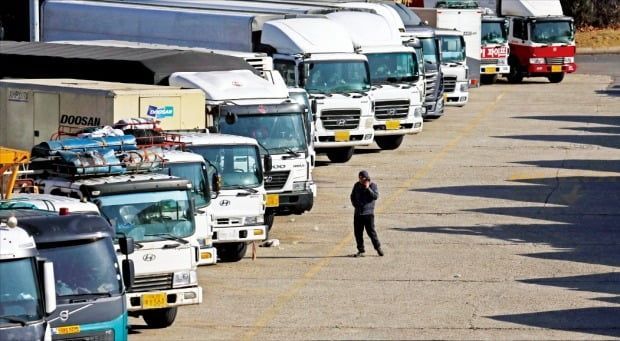
The Supreme Court has ruled that if the police do not specifically inform protestors of the reason for dispersal during a demonstration over the adjustment of freight truck routes (transportation routes), participants cannot be punished for violating the Assembly and Demonstration Act (the Act on Assembly and Demonstration) simply for not complying with the order.
According to the legal community on November 12, the Supreme Court's Second Division (Presiding Justice Kwon Youngjun) dismissed the prosecution's appeal in the final trial of three transportation workers and upheld the lower court's acquittal on the charge of violating the Assembly and Demonstration Act. The suspended prison sentences for the three defendants were maintained.
This case originated in 2021 during the process of adjusting new transportation routes for a food and food materials distribution company. As the company reorganized its routes, friction arose between union-affiliated drivers and the transportation company over the allocation of transport zones. The union demanded a readjustment of the routes, arguing that reduced work threatened their livelihoods, but the company refused. As a result, starting on September 2, 2021, the drivers began a transport strike, held rallies in front of the factory, and blocked the operation of freight trucks as part of collective action.
When disputes over the termination of transport contracts and claims for damages emerged, the union offered to end the strike if the company would exempt them from liability for damages. The company rejected this demand. Ultimately, the local union headquarters instructed a complete refusal of route assignments and planned rallies to block vehicle departures at several worksites. Knowing that production would be disrupted if the raw materials center failed to supply materials to the factory on time, they also pushed for rallies as a means of pressure. They submitted an outdoor assembly notice to the police station and proceeded with the rallies as planned.
At the time, Level 3 social distancing measures for COVID-19 were in effect, prohibiting gatherings of more than 50 people. Nevertheless, about 70 people gathered for the rally, prompting the police to declare it an "illegal assembly" and issue a dispersal order. The union countered that the police did not specifically explain the reason for dispersal, arguing that the order merely demanded dispersal without following the procedures stipulated by law.
The court of first instance ruled that "there was no illegality in the police's dispersal order procedure" and sentenced the three participants in the collective action to ① 8 months in prison, suspended for 1 year, ② 6 months in prison, suspended for 1 year, and ③ 4 months in prison, suspended for 1 year, respectively. The appellate court imposed the same sentences but determined that their actions could not be considered a violation of the Assembly and Demonstration Act. The appellate court stated, "When issuing a dispersal order, the specific grounds under each subparagraph of Article 20, Paragraph 1 of the Assembly and Demonstration Act must be clearly communicated." The court held that failing to comply with a dispersal order without being informed of the reason cannot be deemed a violation of the Act. The convictions for obstruction of business and violation of the Infectious Disease Control and Prevention Act were upheld.
The prosecution appealed, arguing that the sentences were too light, while the defendants appealed, claiming the sentences were too heavy. However, the Supreme Court dismissed both appeals and upheld the acquittal on the Assembly and Demonstration Act charge. The Supreme Court stated, "There is no error in the lower court's judgment that would constitute a misunderstanding of legal principles in violation of the rules of logic and experience."
© The Asia Business Daily(www.asiae.co.kr). All rights reserved.