Collective Cheating Uncovered in AI Class
University Reports "40 Students Have Voluntarily Confessed So Far"
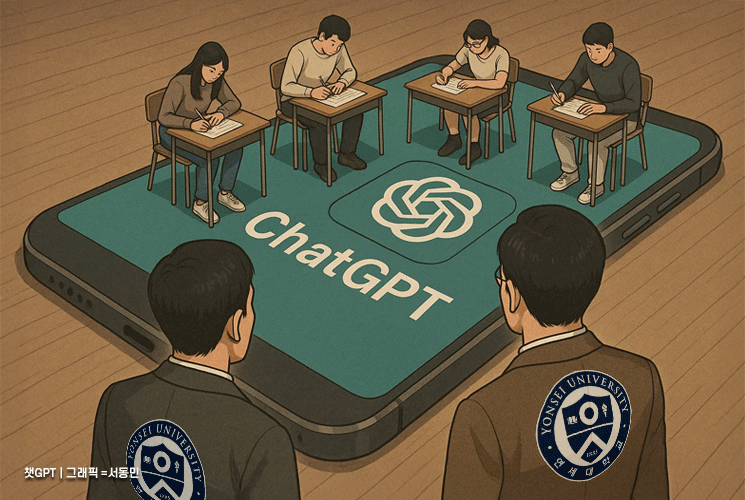
Yonsei University has been rocked by a large-scale cheating scandal uncovered in one of its lectures. The shock is particularly intense because many of the cases reportedly involved the use of generative AI tools such as ChatGPT, reigniting debates about AI ethics on campus. On November 9, Yonhap News reported on the recent 'AI cheating' incident at Yonsei University's Sinchon campus. The professor in charge of the third-year course 'Natural Language Processing (NLP) and ChatGPT' at the Sinchon campus recently announced, "Multiple cases of cheating have been discovered," and declared that all students caught would receive a score of zero on their midterm exam. Approximately 600 students are enrolled in this course.
 A lecture room inside Yonsei University, Seodaemun-gu, Seoul. Photo is not related to the specific content of the article.
The exam in question was held online on October 15, with students required to log in to a website and answer multiple-choice questions remotely. Test-takers were instructed to record themselves on video throughout the exam, ensuring that both their faces and hands were visible. However, some students were found to have cheated by adjusting their camera angles or running multiple programs simultaneously. The professor reportedly issued a notice urging students to come forward voluntarily.
The exact number of students who cheated is unknown, but some believe it could be more than half of the class. One student posted a poll on the university community board 'Everytime' with the prompt, "Let's vote honestly." As of that day, excluding those who identified themselves as non-participants, 211 out of 387 respondents admitted to cheating, while 176 said they completed the exam on their own.
Three Years Since AI Entered Academic Settings, but University Response Remains Insufficient
It is believed that many students secretly used AI during the cheating process. Student A, who took the course, told Yonhap News, "Most people used ChatGPT to take the exam," adding, "I figured it would be hard to get a good grade if I was the only one not using it." Student B, who took the class last semester, also confessed, "Many friends, including myself, searched with AI while taking the test." A Yonsei University official commented, "So far, about 40 students have voluntarily confessed to cheating, while 10 students suspected of cheating have not come forward," adding, "If cheating is confirmed among those who have not confessed, disciplinary action may be considered."
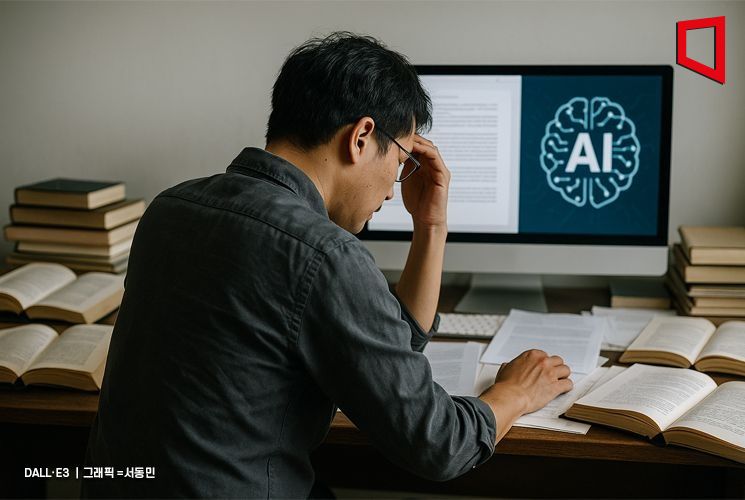 It has been three years since AI deeply entered the academic field, but universities' responses remain insufficient. According to a survey by the Korea Research Institute for Vocational Education and Training, 91.7% of 726 students from 4- to 6-year universities reported having used AI for assignments or research. However, a survey by the Korean Council for University Education found that 71.1% of 131 universities nationwide have yet to establish guidelines for generative AI. The Asia Business Daily
Although it has been three years since AI became deeply integrated into academic settings, university responses remain insufficient. According to a survey by the Korea Research Institute for Vocational Education and Training, 91.7% of 726 students at four- to six-year universities reported using AI for assignments or research. However, a survey by the Korea Council for University Education found that 71.1% of 131 universities nationwide have yet to establish guidelines for generative AI.
There are also concerns that as students become more dependent on AI, their ability to think independently is declining. Jeong Kiin, a professor in the Department of Korean Language and Literature at Kyung Hee University, said, "It's like students who should be learning to walk are riding a motorcycle with AI," adding, "I emphasize the dangers of AI dependency, but it's not easy." Some argue that the methods of education and assessment in the AI era need to be redefined, suggesting that active use of AI should be allowed as long as sources are transparently disclosed. Kim Myungjoo, Director of the AI Safety Research Institute, said, "Students should be required to submit not only AI-generated results but also their own opinions, to foster critical thinking."
© The Asia Business Daily(www.asiae.co.kr). All rights reserved.