Ecological Destruction Caused by Fangsheng Rituals
Widespread Practice Continues Despite Legal Bans
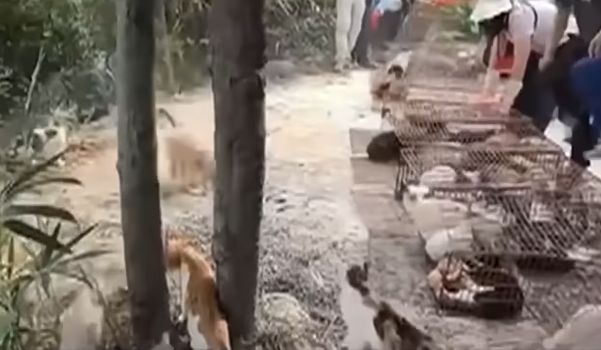
"Accumulating spiritual merit by saving living beings." Recently in China, the noble intention behind the Buddhist practice of releasing animals into the wild, known as "fangsheng," has been lost, and instead, these acts have often resulted in the killing of animals. In one such incident, over 1,000 cats were released into a reservoir in Guangdong Province as part of a fangsheng ritual, leading to many cats drowning. This act, carried out under the pretense of seeking blessings, has sparked fierce criticism from locals, who are calling it animal abuse. According to a report by the South China Morning Post (SCMP) on November 9, a video showing a large number of people releasing cats near Yingzhui Reservoir in Qingyuan, Guangdong Province, has been widely circulated online.
 However, in recent years, there has been growing controversy over ecosystem destruction caused by releasing animals into the wild. This incident occurred on the 1st. YouTube channel Dongzhang+
Fangsheng is a traditional Buddhist ritual in which animals such as fish, turtles, and birds are released into the wild to practice compassion and accumulate spiritual merit. This cultural practice, which began around 2,000 years ago, is intended to alleviate the suffering of slaughter and to pray for blessings in the next life. Among believers, there is a widespread belief that the more animals released, the greater the merit accumulated. Large-scale fangsheng events, in which hundreds of fish, snakes, turtles, and birds are released at once, have become popular. It is estimated that around 900 million animals are released through fangsheng in China each year.
However, in recent years, there has been growing controversy over ecosystem destruction caused by releasing animals into the wild. This incident occurred on the 1st. Two large trucks filled with cats arrived and released more than 1,120 cats. The total weight reached 2,722 kilograms, and the cost of purchasing and transporting the animals amounted to 30,997 yuan (approximately 630,000 Korean won).
The cats, released from their cages, were gripped by extreme fear. Some climbed up trees, while others jumped into the water. The video shows people on paddleboards nearby trying to rescue cats that were struggling and exhausted from swimming. Starting from the day after the release, on the 2nd, animal protection volunteers arrived at the scene to rescue the cats. However, many cats were seen shivering and sick, and some had already died.
The Qingcheng branch of the Qingyuan Public Security Bureau confirmed that 10 people were involved in the incident and that about 400 cats were released. Authorities stated, "They were drawn by the beautiful natural scenery and bought cats with the intention of seeking blessings, then transported them to the reservoir." They added, "There is no evidence of criminal intent, and currently no evidence of illegal activity," and noted, "These individuals have conducted similar fangsheng activities several times in the past."
SCMP reported that this is not the first time such an incident has occurred at Yingzhui Reservoir. In August 2023, dozens of cats were found dead or sick after a large-scale fangsheng event in the same area. This sparked public outrage on social media. Many online users criticized the act, saying, "This is not fangsheng. It is large-scale animal abuse disguised as religion."
Previously, in 2017 in Xiamen, China, a person died after being bitten by a snake they were attempting to release. In 2016, participants in a fangsheng event in Qingdao released thousands of sparrows into the wild, but most died of starvation as they could not adapt to the wild. There have also been many cases where the indiscriminate release of non-native species has led to the extinction of native species and the destruction of ecosystems.
© The Asia Business Daily(www.asiae.co.kr). All rights reserved.