[The 24-Hour Trading Era Is Coming]
Brandon Tepper, Senior Vice President of Nasdaq
"Investors Expect an 'Always On' Market"
Recognizes Market Concerns, "Focusing on the Right Incentive Structure"
Identifies 'Liquidity' as Korea's Key Challenge... "Infrastructure and Transparency Are Critical"
"What's clear is that the future of trading is global, continuous, and data driven. Exchanges that prioritize scalability, transparency, and trust will be best positioned to lead."
![[Interview] Nasdaq Senior Vice President: "The Era of 24-Hour Trading Is Here... Korea Must Secure Liquidity"](https://cphoto.asiae.co.kr/listimglink/1/2025110917232510228_1762676605.jpg)
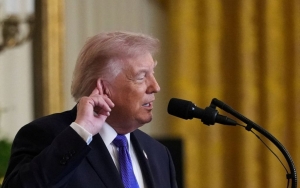
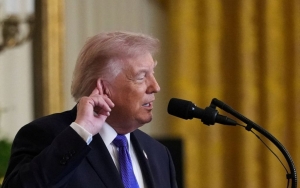
Brandon Tepper, Senior Vice President of Nasdaq, who is overseeing the implementation of 24-hour trading in the second half of next year, recently told The Asia Business Daily in an interview, "Investors now live in an era where they can order food or goods anytime via mobile, and they expect markets to be 'always on' in a similar way." This is Tepper's first interview with a Korean media outlet since joining Nasdaq in 2001, where he currently serves as Global Head of Data.
To begin, Tepper cited "structural changes in the global market" as the main reason Nasdaq is adopting a 24-hour trading system. He explained, "At Nasdaq, we're addressing a growing and persistent demand from global investors for access to U.S. equities during their local market hours," adding, "This reflects a fundamental shift in how global markets are evolving."
He also noted that Nasdaq has "taken a deliberate, infrastructure-first approach to this transition," and over the past year has invested heavily in capacity planning, latency optimization, monitoring, and risk management. "Our systems have been tested under high-load conditions, and we're confident in our ability to deliver a stable and resilient experience for market participants," he said.
However, there are concerns in the market that switching to 24-hour trading could lead to reduced liquidity, market distortions, and an increase in emotional trading. In response, Tepper acknowledged, "These concerns are valid." He continued, "Liquidity during overnight hours is currently limited, which is why we're focused on creating the right incentives for market makers and institutional participants to engage."
He emphasized, "What's important is that we're bringing overnight trading onto the exchange, where it benefits from regulatory oversight, transparent price formation, and robust surveillance," adding, "This is a meaningful addition to more fragmented off-exchange activity."
Tepper also pointed out that, following the United States, major markets such as the United Kingdom, Hong Kong, Germany, and Singapore are actively considering extending their trading hours. Specifically, he mentioned that Hong Kong and Singapore are responding swiftly to growing demand for digital assets and broader market access. He said, "The future of trading is global, continuous, and data driven," suggesting that a 24-hour trading system will essentially become the new normal.
He also gave a positive assessment of the Korea Exchange's plan to introduce "8to8" (12-hour trading) within the year and to prepare for a 24-hour system in the long term. However, he identified "liquidity" as the most important challenge the Korean market may face in this process. "Liquidity is the foundation of any healthy market," he said. "Extending trading hours without sufficient participation can lead to wider spreads and increased volatility."
He further explained, "Korea's challenge will be to ensure that extended hours are supported by active market maker engagement and investor education, and of course valuable information at that time." He stressed, "Infrastructure readiness is also critical, particularly around corporate actions, surveillance, and risk management." Ultimately, this means that Korea's success will depend on how well it balances increased accessibility with stable market operations.
In addition, Tepper listed infrastructure, transparency, early collaboration with liquidity providers, and a phased, data-driven approach as the key priorities that Korean regulators and exchanges should consider before implementing a 24-hour trading system. "Systems must be resilient and capable of supporting real-time surveillance, risk management, and corporate actions. These aren't back-office concerns, they're essential to investor trust and protection," he emphasized.
He continued, "They should monitor behavior, refine the model, and focus on meaningful access - not just more hours," adding, "It's about meaningful access backed by infrastructure, data and insights."
© The Asia Business Daily(www.asiae.co.kr). All rights reserved.