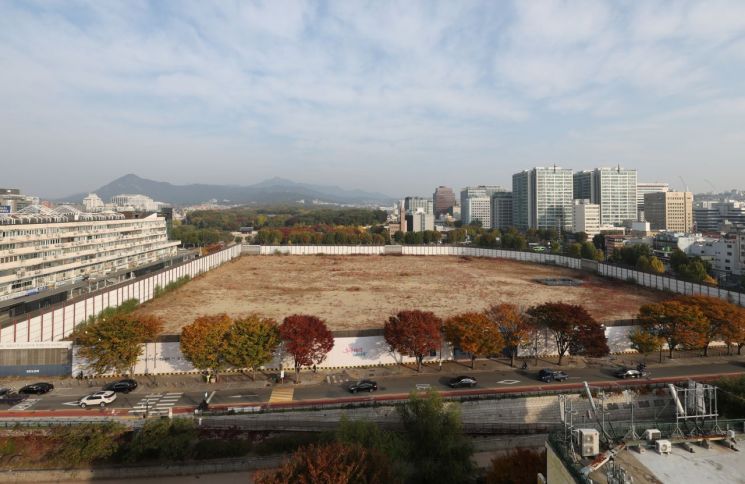
Sewoon District 4, 180 Meters from Jongmyo
Supreme Court: "Ordinance Easing Development Restrictions Is Lawful"
Cultural Heritage Administration and Ministry of Culture Express Concerns Over Damage to Historical Landscape
Seoul City: "Aiming to Improve Accessibility and Landscape"
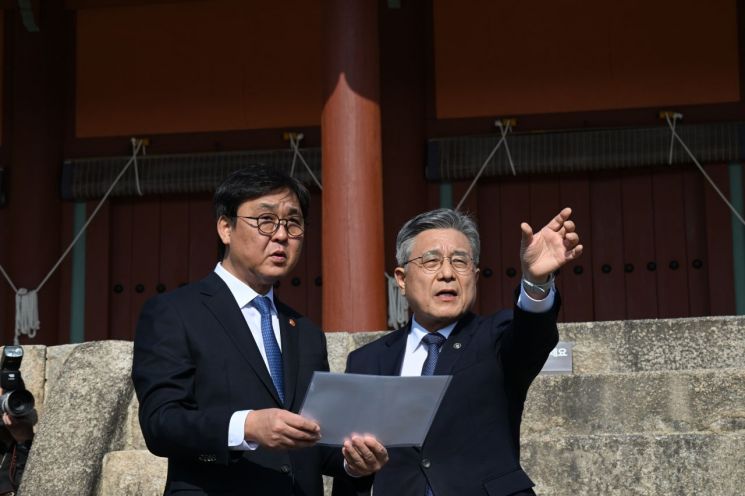 Heo Min, Director of the Cultural Heritage Administration, and Choi Hwiyoung, Minister of Culture, Sports and Tourism, are touring the Jongmyo site. Photo by Cultural Heritage Administration
The controversy surrounding high-rise development in the Jongmyo area of Seoul, a UNESCO World Heritage site, is intensifying. On November 6, the Supreme Court ruled that the Seoul Metropolitan Government’s modification of the Sewoon District 4 redevelopment plan was lawful, paving the way for the construction of a 110-meter building in front of Jongmyo. The Cultural Heritage Administration and the Ministry of Culture, Sports and Tourism immediately objected, expressing concerns about damage to the World Heritage landscape.
Heo Min, Commissioner of the Cultural Heritage Administration, criticized Seoul’s development policy in a statement on November 7, saying, “High-rise construction in Sewoon District 4 could directly damage the historical and cultural landscape of Jongmyo.” Heo explained, “Jongmyo, the first World Heritage site in Korea, is a place where a 500-year-old ritual tradition continues, and the structure of a super high-rise building overlooking Jongmyo is not permissible by international standards.” He added that “the Seoul Metropolitan Government is neglecting its responsibility to protect World Heritage,” and announced plans to consider amending the Special Act on World Heritage and responding through international organizations.
Choi Huieyoung, Minister of Culture, Sports and Tourism, also visited the Jongmyo site on the same day and strongly criticized Seoul’s development push. He stated, “Jongmyo is a World Heritage site representing Korea, and the situation where the possibility of damage has been raised is extremely serious.” He further commented, “The revision of the ordinance and the development methods pursued by the Seoul Metropolitan Government are difficult to accept,” and declared that he would pursue amendments to relevant laws and, if necessary, the enactment of new legislation.
The root of the controversy lies in the Seoul Metropolitan Council’s deletion last year of the provision restricting construction outside preservation areas. The Ministry of Culture, Sports and Tourism filed a lawsuit, claiming illegality, but the Supreme Court ruled that “deleting an ordinance with no effect is lawful.” This ruling has effectively provided a legal basis for easing height restrictions near Jongmyo.
The Seoul Metropolitan Government explains that “the modification of the redevelopment plan is a basic framework, and adjustments can be made through a cultural heritage impact assessment during the approval process.” However, the Cultural Heritage Administration countered that the core issue is not whether the height can be adjusted, but that “the very existence of a super high-rise building blocking the frontal landscape axis of Jongmyo is a serious risk.”
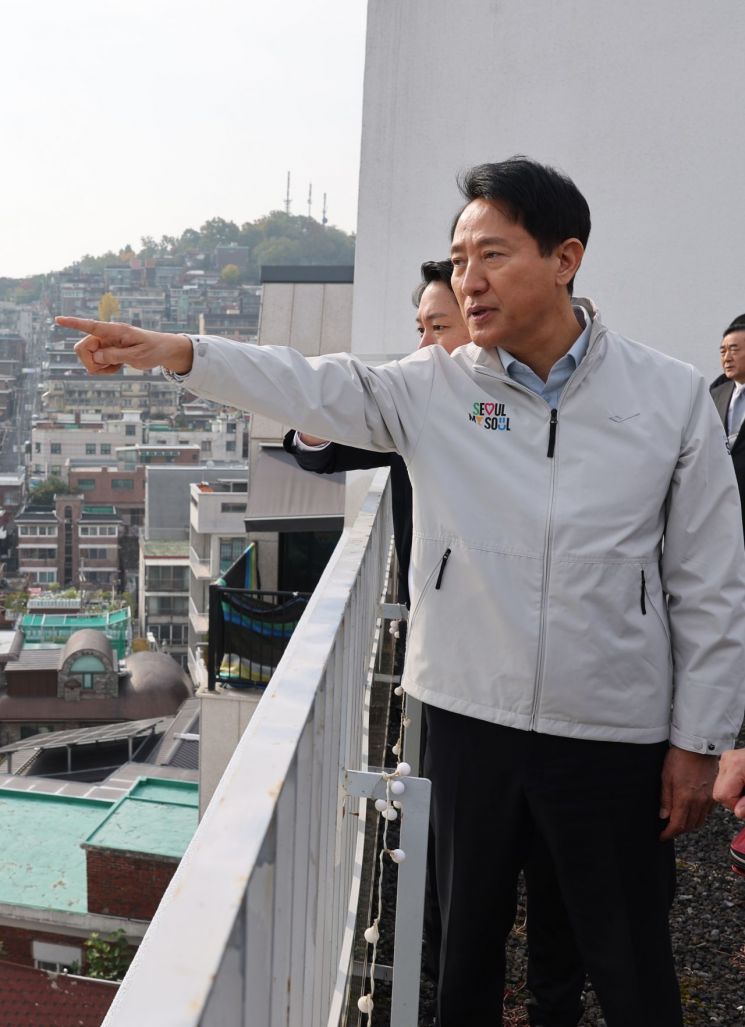 Seoul Mayor Oh Sehoon is visiting Jangwi 13 District in Seongbuk-gu, Seoul on the 6th, listening to explanations about redevelopment and engaging in conversation. Photo by Yonhap News
The World Heritage advisory body ICOMOS may consider designating Jongmyo as a ‘potential World Heritage in Danger’ if concerns about landscape damage are confirmed. At the time of Jongmyo’s inscription on the UNESCO list, the visual corridor in front of the shrine was established as a key management indicator, and the spatial axis connecting Jongmyo, Sajikdan, and Gyeongbokgung is regarded as a rare remaining royal capital structure in downtown Seoul.
The developers of the Sewoon District argue that easing height restrictions is necessary for the regeneration of deteriorated areas and the restoration of urban functions. The area around Sewoon Shopping Center has been identified as a region where redevelopment has been delayed for over 20 years, leading to severe decline in commercial activity. In contrast, preservation advocates point out that “areas adjacent to World Heritage sites cannot be approached with ordinary urban planning logic,” and argue that “the current landscape impact assessment standards do not sufficiently reflect the requirements for heritage preservation.”
The government is reviewing the direction of institutional reforms. The Cultural Heritage Administration has mentioned the need for a legal amendment to clearly define the scope of protection around World Heritage sites, while the Ministry of Culture, Sports and Tourism is considering the establishment of buffer zones, the legalization of landscape rights, and strengthening prior consultations for World Heritage sites. Whether the Seoul Metropolitan Government will reconsider its redevelopment plan is expected to become a major issue going forward.
On this day, Seoul Mayor Oh Sehoon posted on his social media account, stating, “The Sewoon redevelopment does not damage the value of Jongmyo, but rather improves ecological accessibility and the landscape.” He mentioned the creation of a green axis connecting Namsan, Jongmyo, and Jongno, the restoration of Yulgok-ro, and restoration projects around the Seoul City Wall and Jongmyo, emphasizing that “Seoul’s policies are aimed at enhancing the value of historical and cultural assets.”
Mayor Oh countered the criticisms from the Ministry of Culture, Sports and Tourism and the Cultural Heritage Administration as “excessive concerns,” and proposed resuming dialogue.
© The Asia Business Daily(www.asiae.co.kr). All rights reserved.