This year is expected to be recorded as the second or third hottest year on record.
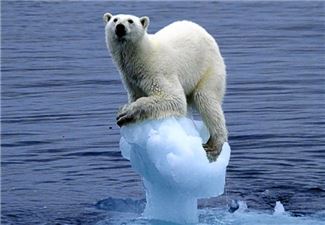
The World Meteorological Organization (WMO) stated in its annual report released on November 6 (local time) that the global average temperature from January to August this year was 1.42 degrees Celsius (±0.12 margin of error; hereafter, Celsius) higher than the pre-industrial average. While this figure is lower than last year, which was the hottest year since records began in 1850, it still ranks as the second or third hottest year overall.
The average annual global temperature reached a record high of 1.45 degrees Celsius (±0.12 margin of error) above pre-industrial levels in 2023, and this was surpassed last year with an increase of 1.55 degrees Celsius (±0.13 margin of error). The years 2023, 2024, and 2025 are expected to make up the top three hottest years on record. The WMO explained that every year from 2015 to 2025 is projected to be among the 11 hottest years since observations began.
The WMO also reported that greenhouse gas emissions increased by 2.3% this year compared to last year, identifying India, China, Russia, and Indonesia as the countries with the highest emissions. Additionally, it warned that the increase in ocean heat content is accelerating the reduction of sea ice in the Arctic and Antarctic, which could lead to rising sea levels. From 2016 to this year, the global average sea level has risen at an annual rate of 4.1 mm, nearly double the rate of 2.1 mm per year recorded between 1993 and 2002.
Celeste Saulo, Secretary-General of the WMO, warned that it will be virtually impossible to keep the rise in global temperatures within 1.5 degrees Celsius above pre-industrial levels, as pledged in the 2015 Paris Agreement, for the next several years.
The WMO noted that extreme weather events such as heavy rain, floods, tropical cyclones, heatwaves, and large wildfires from January to August this year have affected lives, livelihoods, and food systems. However, it welcomed significant progress in the number of countries equipped with multi-hazard early warning systems, which more than doubled from 56 in 2015 to 119 this year. Still, it pointed out that 40% of the world remains without such systems, emphasizing the urgent need for action to close this gap.
This report is scheduled to be presented at the 30th Conference of the Parties (COP30) to the United Nations Framework Convention on Climate Change, which will be held in Brazil next week.
© The Asia Business Daily(www.asiae.co.kr). All rights reserved.