Employees on Leave Included in Two National Projects, Receiving Research Allowances
Violation of Internal Personnel Regulations and Research Allowance Guidelines
The SH Corporation Urban Research Institute was found to have illegally included employees on leave as research participants and misappropriated labor costs for national research projects funded by the Ministry of Land, Infrastructure and Transport.
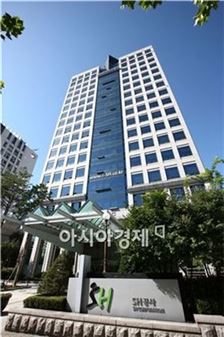 SH Corporation Headquarters Building
According to Seoul City Council member Choi Gichan and others on November 7, employees on leave at the SH Urban Research Institute were listed as participating researchers in national projects carried out by SH and received research allowances.
One researcher affiliated with the SH Urban Research Institute was caught in 2023 for providing a corporate credit card, intended for research and development expenses on a national project, to an undergraduate student at a partner university without authorization, resulting in an expenditure of 24 million won. At the time, SH conducted a special audit, dismissed the researcher, and imposed a one-month salary reduction on the person in charge. In May of this year, the Administrative Court ruled that the dismissal of the researcher was justified.
In 2021, one of the three researchers participating in the project “Development of Technologies for Urban Space Risk Analysis and Urban Resilience Enhancement in Declining Areas” was on parental leave for 10 months during the research period (2021). However, this researcher was recorded as having a 40% project participation rate and an 11% contribution rate and received a research allowance.
For the national research project “Development of Innovative Technologies for OSC-Based Apartment Production Systems,” conducted in 2022 (the second year, 12 months), two out of 11 participating researchers were on leave. One was on maternity leave for nine months, and the other was on short-term leave, but both were recorded as having participated in the research for 12 months and received research allowances accordingly. Only one researcher who had resigned, not on leave, had their participation period adjusted to 10 months.
According to Article 26 of the Guidelines for the Use of Research and Development Expenses in National R&D Projects, when a researcher’s project participation period changes, labor costs must be recalculated based on the actual period of participation, and research funds can only be allocated within 20% of the adjusted labor costs. Article 65 of the same guidelines stipulates that labor costs for participating researchers should be calculated on a monthly basis. Therefore, if a researcher participated for only two months and then went on leave, allocating labor costs for the period after the leave violates these guidelines.
Article 37 of SH’s personnel regulations clearly states that “employees on leave are not permitted to perform work,” but this was not properly followed. While other research institutions, such as the Korea Institute of Civil Engineering and Building Technology, automatically link researcher information such as leave status through integrated research fund management systems, the SH Urban Research Institute is known to leave the calculation of participation rates entirely to the discretion of the research project manager.
An industry official pointed out, “Allowing employees on leave to participate in national projects constitutes a violation of personnel regulations, and if they are included as participating researchers, thereby increasing research funds and allowances, it could seriously undermine the integrity of national R&D projects.”
An official from the Korea Agency for Infrastructure Technology Advancement, the evaluation agency for the relevant national research projects, stated, “If labor costs are used for purposes inconsistent with the research objectives, this could constitute misappropriation, in which case the funds may be recovered, or a sanctions review committee may be convened to determine the level of penalties. Depending on the severity, fines may be imposed or participation restrictions may be enforced.”
© The Asia Business Daily(www.asiae.co.kr). All rights reserved.